


Maybe some heroes inherit the actual genes for it.
Steve Duley was raised in Baltimore. The Army veteran and decorated police officer said both his uncles and all five cousins were veterans; his dad was a cop; his grandfather and great-uncle were vets and police officers.
“People in your family serve, and they tell the stories and you just get interested in it,” Duley said.
A chance visit to the South and its hospitality, plus his wife accidentally catching a PBR on television, led the couple to retire to Texas, where the American hero, inexplicably, has spent the past year learning to rope.
A career in service
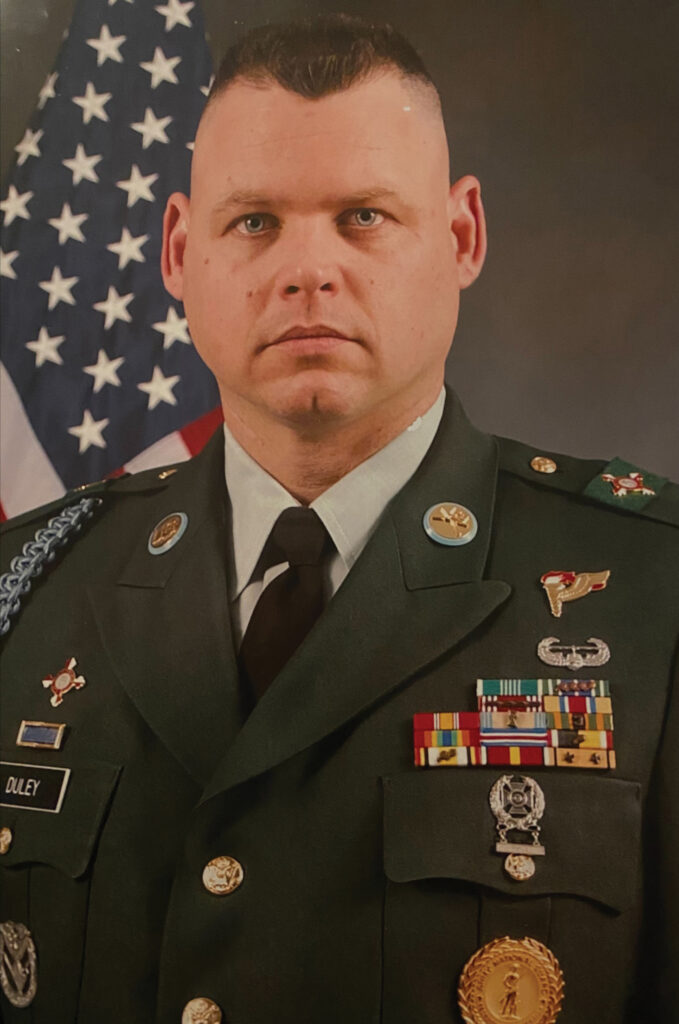
Duley served for two decades, retiring as an Army first sergeant. He helped guard America’s airports after 9/11, protected Air Force bases and often secured Air Force One. Then he spent two more decades in the Baltimore County Police Department.
“I worked as a patrolman for about six years and on the mobile crisis team another six years,” he recalled. “Our job was to protect mental-health clinicians; we would get the call to interview someone in crisis and decide if they were safe or needed to be transported to the hospital. If things were slow, we’d deliver food or medicine to the homeless.”
During Duley’s final eight years on the job, he was a firearms instructor and detective on the FBI’s Joint Terrorism Task Force. His wife, Meredith, was also a veteran of the police force but was injured twice and transferred to the crime lab. He said the riots following the 2015 death of Freddie Gray and the protests after George Floyd’s death in 2020 were tough.
“It was kind of hairy,” Duley recalled. “More people were against the police than I ever thought would be, even friends and family. When I first became a police officer in 2004, it wasn’t long after 9/11 and everybody loved the police. I mean, here we were in the same uniforms—we were the same guys.”
In 2024, with attitudes across the country toward law enforcement continuing to sour, Duley watched several officers leave careers they otherwise would have stayed in longer.
“I bet we lost a couple hundred officers in the past couple years,” he said. “In Baltimore, we had a 2,400-officer department and now it has about 1,800.”
The trip that changed everything
Duley knew he wanted to retire at the end of 2024, so he and his wife spent years scouting a place to live. He’d once visited and enjoyed the Fort Worth Stockyards and told Meredith how nice everybody was in Texas.
“In New York, Boston or Baltimore, if you say hi to somebody, they look at you like you just took their money,” said Duley.
The pair made several trips to Texas, renting the same Airbnb in Cleburne while scouting everywhere from Nacogdoches to the Panhandle. One last trip coincided with Charly Crawford’s American Hero Celebration at NRS. The Duleys watched the roping and stayed for the auction. They’ve attended every affiliated activity since—including the spring branding. That’s where Steve met team roper Bill Force, a fellow veteran who had also been a Baltimore police officer.
“He lent me an excellent horse and we had a great time at the branding,” said Duley, who admitted being exhausted after gathering, dragging, castrating and branding calves all day.
“I wasn’t thinking about work or the cases I had—I wasn’t stressed about anything,” he recalled. “I felt so good at the end of the day. Roping is the same way. When you go rope, your brain is occupied; that helps a lot of us who are hypervigilant.”
From first responder to roper
In January 2025, the owners of the Airbnb decided to rent the Cleburne home indefinitely to the Duleys, and Steve has spent a year now working full-time as a security supervisor for Trinity Industries in Saginaw. In the meantime, Meredith found a new love for bull riding.
“Then she went to the rodeo and fell in love with that,” recalled Steve. “Now we’re going to the stock show. We’ve been to San Antonio. We’ve been to the rodeos in Cheyenne and Pendleton. She’s got a list!”
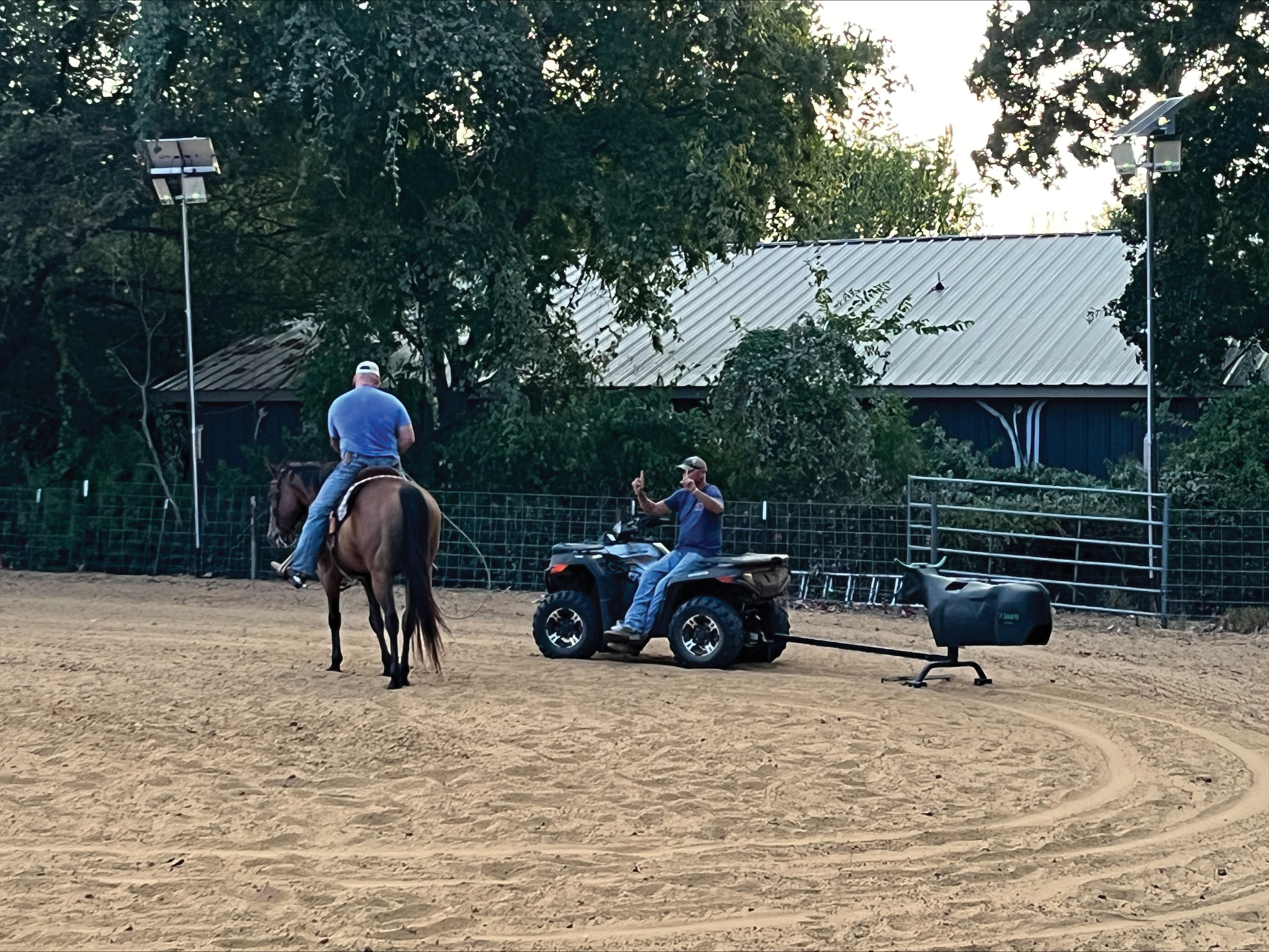
Duley has spent the past year roping the sled on Force’s horse Preacher, and just last month said he could actually catch horns. He would love to improve enough in 2026 to apply for Crawford’s clinic.
“To me, it’s not the competition of Charly’s event that we love, but the camaraderie,” Duley said. “It’s like being back in military mode or police mode—we’ve got each other’s backs.”
Nobody could have guessed that team roping would become a hobby for the East Coast first responder. But as soon as Duley moved to Texas, Force told him to come over and rope.
“I said, ‘I don’t even know how to make a loop,’” Duley recalled. “And he said, ‘I’ll teach you.’ And he has.”
—TRJ—
Thank you to Equinety for helping us share stories of military members, veterans and first responders in the team roping community.
READ MORE
READ: Mary Ann Miller on Legacy, Leadership and the Future of Team Roping