


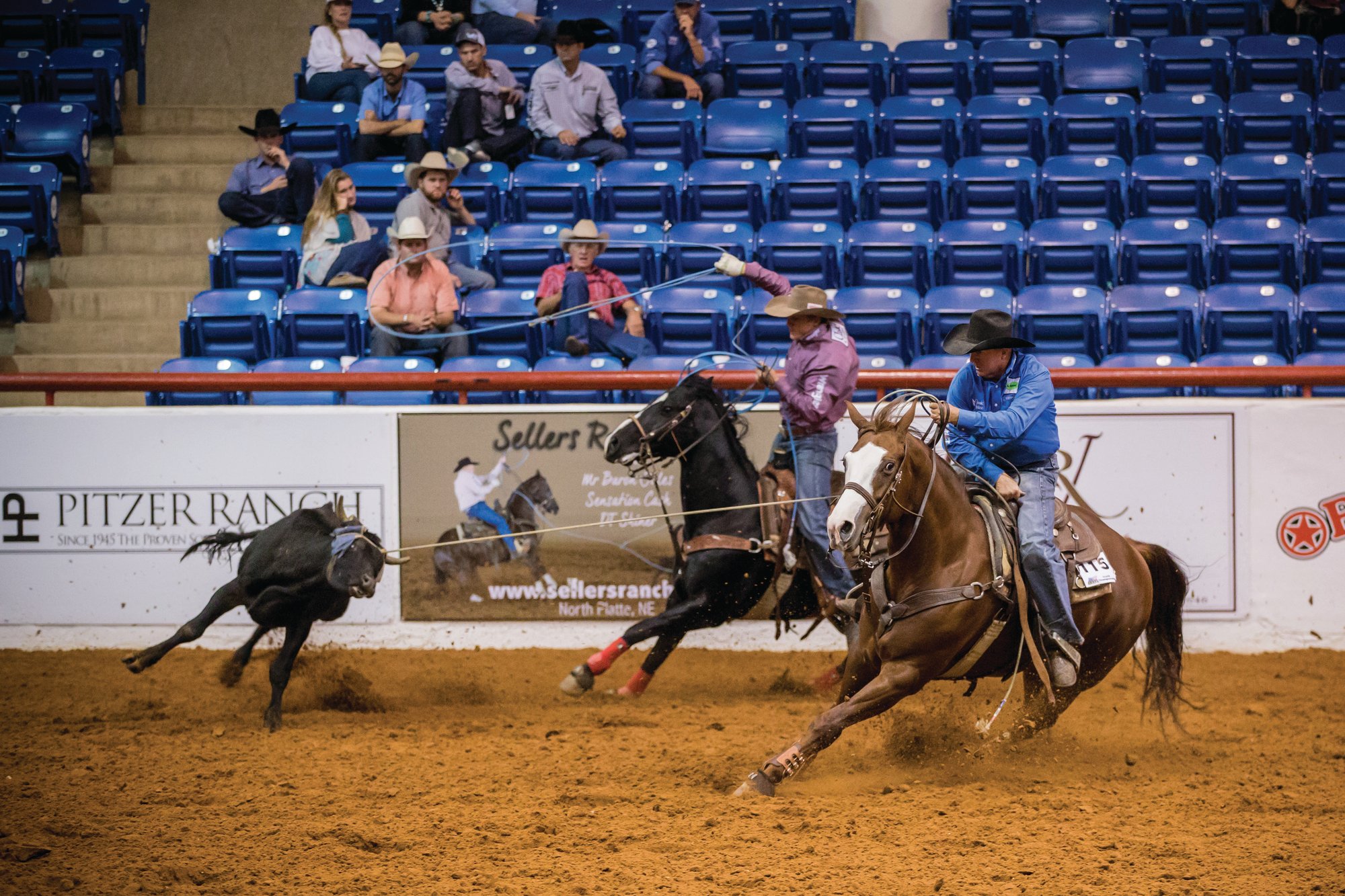
DT Air Jordan won the first big-money rope horse futurity twice. Nine years later, J.D. Yates says he’d still beat today’s field.
J.D. Yates picked DT Air Jordan out of Dean Tuftin’s program on the horse’s hind leg and his bone, not his pedigree.
“I just picked him out as an individual, not so much on how he was bred,” Yates said.
How DT Air Jordan Was Built
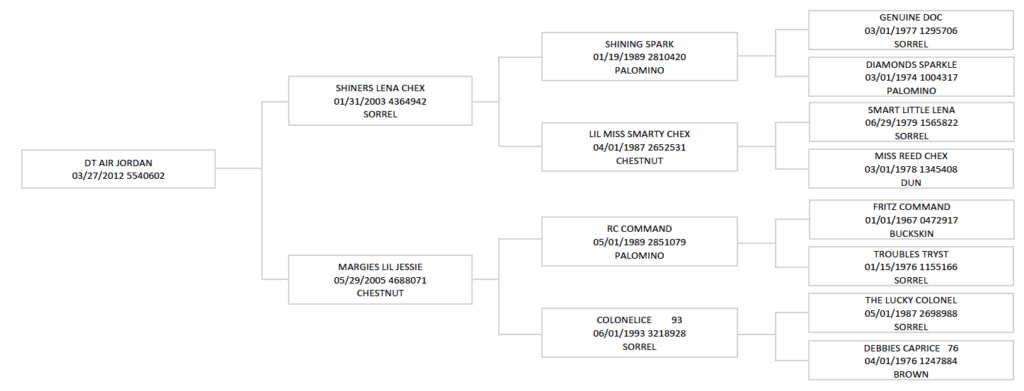
Tuftin bred him in 2012 by Shiners Lena Chex—a son of the $10 million sire Shining Spark—out of Margies Lil Jessie by RC Command. The mare is the reason the horse exists.
“She had all the goods—foot, leg and look,” Tuftin said. “Our whole program is really revolving around the mares.”
Tuftin sent him to Nick Dowers to start on the cow horse side as a 2-year-old.
“Nick rode him for probably seven months,” Tuftin said. “After that, we started roping the dummy and lead steer. That 2-year-old year set him up for success.”
What came out the other end was a colt Tuftin knew was rare.
“He was a big, strong horse that could drag his butt,” he said. “That’s a rare find.”
Tuftin roped on him for a year and a half before Yates took him home to Pueblo, Colorado, and sold him to Greg and Kyle Hause. “He was just a big, catch-your-eye kind of gelding,” Hause said.
Letting a Good One Grow Up
Then Yates did the thing that separates a program from a pipeline: he left him alone as a 3-year-old to grow up. The horse didn’t show until he was 4, and the first time out he wasn’t even Yates’ to ride—the gelding was leased to Brazil’s Rafael Correa Paoliello to qualify for the AQHA World Show and placed fifth in the junior heading.
By the fall of 2017, Jay and Lindsay Wadhams had been producing ARHFA events for more than a decade, but rope horse futurities were still something ropers watched rather than something they bet a program on. Then, that October, Fort Worth offered $100,000 added and drew 97 head horses and 122 heel horses.
“We paid out $292,000 plus prizes in one day, which was a first,” Wadhams said.
Yates won the heading on DT Air Jordan with 825.0 points and $26,000.
“He could do whatever you wanted to do,” Yates said. “I wouldn’t be afraid to ride him at the BFI tomorrow.”
Coming from a 21-time NFR qualifier, that settled an argument the futurity pen had been having with itself. “He’s broke, he can win the show, you could go jackpot on him, or you could go rodeo,” Yates said. But he wouldn’t rush him: “I don’t want to go rodeo on a 5-year-old. He needs another year being a horse.”
Proving He Was More Than a Futurity Horse
He gave him the year, and then he took him. Yates hauled the gelding down the road the next summer and remembers riding him in the second go-round at Cheyenne after crippling his good horse in the first. “So evidently he can do the time,” Yates said. That October he brought him back to the John Justin Arena and won the World Championship again, marking 929.54 on four runs at a show grown to $110,000 added and $362,000 paid. A back-to-back champion who had spent his summer at rodeos was not a horse anybody could file under show pen.
Another of Yates’ customers, Mike Van Egdom, bought “Jordan” for himself after his futurity career.
“He can step it up for the open guys, and then when I get on him, it’s just, he’s the coolest feeling,” Van Egdom said. “He’s unbelievable.”
Yates’ read on why the horse has lasted comes back to how he’s put together—very few horses his size move the way he does.
“He can run, but he stops and turns like a small horse,” Yates said.
Then the part that has nothing to do with conformation: “He just likes his job.”
The show DT Air Jordan won paid $292,000 in a day and felt enormous. The 2025 ARHFA World Championship carried $250,000 added on its own, and through mid-June of this year the top 15 futurity rope horses in the country had won $846,826 among them. The colts he’d be competing against today were bred on purpose for a market that didn’t exist when he was foaled.
Asked whether the gelding, if he were a 4-year-old this year, would hold up against the best futurity horses in the world, Yates didn’t even wait for the end of the question.
“Every day of the week.”
—TRJ—