


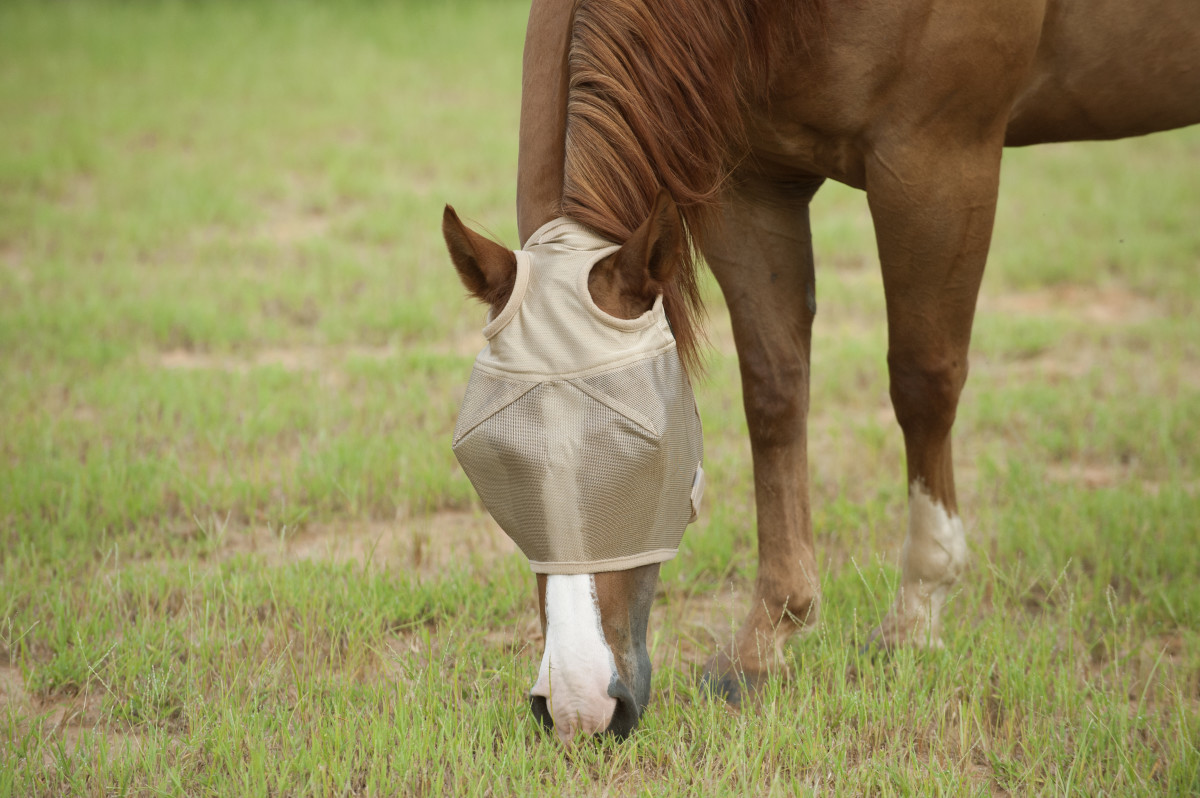
When is a fly mask more than a fly mask? When it does more than protect your horse’s eyes from pesky insects during fly season. The latest generation of fly masks does just that, with innovative styles that address several common issues. Styles range from a standard mask that protects the eyes, cheeks and foreheads from flies to bespoke styles that protect just the horse’s ears.
Here are five special features to consider before purchasing your horse its first mask:
1. Nose flap: If your horse’s white nose tends to get sunburned—or if he has pink skin on his nose—he might benefit from a fly mask with a lightweight flap extending over the nose and muzzle. This style is typically made with soft, breathable nylon mesh that keeps flies off of the lower face.
2. UV-blocking material: Many of the newest fly masks are crafted from materials designed to block most of the sun’s damaging ultraviolet (UV) rays. These can also prevent harsh sunlight from irritating sensitive eyes. Julie Goodnight, a horse trainer out of Poncha Springs, Colorado, says that individuals in particular need of UV protection include horses with eye issues, pink skin or sensitive skin; “bald-faced” horses; or horses with excessive white and blue eyes. “UV protection is most important in high deserts,” she added. One style on the market, Cashel’s Crusader Fly Mask, protects the eyes and face from 70% of harmful UV rays.
3. Ear sleeves: Some horses have especially sensitive ears or are prone to ear infections triggered by biting gnats, deer flies and the like. For them, a fly mask “with ears” might be in order. The sleeves are typically fashioned from soft jersey fabric, netting or soft micromesh, all designed to keep biting bugs at bay.
4. Unobstructed vision: Although fly masks can help shield the eyes of light-sensitive horses, it’s important to ensure that the masks don’t impede your horse’s vision. Some are easier to see through than others because of the materials used; you can check this out yourself by looking through the masks. Other styles have special shaping or mesh “cups” over the eyes to keep the mask from rubbing against them. These styles can also protect the eyes from wind and flying debris, or provided added protection for hoses recovering from eye wounds. “I had a horse that injured his eye in the pasture. While medicating it, we kept a fly mask on, and it helped significantly,” said Al Dunning, a trainer out of Scottsdale, Arizona.
5. Three-hole cap: To minimize forelock damage, and provide added comfort, look for a style of fly mask featuring three separate holes in the cap—two for the ears and one for the forelock. This style is designed to keep the fly mask from rubbing (and possibly breaking) the forelock hair and also keeps the horse more comfortable by keeping forelock hair out from under the mask where it could potentially cause irritation.
Safe, durable and affordable. No matter the insect, Cashel has a solution for you. www.cashelcompany.com