


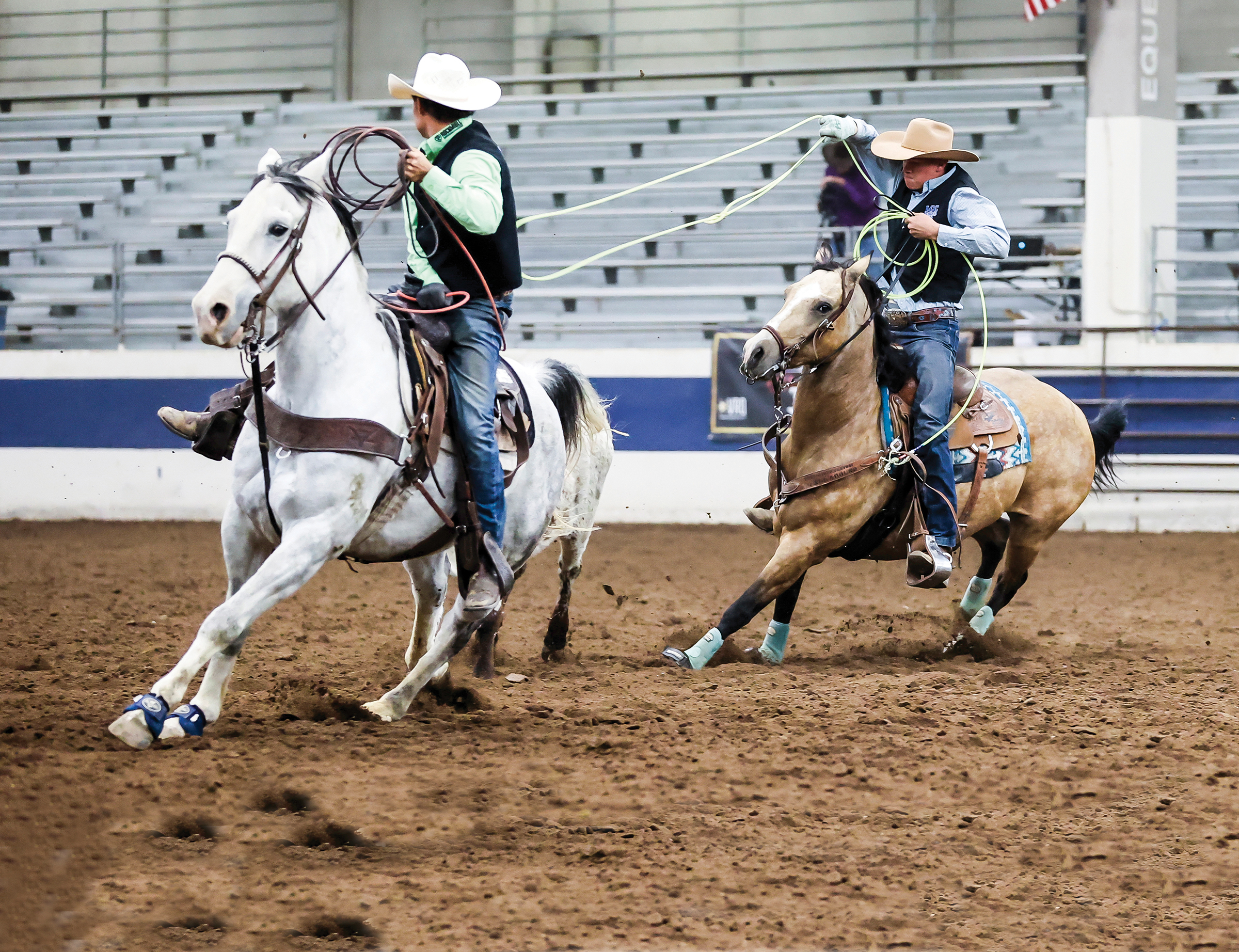
When Trevor Brazile told readers in our October 2024 issue that rope-horse trainers desperately need good colt starters, it caught the attention of a horse-training instructor at Lamar (Colorado) Community College. The result? Starting in the spring of 2026, LCC will offer one of the country’s first collegiate rope-horse training certificates.
New Option for Students: Stay and Rope

Since the 1970s, LCC has been the rare college with a colt-starting focus as part of its Horse Training and Management associate degree. The program instructs students through starting three colts and specializing one more in a particular discipline.
Next spring, instead of spending their final semester apprenticing with a trainer, students can stay at Lamar for the rope-horse training course, likely taught by one of the wolfiest heelers in the country.
“It was really a God thing that this came together,” said Savanna Mauch, chair of LCC’s Department of Ag, Equine and Rodeo. “We were talking about that article Trevor did. Then right after that, I heard a podcast where Miles Baker was talking about two trainers, Tyson Benson and Austin Johnson. One of our graduates works for Tyson, and Austin came through our program. LCC has always supported the rope-horse industry, but now in a more definitive way.”
Meet the Instructor: T.J. Watts

Equine dentist and rope-horse trainer T.J. Watts grew up in that corner of Colorado and has for years helped coach LCC’s rodeo athletes. He’s a natural choice to teach the course. With a 9.5 heeler number, he’s also been to the Mountain States Circuit Finals Rodeo a dozen times in the past 15 years. He and Garrett Tonozzi gathered up $30,000 and the circuit championship in 2021, but watched a potential NFR berth dwindle when Watts’ good mare, Money, got hurt and he started fighting bad hips.
This year, after two hip replacements, Watts is content to stay close to home. While he can’t put the first 90 days on a colt anymore, he takes colts just after that point, teaching them to read cattle and take a jerk while riding them to tag, brand, pair-sort and ship on a neighboring ranch.
“I like to put a solid foundation on them then let a guy like Joseph Harrison take the better end of them and go on,” said Watts. “There aren’t many of us who want to do that. People see the futurity money and want to compete. But I think a person could make a really good living going through basics with these horses so that when top trainers get them, they don’t have to go back and restart everything.”
Watts, whose grandfather was friends with Dick Yates, grew up spending time at Yates’ and working for world-champion horse trainer Jack Wright. This winter, he placed a colt third at the ARHFA futurity in Rapid City and plans to take a few to Amarillo this fall.
“I get some really nice colts in, but a lot of them have a reining foundation so it feels like I spend most of my time just getting their heads up,” Watts said. “To take a jerk square, I personally think they’ll stay more sound if they have their shoulders up and their butt down.”
What Students Can Expect
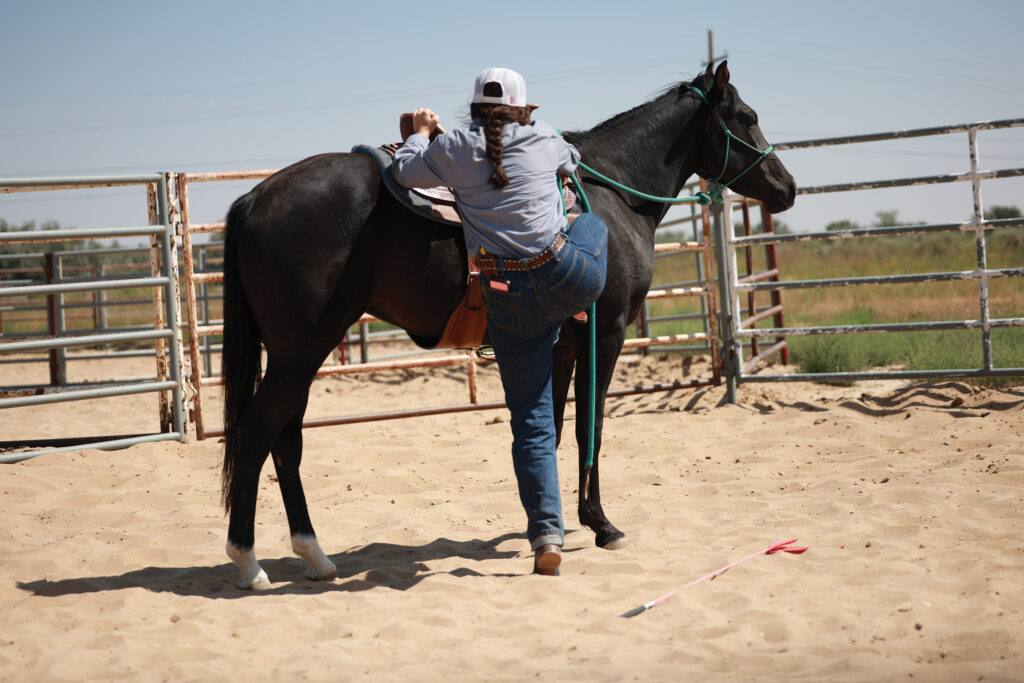
Students can learn these skills by enrolling in the rope-horse certificate program. But Watts knows college kids—and stresses that they need to understand some horses are going to come around quickly and some are not.
“I’ve had horses I’ve roped on a single day and taken to a jackpot, and I’ve had horses I’ve ridden for a year that I wouldn’t take to a $10 roping,” Watts said. “Our job as trainers is to understand when and where to push.”
Not every horse is the same. Watts said students will get a 2-year-old started and think all their others will be just like that.
“We struggle in the industry right now with experience,” he said. “These horses will kind of train themselves if trainers will just stay out of their way; just give them the freedom to make a mistake and learn from it.”
To that end, LCC offers more real-world experience than most. Students are expected to graduate not just with a piece of paper, but with the actual skills they’ll need to train horses, Mauch said. Her alumni have a higher-than-average 90% rate of being employed in the horse industry within six months after graduation.
“I attribute that to our students being on feed crews at 6 a.m. and 5 p.m., seven days a week,” she said. “They’ve got to clean their own stalls, wash and clip their own horses, even drag the arena.”
Mauch, a versatility competitor who was instrumental in LCC getting cutting flags and roping sleds, also helped start the Lamar Legacy Horse Sale. She said the program’s colts—some even Riata Buckle-eligible—come from ranches in Colorado, Kansas, Oklahoma and New Mexico.
With Watts at the helm, students can expect to work colts on lots of pen roping, lead steers and sled work before actual full contact.
“You can’t train a kid to rope and a horse to rope at the same time,” Watts warned. “It’ll be good for students who understand how to rope. And it’ll probably be popular—who wouldn’t want to go rope all afternoon instead of going to class?”
—TRJ—
Brought to you by Dechra—committed to the horses who power the sport.