


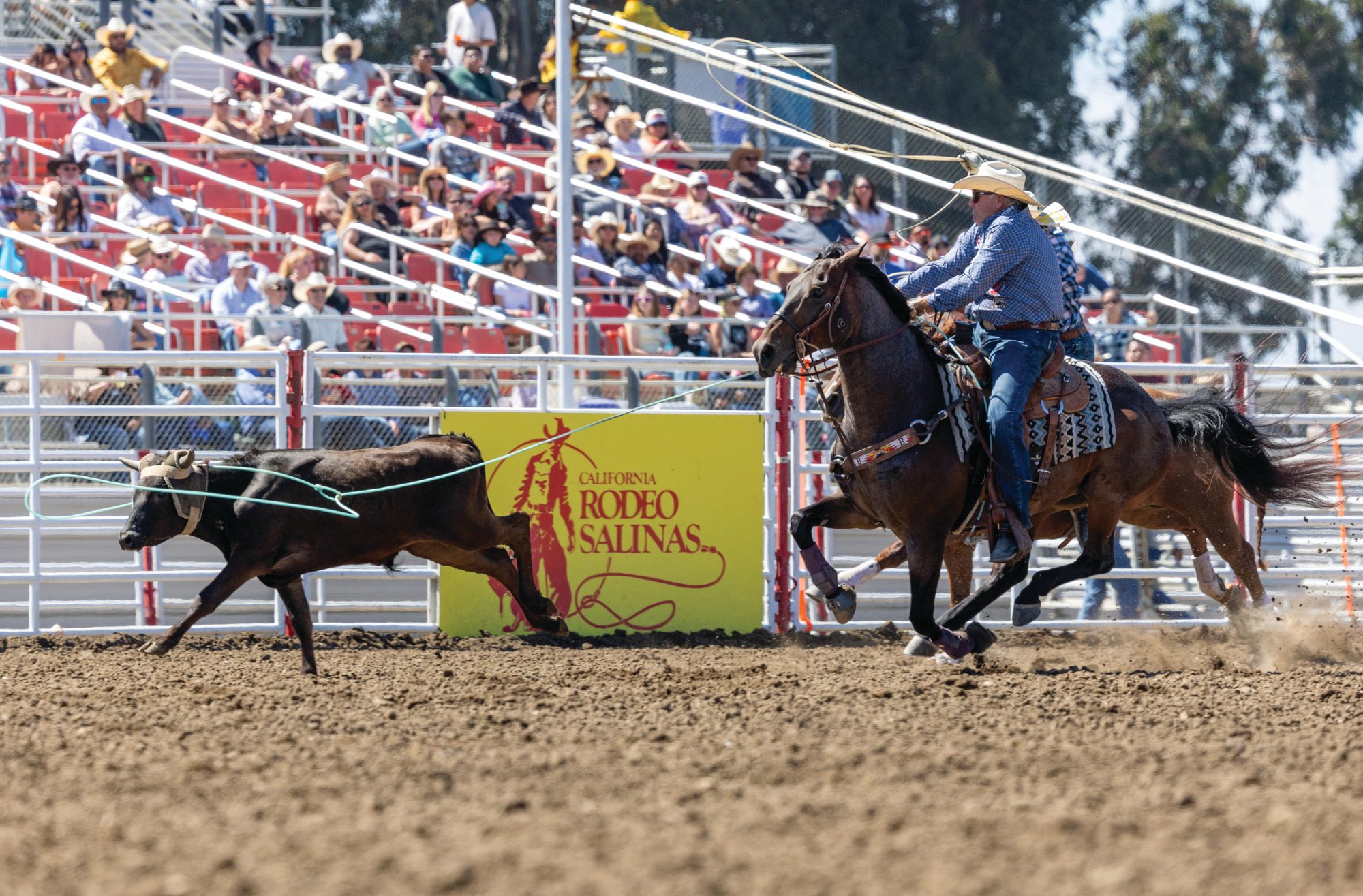
Hall of Famer Joe Beaver is an eight-time World Champion Cowboy who’s won five world titles in the tie-down roping (1985, ’87-88, ’92 and ’93) and three world all-around championships. Team roping was his second event when he won that ultimate cowboy crown in 1995, ’96 and 2000. This lifelong Texan, who’ll turn 61 this month on Oct. 13, has been heading at the California Circuit rodeos this year.
Q: In 1985, you were one of the rare professional rodeo rookies who won the world straight out of the gate. Did that come as a surprise to you?
A: It did to me. It didn’t to my mother (Bonnie). She expected it. I was just roping to have fun.
Q: Who taught you how to rope?
A: My dad (Walter) taught me how to rope, and he was a student of the game. He said, “If you figure out how to use your long rope and get it on ’em fast like Bubba Kendricks, and flank and tie like Mark Doehrman, you’ll never have to have a job.”
Q: Talk about the mental toughness that’s always been one of your calling cards. Where did that come from?
A: I think one of the reasons it was so easy for me to get in and win right off the bat was because I was so mentally strong from the amateur circuit. I rodeoed with a guy named David Nyegard, and he taught me to be so mentally tough and so unbreakable and strong mentally that I had an “up” on them. Then I got in with Stephen Perry, and he thought I could win on anything and convinced me to believe I was going to win every time unless something went wrong.
Q: The tie-down was always your event. When did you first team rope?
A: I team roped at the amateur rodeos when guys like Gary Sutton, Marty Johnson, Pete Pearce and Jesse Gonzales were down there dominating. When they needed another run, I subbed in and roped with those guys a lot. It didn’t hurt that when I was a kid I heeled for Matt Tyler at some junior rodeos, so I got to see one of the best headers in the world come from a kid to being one of the dominant headers. The reason I didn’t always team rope when I was rodeoing was because there wasn’t equal money.
Q: Have you always headed at the pro rodeos?
A: Yes. I’m no professional heeler at all.
Q: You have 23 total National Finals qualifications, including 18 in the tie-down, four in the team roping and the 1988 National Finals Steer Roping. Can you rattle off your NFR partners for us?
A: I roped with Monty Joe Petska at the 1997 NFR, Bret Gould in 2000, Brad Culpepper in 2002 and Cole Bigbee in 2006. Three guys from east of the Mississippi. And I made the steer roping finals one time just to show them I could.
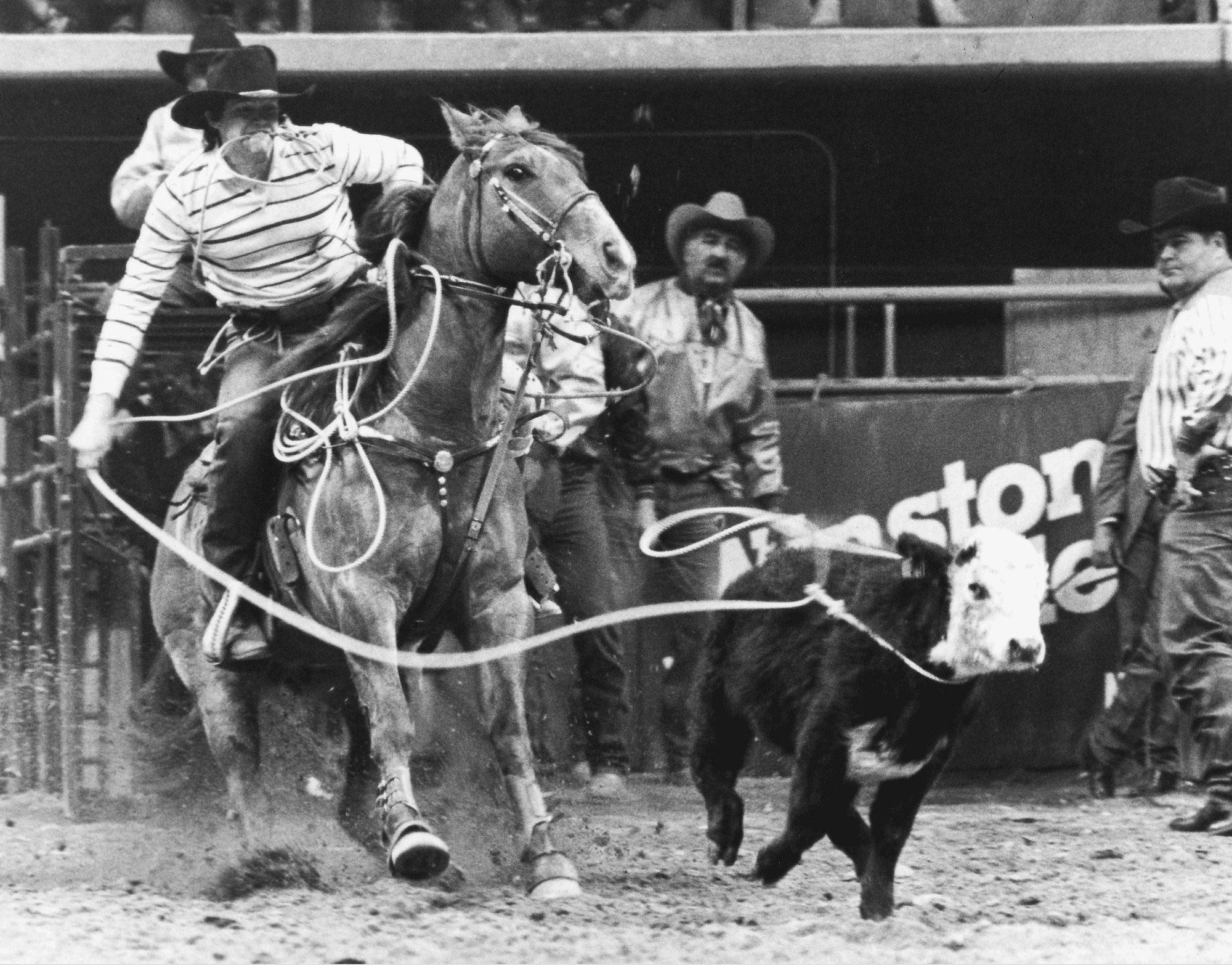
Q: What was the most memorable team roping night for you at the Thomas & Mack?
A: When Bret Gould wheeled that son of a gun for me in Round 10 at the 2000 NFR. We won the last round, and it won that third all-around for me. I was there in two events, and was behind, chasing Scott Johnston, who was there in the bronc riding. Once Bret wheeled that last steer, all I had to do was tie my calf down to win the all-around.
Q: Talk about team roping in the tight quarters of the Thomas & Mack.
A: That first year I made it I bought the tapes from the year before. I watched Speedy (Williams), then fast-forwarded to the next round, watched Speedy and kept going. I knew he’d figured out how to get a swing off and get it on ’em right there. And the faster you get it on ’em, the more you’re going to win. The steers—and the horns on the steers—were bigger back then, and you had to have a horse that would crawl the wall to face. Luckily, I had one like that.
Q: What’s your best advice to headers going into NFR battle for the first time this year?
A: You cannot be scared at the barrier. If you break the barrier and you’re 14, you can still win good in the average. Not that many teams are going to catch 10. But if you’re late there, it’s hard. You cannot be late and you cannot be afraid to throw.
Q: You really, truly love to compete, don’t you?
A: Roping’s not how I eat anymore. But it’s fun to see if a guy about to be 61 years old who’s had 17 surgeries and doesn’t have near the game he used to can still figure out a way to win.
Q: Who’ve you been roping with, and why the California Circuit?
A: I’ve been roping with Lane Wheeler. Last year I had clinics in Oregon, Washington and Northern California. I was talking to Monty Joe one day, and he told me about this kid, so I told him to put us down. We got to the California coast and did a couple roping clinics at Cal Poly with the college kids, and had my junior roping there. When we went back home to Texas, it was over 100 degrees—hot and humid—and Jenna was like, “What are we doing?” We enjoy the weather immensely, and the people are as nice as the weather. It’s about enjoying life, so here we are.
Q: At this stage of your life, would you rather rope or help a young person with his or her roping?
A: That’s about 50-50. I still love to rope. But if people are calling me wanting to rope and I have a kid with talent who’s having problems and needs my attention, I’m helping that kid before I rope.
Q: Who are your favorite teams to watch in 2026?
A: On the veteran side, I love watching Kaleb (Driggers) and Junior (Nogueira). If Kaleb hangs it out there, Junior will block and tackle. Whatever they need to do to win is what they do, and they complement each other.
On the other end of the spectrum, you have Tyler (Tryan) and Nicky (Northcott). Both have huge shadows on them because their dads are highly successful with ropes. Clay Tryan’s one of the GOATs of heading, and Steve Northcott was as dirty with a heel rope as anybody. To see their kids step out of that shadow and into their own light is very refreshing.
It’s also been fun to watch Korbin Rice and Cooper Freeman. When you have a big win, like they did at Houston, everybody says that’s the only reason you’re going to make it. But they came back and won Calgary, and have been steadily chipping away. It’s cool to see a young team do that.
Q: If you had to pick one all-time favorite day in rodeo, which one would it be and why?
A: It would probably be the first calf I ran at the NFR the first year. My dad always said that was the best run I ever made in a pressure situation. After I won Round 9 in 1996, I had to win Round 10 and second or better in the average to win the all-around, and won both. I missed the barrier, and made a great run. I asked my dad, “What about that one being my best run?” He thought that first round at that first Finals was more impressive, because I had no idea what I had to do and did it anyway.
—TRJ—