


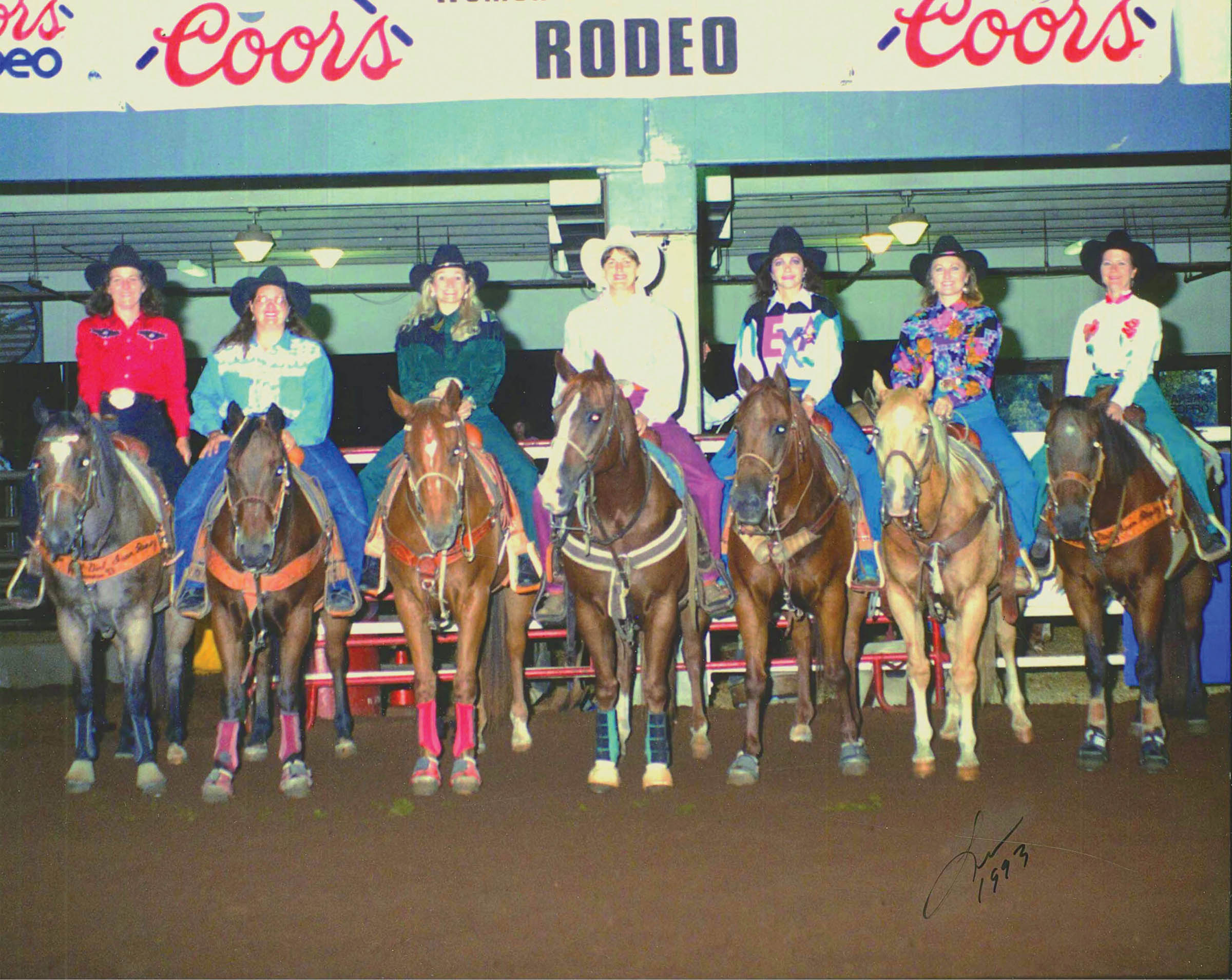
For decades, the only place a grown woman didn’t have to rope against a man was an all-girl rodeo, very far away and for very meager dollars. But from the mid-1990s to the mid-2010s, a handful of all-girl jackpots became the pinnacle.
Hall-of-Fame heeler Pam Minick—a 16-time qualifier to the Women’s NFR who helped lead the WPRA/PWRA throughout the ’80s—and Debbie Garrison (they incidentally both reigned as Miss Rodeo America in the 1970s) were the first to promote all-girl team roping in Texas.
On the West Coast in 1980, Barbara Kenney was kicking off the Women’s Team Roping Association for ladies in California, Nevada and Oregon. But in Texas, Garrison was 35 and had just married Super Bowl champ Walt Garrison when Minick talked her into learning to rope. Then Debbie, too, went to the Women’s NFR 14 times heading steers and won the average there twice in the 1990s.
But when they started, there was no USTRC and no handicaps—only mixed ropings that paired each woman with a man.
“I remember one of the biggest mixed ropings was at the Lazy E, and Leo Camarillo was entered with Rebecca Gonzalez,” said Garrison. “Those guys knew whose wives turned the most steers at home—ladies like Shryl Cooper.”
If they couldn’t travel to far-flung rodeos, the likes of Cooper and Jacque Woolman and Peggy Bach turned a lot of steers for their husbands at home. They did it well.
READ: 9 Hall of Fame Ropers Who Paved the Way for Women in Rodeo
Getting started
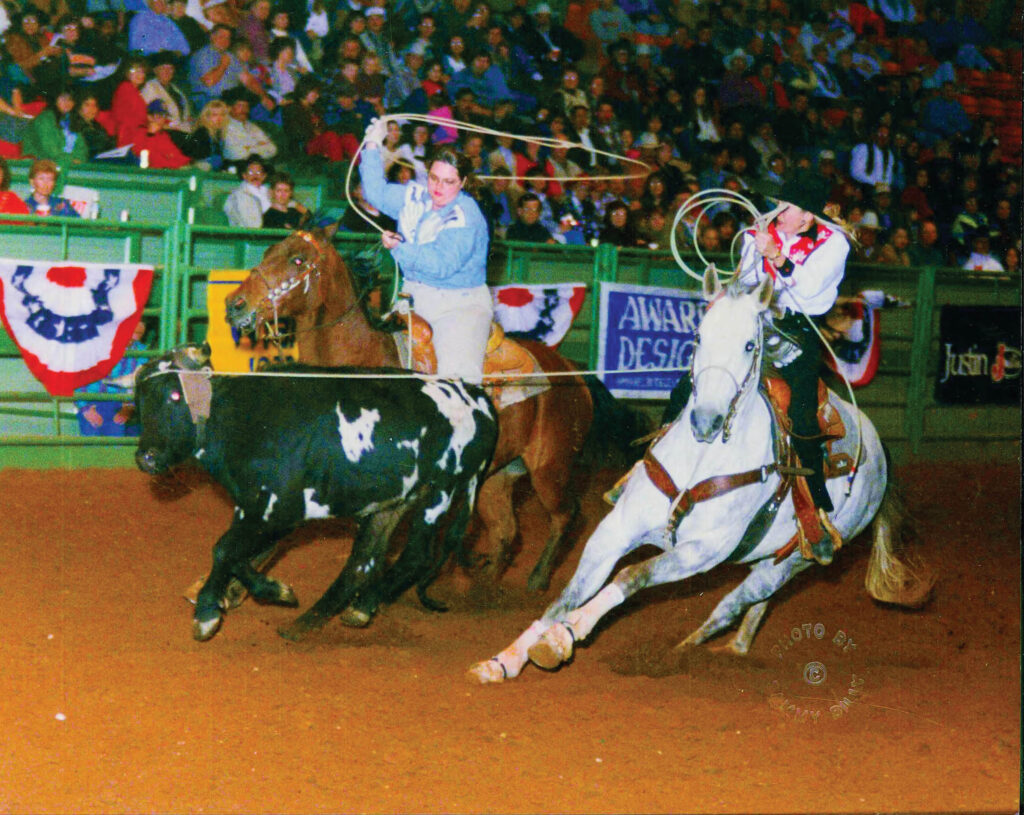
Then, in about 1989, when Minick and Garrison were volunteering at the 16-year-old Windy Ryon Memorial in Saginaw, they decided to add an All-Girl.
“I started asking everybody, ‘Is there some kind of mailing list or something with a printout of girls who rope?’” recalled Garrison. “But there was nothing, just the PWRA membership, and that was private.”
So, Garrison started walking up to girls she didn’t know and introducing herself.
“I’d ask them, ‘If we started having a roping in certain places, would you like to know about it?’” she recalled. “And they’d give me their contact information.”
Garrison and longtime WPRA roping director Patti McCutcheon worked to get team ropings sanctioned by the PWRA to entice the rodeo gals to come, too. There were only a few dozen teams at that first Windy Ryon All-Girl.
Then, in 1991, Debbie and Walt bought an arena southwest of Fort Worth and hosted more all-girl ropings, just as the USTRC was born. Momentum built at the Windy Ryon until the annual All-Girl every May was fielding some 300 teams despite the long score, typical dust and usual wind.
“I loved that roping,” said Barrie Smith, who came from Arizona. “Debbie and Pam did amazing with it. I actually won the Windy Ryon four times—three times with Jackie Crawford and once with Lari Dee [Guy].”
Then, in 1996, Nevada developer Perry DiLoreto and his daughter Teresa launched their million-dollar Reno Rodeo Invitational (RRI) the day after the BFI in June. They added the Ladies Only soon after.
“During the 11, we had a few females competing with the men,” said Teresa. “We just thought it would be super special to be able to give the ladies their own roping.”
It was go-once, just like the main event, and offered all three steers plus the popular consolation round. It paid $25,000 to win.
“We introduced the whole concept of high-dollar ropings,” said Perry.
That week in Nevada became such a mecca that all-girl ropings sprouted up in June along the route to and from Reno as far north as Wyoming.
LISTEN: The One and Only Pam Minick
The good ones
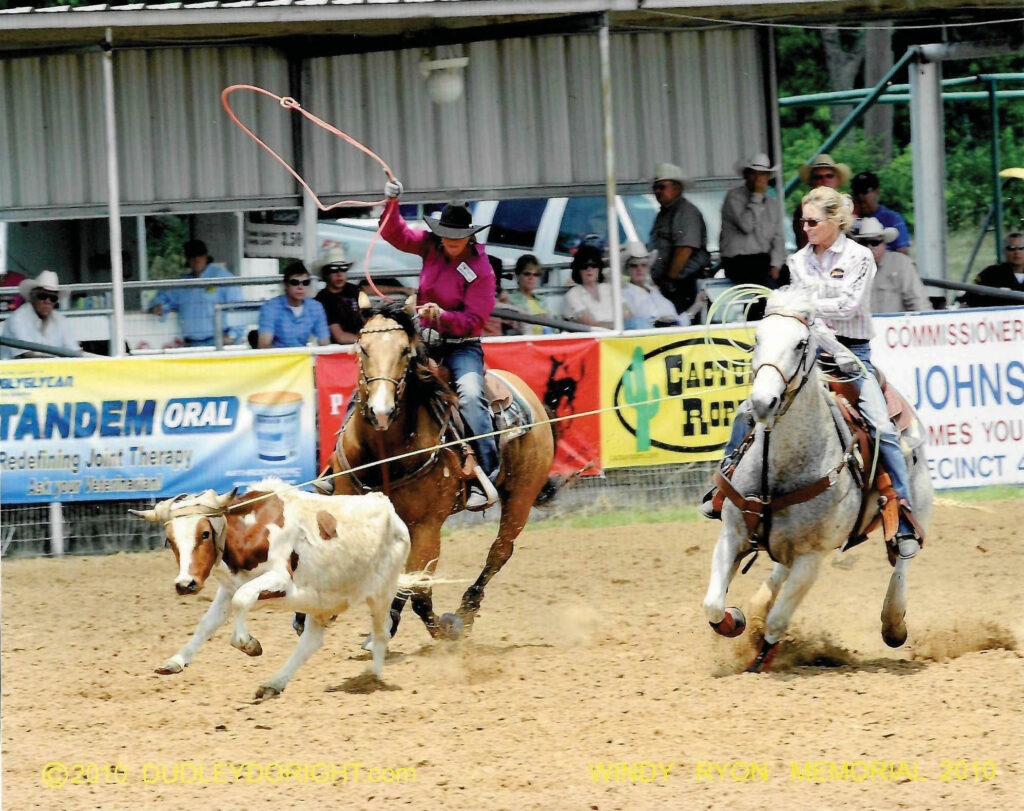
Then, in 1999, two things happened. Equibrand bought the USTRC, so the Bray family added an All-Girl to the national finals in Guthrie. And Billy Pipes kicked off his first Open to the World roping inside his Wildfire Arena in Salado.
Like its counterparts at the Windy Ryon and RRI, the Cruel Girl Championships in Guthrie became a bucket-list destination for any girl who headed or heeled. By 2014, it paid the winners $18,500, saddles and a new wardrobe.
“We lost money every year on it,” said Billie Bray. “There were four ropings we lost money on, but we had them because they grew the sport. The Open, because it’s what everybody strives to become; the All-Girl as a way to recognize the girls; the Century to pay tribute to the older ropers; and the Junior Looper, which is where the Smith boys started.”
Down in Salado, before Pipes’ second annual February shindig, Garrison implored him to have an All-Girl, assuring him she’d pitch in on the prizes and purse.
“He said, ‘Oh, Debbie, it won’t hardly get 30 teams,’” she recalled. “I said, ‘I think the girls will come. I’ll get you more teams than you’re getting in the Open.’”
Pipes mulled it over and said he’d go ahead and have it that morning before the Open so the guys could watch the cattle. Garrison put a flyer together and mailed it out. Girls came from as far away as Colorado, Florida and New Mexico—more than 150 teams.
“The Turnout Tavern over the arena in Salado was epic,” Garrison recalled. “Billy was like the Pied Piper with the girls. He upped our game and made it such a great event, paying well and giving prizes to everyone who made the short round.”
Jimmi Jo Montera never missed the long drive from Colorado for the great payout.
“It was one of the last true Opens for women,” Montera said. “It was one of the better ropings we ever had. It was just a ‘go rope’ jackpot with no points or brackets necessary.”
Bach, who moved to Texas in 2000, recalls the Windy Ryon and Wildfire as the biggest and most special all-girl ropings in the country. She won the Windy Ryon in 2005 with April Elison.
Everyone got on the bandwagon. All-Girls were added to Texas’ Original Finals and Spicer Gripp Memorial, Montana’s Wrangler Finals, Nevada’s ACTRA Finals and Alabama’s Perry Bigbee Memorial. Heck, Garrison even got the European Team Roping Finals to add one after she went to France to rope.
“There were five women competing with the guys and I told the producer I’d sponsor buckles for an All-Girl if he’d have it,” she recalled. “It became large.”
End of an era
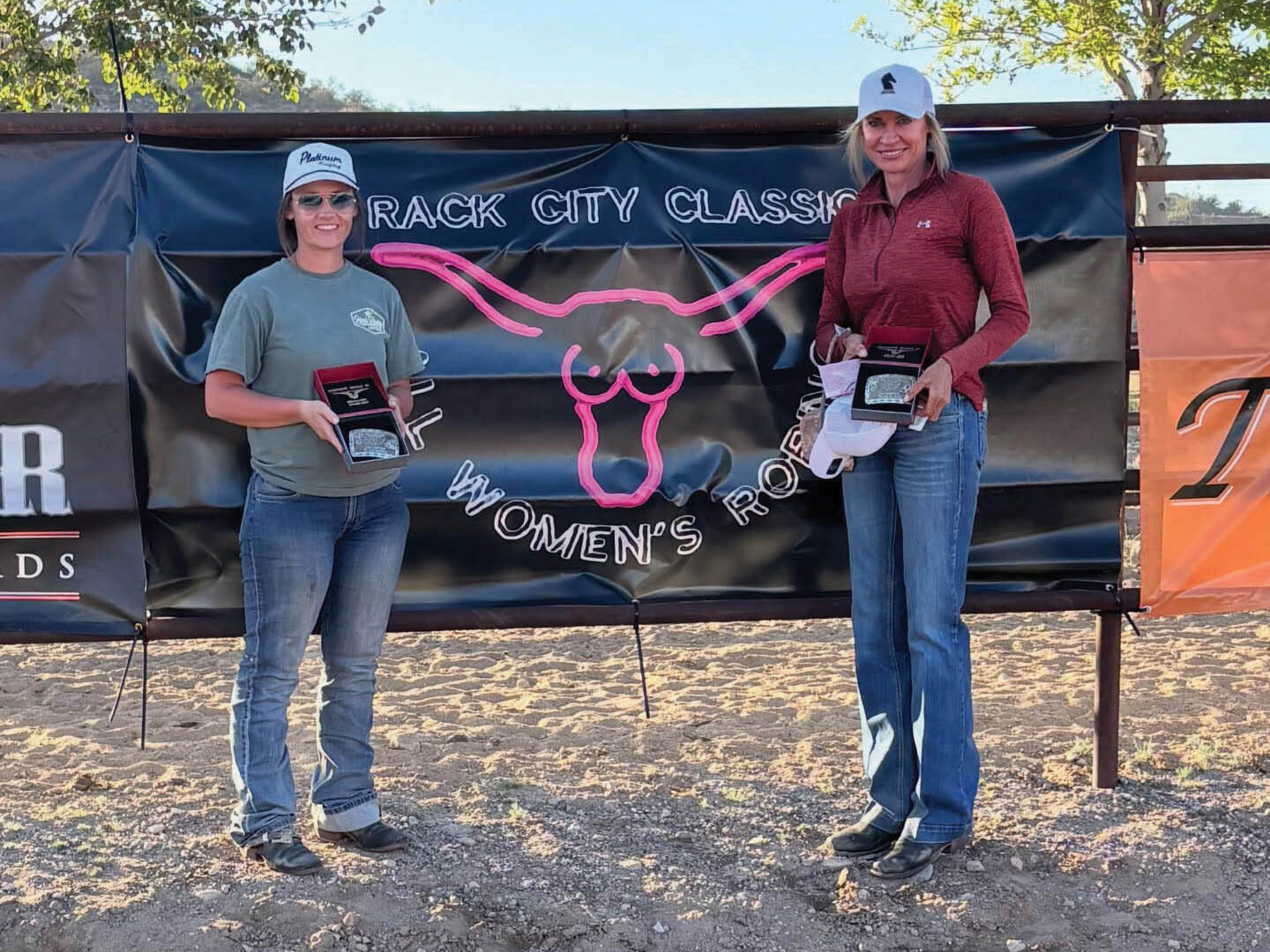
Whitney DeSalvo and Kaitlyn Torres started entering the Wildfire Ladies’ Open at barely 15 years old and became two of the best female heelers in the world. DeSalvo put $12,500 in her trophy Cactus purse for winning it in 2017.
“The ladies have always been so appreciative—win, lose or draw—of what we do,” Pipes told Kendra Santos that year. “It’s been so gratifying to see so many young women step up over the years.”
But about a decade ago, after a 20-year run, things changed. In 2016, the DiLoretos sold the RRI and Ladies Only. And in 2017, Pipes sold his arena and Equibrand sold the USTRC. Luckily for the gals, Equine Network continues to host the Cinch Ladies Open, and Ullman Peterson Events still hosts Reno’s former Ladies Only (both now at the Lazy E each spring), though both pay less than they did in the old days. And in Texas, female team counts dwindled until the Windy Ryon no longer has an All-Girl, nor does the Spicer Gripp.
“Over Memorial Day now, there are no less than 30 other ropings within a 100-mile radius,” said Minick. “It got to where girls could make a living roping, which is a really good thing. But it took away the incentive for those of us who’d compete once a month.”
Guy thinks it’s similar to what’s happened with junior rodeo—there are just so many more venues now with lucrative events. Girls can rope anywhere. And while more girls than ever rope, a small percentage of heelers still dominate All-Girls.
To alleviate that, producers began handicapping them. But that hurt team counts and payouts anyway. Megan Gunter, a 6 header, said the best female heelers have been partnered up “for a million years” and there wasn’t space to squeeze in, so she learned to heel.
“The all-girl ropings could never hit the magic mix,” said Denny Gentry, who offered Cowgirl Steer Stopping at his Riata Championships in 2024-25 but scrapped it this year when it didn’t grow. “No one wants to bang heads with Annette Stahl or Whitney DeSalvo, so it’s like the old days of the Open ropers. It’s a cat-and-mouse game.”
That game was the reason he started the USTRC. However, when All-Girl ropings are saddled with max numbers, the prestige fades away. So do fans. There’s a novelty to skilled cowgirls. Montera points out the Art of the Cowgirl features the World’s Greatest Horsewoman, but caps its team roping at a 9.5.
“I wish there were about five major events a year that could bring the pro women ropers together,” said Guy. “There’s prestige in the best women’s teams in the world roping against each other.”
WATCH: 2026 Cinch Ladies Open
The domination problem
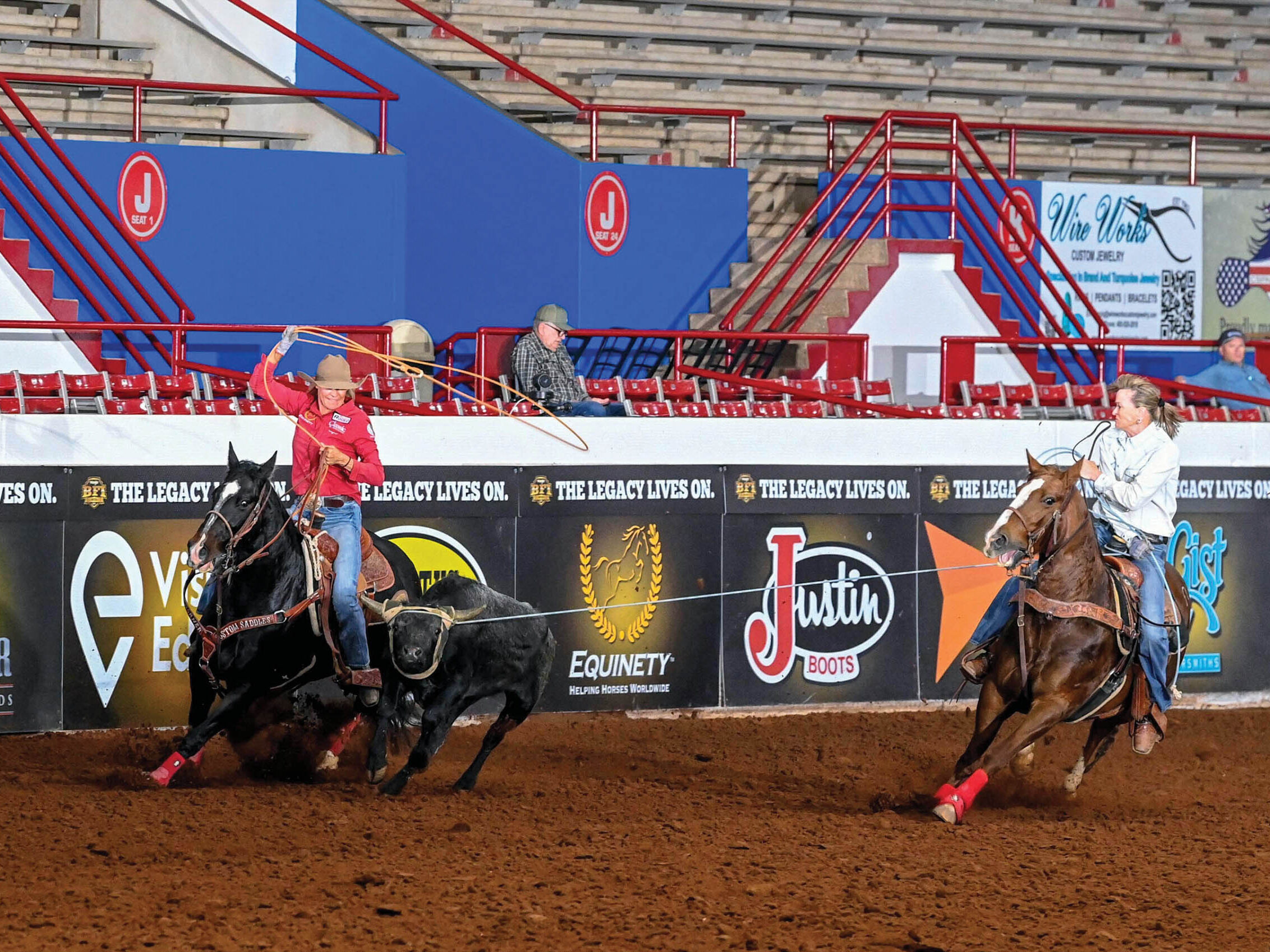
In 2023, Montera and Beverly Robbins finally won the Charlie 1 Horse at the BFI after entering since back in the Reno days when Robbins also entered the BFI. Daren and Kami Peterson have kept it Open, but introduced a pick-one-draw-one format and added a 9.5 Incentive. Everyone still wants to say they won the BFI. And now, girls driving across the country are excited about the prospect of drawing a DeSalvo or a Stahl or a Montera.
“Keeping it Open but adding the draw and incentive are so important,” said Mary Ann Miller, a two-time WPRA world champion header who hosts all-girl team ropings at her Phoenix home. “A lot of girls rope well but are unknown and unpartnered. A draw enables them to showcase their skills.”
Gunter actually won the BFI’s Charlie 1 Horse this spring with a draw partner. The Petersons offer a similar format during their All-Girl at the CoJo, the Cowgirl Gathering and Fallon’s Double Down. You can also find All-Girls at Johnny Johnson’s Big Daddy in Cheyenne and NTRL Finals in Jacksonville, as well as at the ACTRA Finals, Oil Capital Classic and Best of the West. Plus, the Priefert Ranch Open recently added one.
California’s Richest started as a breakaway roping, but recently added an All-Girl and fielded 300 teams. They’re giving a trailer this August to the high-money cowgirl entered in both breakaway and team roping. Meanwhile, adding qualifier points to all of them is Premier Women’s Rodeo (PWR), with two levels of competition based on Global Handicaps. In its sixth year at Cowtown Coliseum in May, its $183,000 added on each end made it the richest All-Girl in history.
Breathing new life
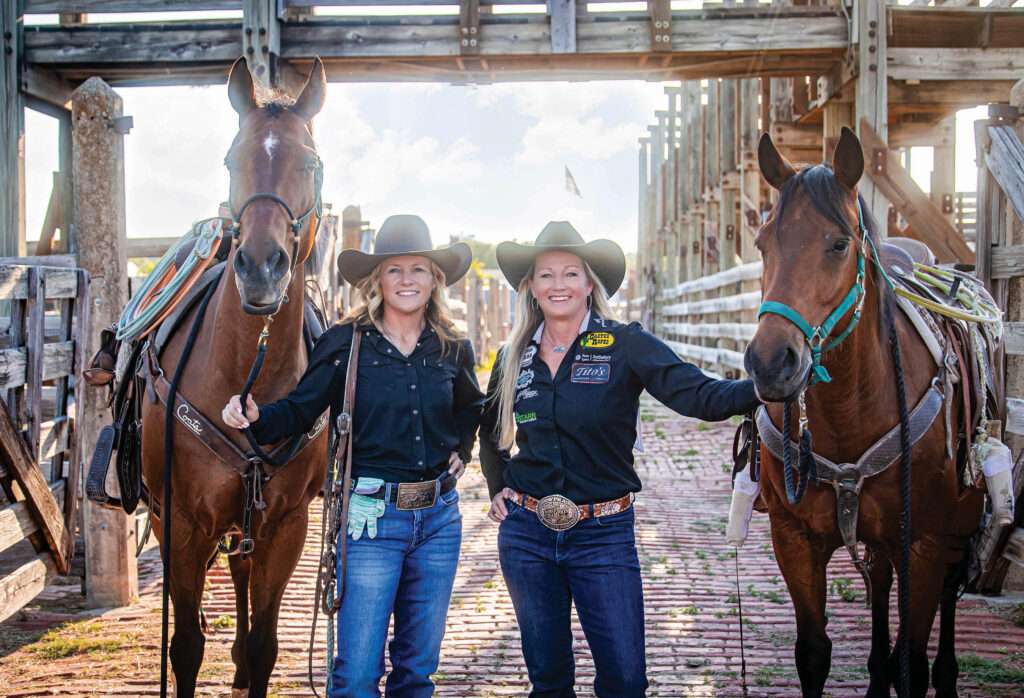
Tammy Lewis, who won $64,250 heeling at last year’s renamed PWR, wanted to educate lady ropers and help them get qualified in ’26. So, in March, she and Tammy White held their first-ever Rack City Classic at Lewis’ new place in Wickenburg, Arizona.
With a logo of a “rack” and tongues firmly in cheek, the pair of veteran ropers offered a short-round calcutta and provided free hot dogs all day. Miller, who four years ago talked Tito Beveridge into supporting female ropers, brought added money from Tito’s Handmade Vodka. The roping drew 300 teams and paid 14 holes plus an incentive.
“When we started our Qualifier Series team ropings, we’d get on average 100 runs,” said Sami Jo Smith, PWR’s director of operations. “This year at our 19 qualifiers, the average run count was 250.”
Gary McKinney had been watching a WCRA event when he decided women ropers were underserved. So, in 2020, his team launched the Women’s Rodeo World Championships—now owned by the PBR and renamed PWR.
“The PBR has huge plans for the growth of women’s rodeo,” said Smith. “A television show is coming, and we’re having a new made-for-TV roping in December at Cowtown Coliseum. With the help of the creative team at WWE, our goal is to make stars out of these girls and their horses. We’re bringing new eyeballs to women’s roping with broadcasts on Ion, the channel airing women’s pro basketball and hockey.”
PWR estimates the number of female ropers in this country at 85,000 to 95,000. These are women with more places than ever to team rope. So why all-girl competition?
“It’s a sisterhood,” said PWR Commissioner Linsay Rosser-Sumpter. “As women, we know the struggles we have in juggling the practice pen with our kids and our jobs. That’s a bond we all have.”
—TRJ—