


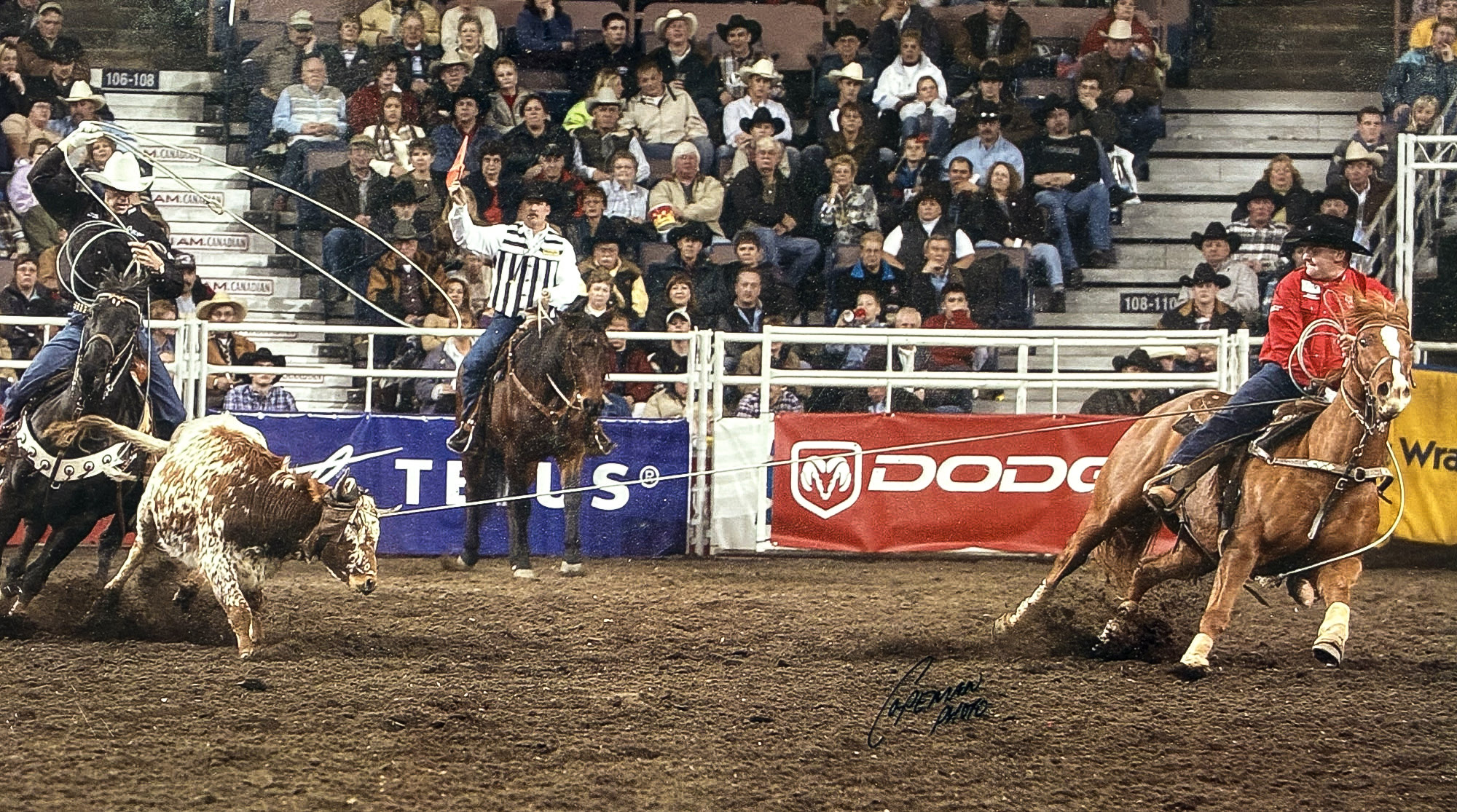
Fifty years ago, when he moved to Medicine Hat to run heavy equipment, George Schreiner spotted a poster on a wall advertising a team roping school. He decided to get himself a horse and try it out. Six months later, at a jackpot, he drew the instructor, and they won the saddles.
“That got me committed, eh?” explained Schreiner, who then taught both his sons, Kevin and Clint, to rope.
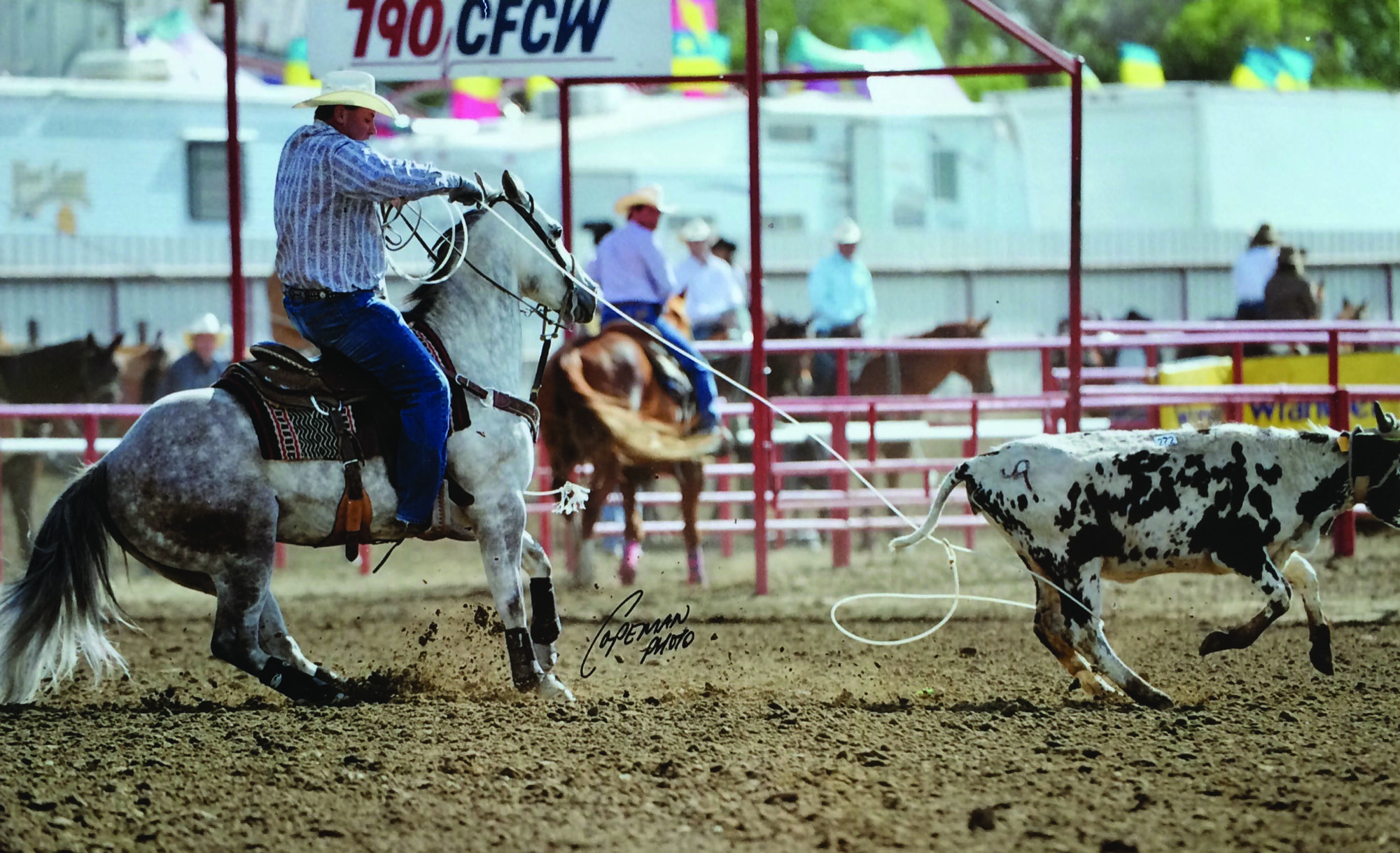
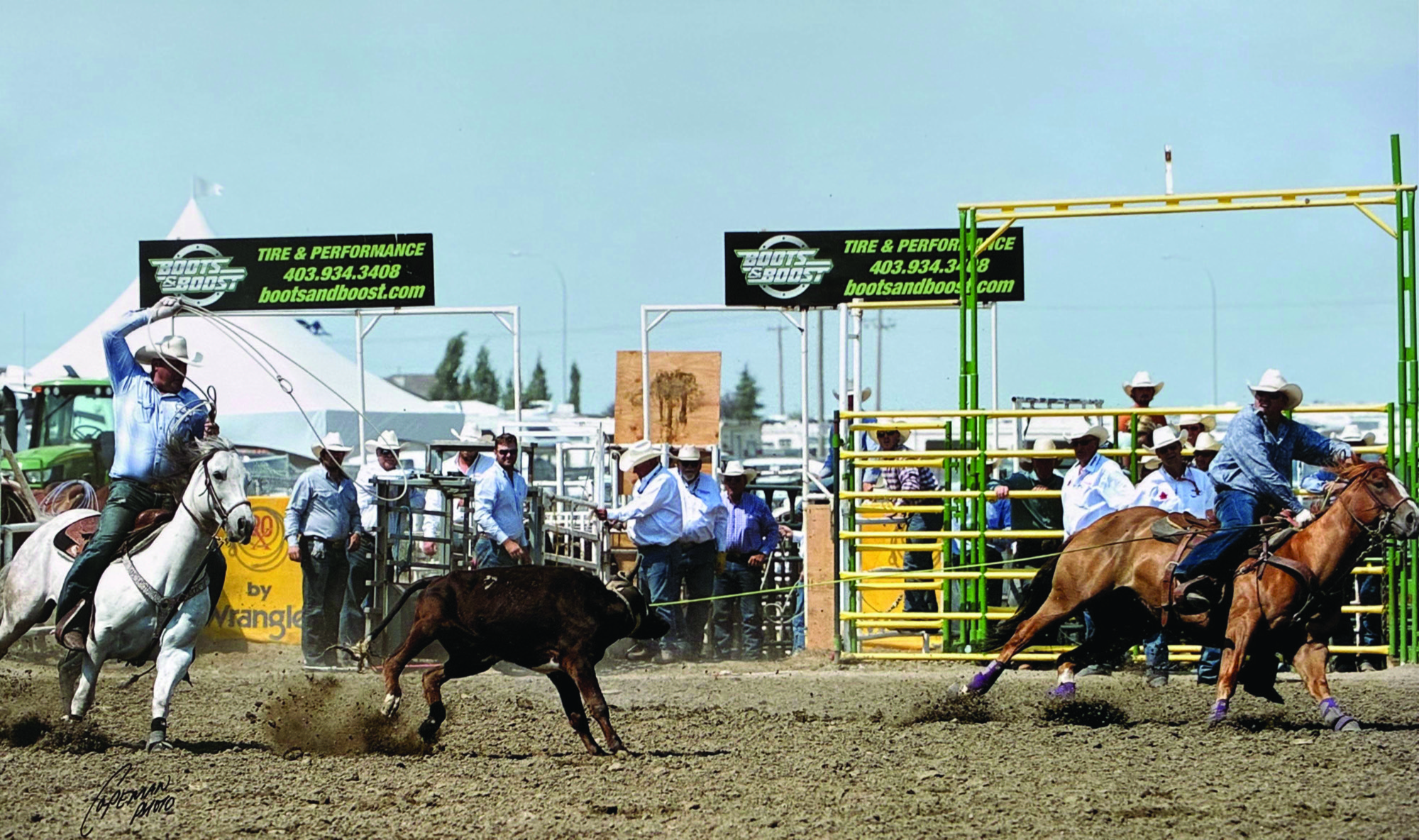
Kevin Schreiner has qualified for the Canadian Finals Rodeo 10 times—five years heading and five heeling. He’s the lone team roper who’s been a Canadian champion at both ends. Nobody else in the CPRA or PRCA has ever done that.
“He was one of the best headers in Canada,” said Montana’s Dustin Bird, a five-time NFR header and two-time Canadian champion. “Then he switched to heeling. Now he puts on a few ropings and raises kids who are phenomenal hockey players.”
Kevin Schreiner says the roping bug bit him very young.
“Rodeo Video didn’t make a VHS tape I didn’t watch,” said Schreiner, who’s always been called “Squig” thanks to his mom’s affinity for Laverne & Shirley when he was born. “That Winning Edge video by Jake and Clay? I wore out five or six of those tapes.”
He was entered in his first jackpot at 5 or 6 years old and won a saddle at a mixed roping when he was just 8 or 9.
“From then on, I was completely consumed,” he recalled. “I destroyed every single roping steer my father could get his hands on. My dad would bust his butt all day in the oil field and come out at 7:30 or 8 at night and I’d rope ’til dark every single day, then we’d get in the truck and compete all weekend.”
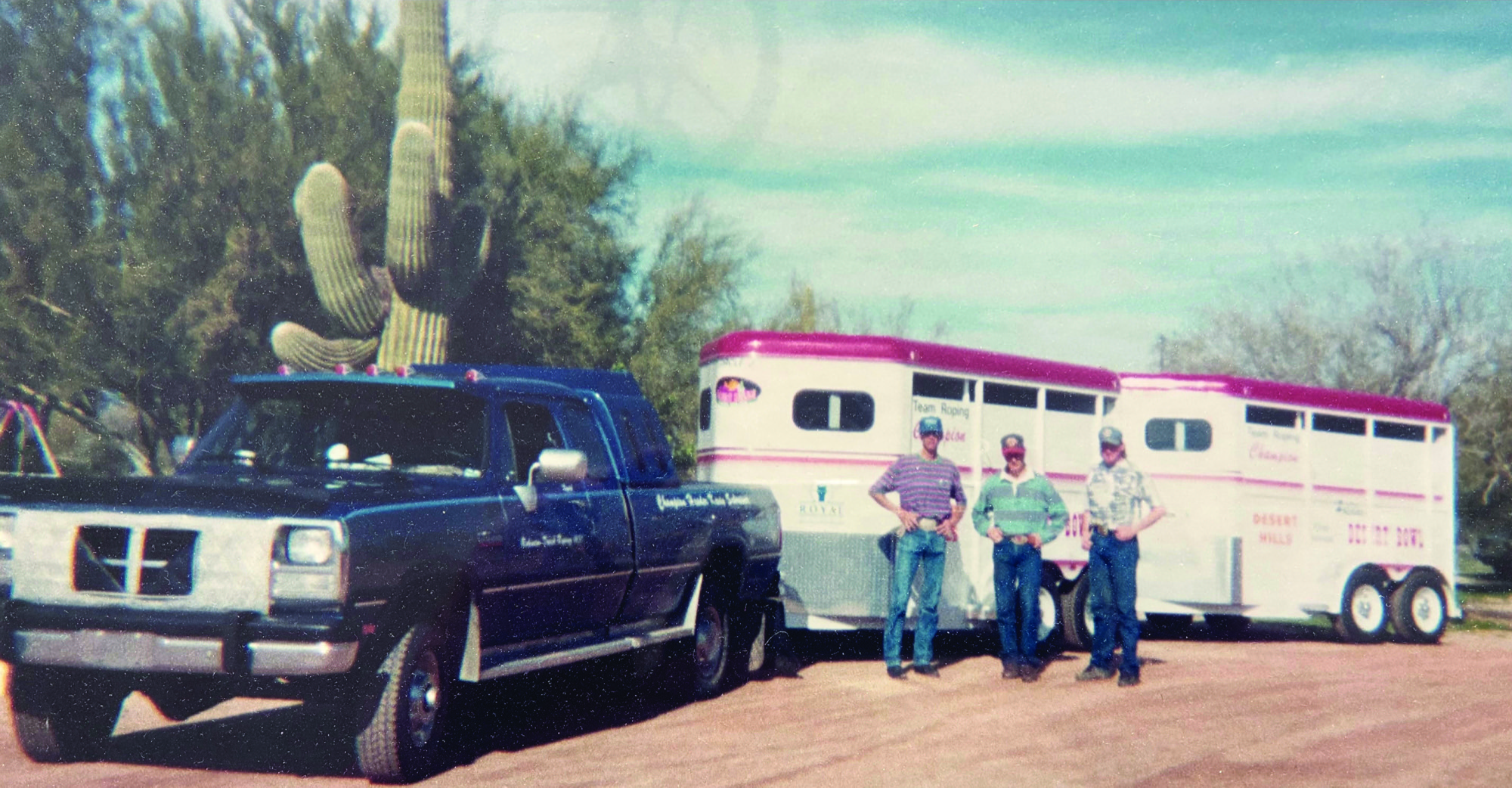
Schreiner made his first amateur finals rodeo at 13 years old in 1993—the same year he won a truck at a jackpot. His three partners at that jackpot? Canadian heeling legends Dwight Wigemyr, Rocky Dallyn and Dean Tuftin.
“I got to spend a lot of time with Dwight roping every day, and got to spend a couple seasons working for Rickey Green in Arizona,” said Schreiner, whose father had hosted Green for a clinic. “Other than my parents, they were huge influences. I was super lucky when I worked for Rickey. Daniel Green was roping with Allen Bach and they’d go through and stop and I’d get to practice with those guys. That was huge.”
Schreiner would rope with Rickey all day, then ride down the street to Dynamite Arena and rope through the jackpot steers for Ronnie Treat. Wet saddle blankets were a daily occurrence. The kid was still barely 15 when he and another Canadian teenager won trailers at a Booger Barter roping in Arizona. Kevin had to con someone into driving his trophy truck down from Canada to tow the new trailers home after welding an extra hitch.
“I got to rope at the US Finals that year with Rickey in the Open,” Schreiner recalled. “It was really cool that a guy like Rickey would even consider taking me there.”
Switching Ends
Schreiner had cut his teeth on amateur rodeos via the Canadian Cowboys Association, Chinook Rodeo Association and Foothills Cowboys Association. He began hitting about 100 of those a year with Cardston’s Riley Wilson.
Then, 1999 rolled around and team roping became legitimate enough for the CPRA. That was the year Schreiner and Wilson won more than any other Canadians at professional rodeos.
“When we started team roping at the CFR in 2000, the go-rounds paid $900 a man,” recalled Schreiner. “The other events paid $10,000 and had 10 qualifiers, while we had six teams. And we roped after the bull riding when the crowd was clearing out. It was kind of like the PRCA’s breakaway today. But it was all just to get in and be accepted. Now it’s good for the guys—CFR go-rounds paid $14,000 a man last year.”
Wilson and Schreiner went on to become back-to-back season leaders and qualified for five total CFRs together, winning the average at least once. But then bad luck hit.
“My good mare had hit herself at the BFI and got an infection that healed up,” Schreiner recalled. “I ran one practice steer on her before going to Red Lodge and Livingston one Fourth, and her leg snapped. I guess the infection had weakened the bone. Then I took off with my backup horse that had never been to a rodeo. We were winning the CPRA standings when he stifled himself at Walla Walla.”
At the time, Schreiner decided he’d just heel until he found another head horse. Then, a decade after becoming the CPRA’s winningest header, Schreiner won the 2009 Canadian heeling championship roping with the late Blair Stroh. In more recent years, he returned to the CFR to heel for guys like Travis Gallais and Jesse Popescul.
Giving Back
For 20 years, Kevin has owned Cactus Well Service, and he and his wife Kara have a 16-year-old daughter named Kody and a 13-year-old son named Blade, both of whom are destined for hockey superstardom.
Kevin and Kara bought World Series qualifiers from Ray Lane in 2016 and put ropings on until a few years ago, when they sold all except the two-day World Series at their home in late July. It’s held annually in conjunction with the PRCA/CPRA Medicine Hat Exhibition & Stampede. And it’s preceded by Schreiner’s annual No Bitch Roping.
“My dad and his friend started that in 1993,” said Kevin. “It was draw-three for $15 a man. Three kegs of beer were free and if you complained about anything, you forfeited your fees and got kicked out.”
The roping is such an event that Kevin can’t imagine not producing it, even after 33 years. The format today is an Open with a #12 Incentive and it’s pick-and-draw, go three times. A 3 roper has a chance to draw a pro and win Incentive money. The Schreiners annually get five figures of added money and pay six or seven holes. Last year, the Open paid $4,400 a man and the Incentive paid $4,000 a man.
“It’s such a tradition, and people just enjoy it,” said Kevin. “A good Open here gets about 60 teams. But we’ll get anywhere from 300 to 500 at the No Bitch. People come hoping to draw a Clay Smith or Jeremy Buhler, and that makes their day.”
CVS Controls plays a supporting role, like it does in all of Canadian roping, and local dealership Big M Ford brings a thousand cold beers out to distribute along with bottles of water, for free. When the roping is over, mid-afternoon, the amateurs settle in to listen to stories told by the pros they watch on TV.
George, 76 now, lent his head horse to a guy who placed second last year. And he has a favorite joke he lays on unsuspecting pros. He’ll pick someone out and walk up and say, “No, I banned you from coming back after last year.” And the roper, crestfallen, will ask why. George loves to say it’s because the person complained the free beer was too cold.
When George cleaned up the huge field they use for parking last year, he found only three pop cans and one beer can in the entire 20 acres. It demonstrates the respect ropers have for the Schreiners.
“We should have canceled it two years ago when it rained all night,” Kevin recalled. “I was about to call it off when Kolton Schmidt said, ‘This is the No Bitch Roping—we’re roping in the mud!’ I had 190 steers standing there, anyhow. I figured I might get 100 teams of diehards. We had 375 teams and it rained all day on us.”
Inspiring Legacies
It isn’t just an absolute love of roping passed along by the Schreiners, but a legacy of mentorship.
“Squig is a big part of the reason I rope,” said Steve MacIntyre, who grew up on a Saskatchewan farm but played hockey for 15 years, including stints for the NHL’s Panthers, Oilers and Penguins. He was a firefighter for years after retiring from hockey, then moved back to Canada to help his dad and ended up in Medicine Hat, where he met the Schreiners.
“I’d go to Kevin’s every day in summertime and if you wanted to rope, they’d rope,” said MacIntyre. “Their No Bitch roping is one of the biggest jackpots in all of Western Canada. It’s like Christmas—everyone goes, no matter what. The Schreiners are just tremendous people.”
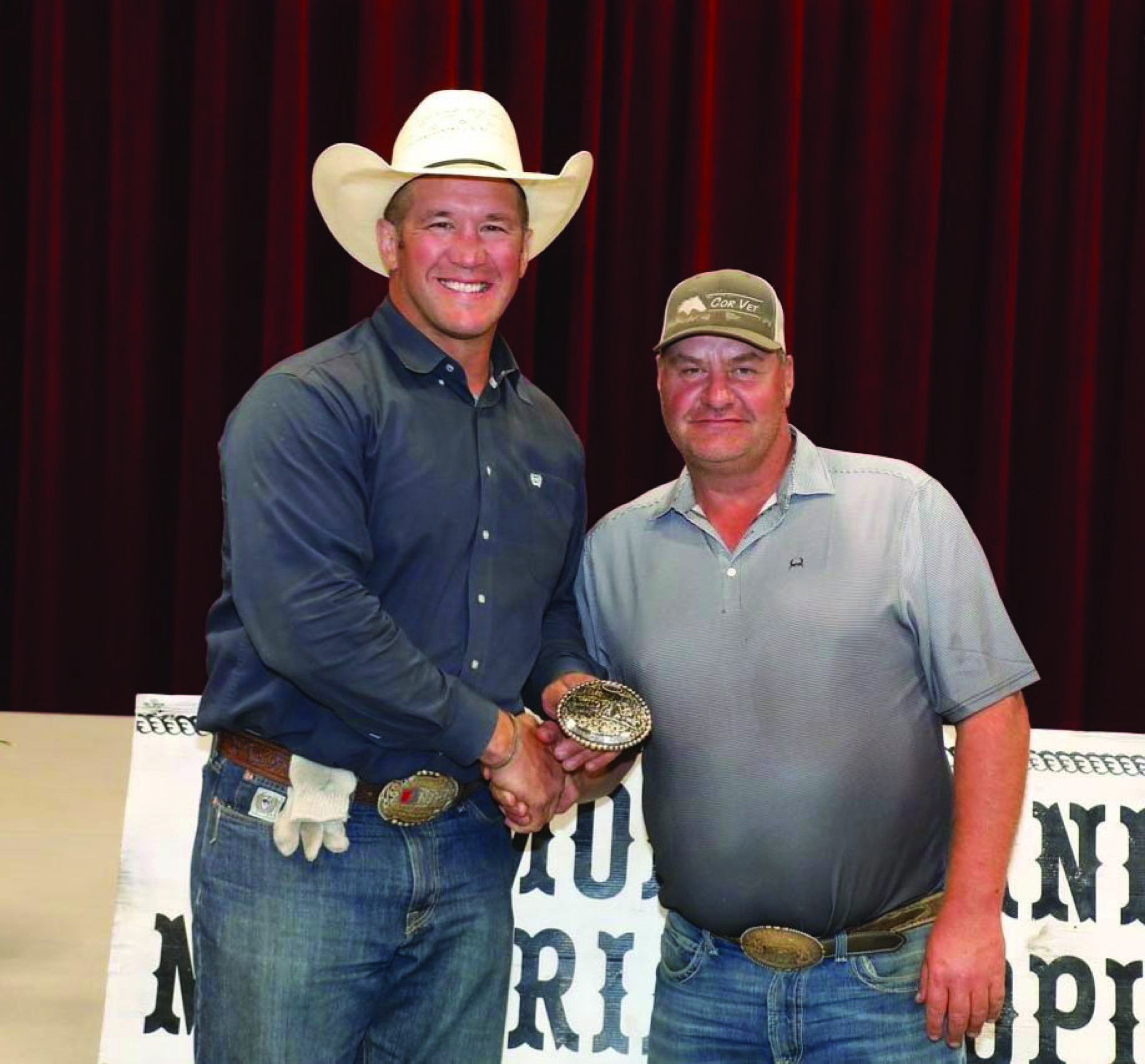
Another roping started by George became the biggest jackpot in Canada: the Memory Lane Memorial. Winners choose trophy buckles inscribed with the name of a member of the roping community who passed. He had to move the jackpot to the rodeo grounds, where it drew 850 teams and went into the wee hours. Then it expanded over multiple days, annually drawing 1,800 teams from all over Canada and Montana.
“We’ve given out 100 commemorative buckles by now,” said George, who turned it over to other producers a few years ago. “It was a lot of work, but at the end of the day, it was worth it. I always got a lot of sponsors to keep the fees real cheap. I did it for 13 years.”
What Counts
MacIntyre, in particular, relishes winning one Memory Lane jackpot that came with an emotional trophy.
“Rickey Green came up for a clinic once and I got to meet him,” said the NHL star. “He was in the heeling box when I rode in the heading box, and I was so intimidated. Here I am, 6-foot-5 and 265 pounds and had smashed and crashed hockey players in front of 20,000 people, but I’m nervous about roping a steer for Rickey Green! He was such a nice man.”
After Green passed away, MacIntyre won a Memorial roping and was able to take home the buckle with Green’s name on it.
“I get to wear that very proudly, all because of the Schreiners,” said MacIntyre. “They’ve worked their tails off to give so much back to team roping up here.”
It started with George, a first-generation roper who fed his kids’ obsession every chance he got. Today, Kevin is a Gold Card member at just 45 and says he’s “pretty well retired” from rodeoing.
He doesn’t even own a horse, choosing to heel on his daughter’s horse at select local jackpots. A bone spur on one hip gets painful if he runs too many now. But a good crowd still fires him up, and he doesn’t miss entering the Ponoka Stampede—one of his all-time favorite rodeos.
Squig is the first to admit that roping comes with no retirement package. And he said diesel in Canada at press time was running right at $9 a gallon. But with roping in your DNA, you fill the tank and figure it out later.
“If you love to rope, you’re going to live the best life ever. Every morning when I get up to go to work, I’m not happy with my life choices. But when I get to the rodeo, I’m sure happy.”
That attitude spills over into the people around the Schreiners. Bird says that what they’ve done to support other ropers generates a huge following.
“Kevin and his dad have big hearts and just love rodeo and roping,” he said.
In fact, they’ve not only put up their own entry fees for decades, but they get their community involved and give lifeblood to the true heart of the sport—camaraderie.
“It’s the friendships with people,” said George. “You meet so many people and become friends and that’s what it’s all about, eh?”
—TRJ—