


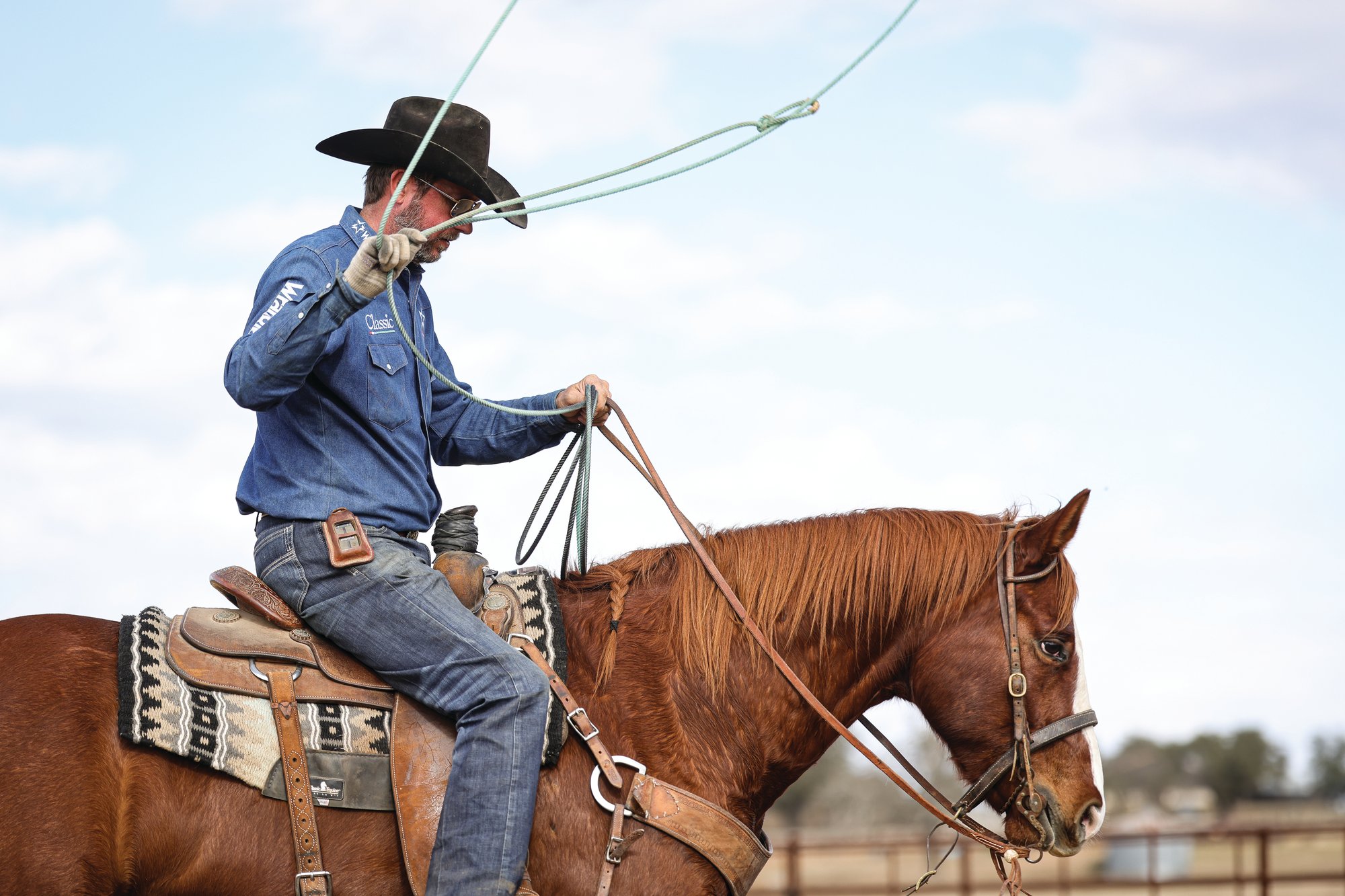
You’ve probably seen or heard of scoring lanes for practice sessions, which are designed to slow the exit of steers from the chute. This is not a new concept—ropers have been creating their own old-school ways to slow down steers for eons. But the simple zig-zag framework can come in handy in more ways than you think, according to rope-horse trainer and former NFR header Logan Olson.
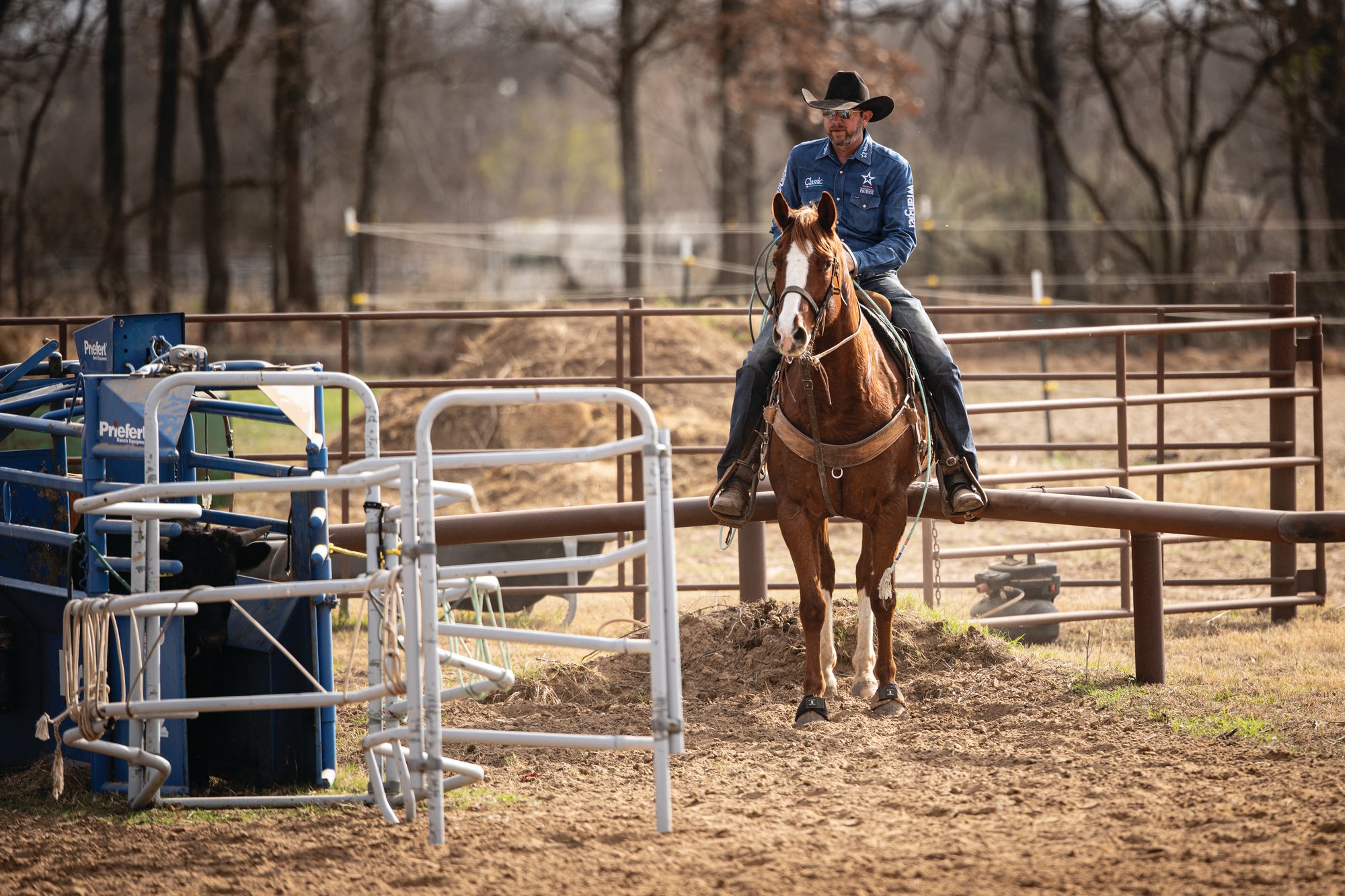
Olson, a South Dakota native who won Cheyenne with the late Broc Cresta 17 years ago and who spun steers at the 2005 NFR for Cody Hintz, cut his teeth team roping with Hall-of-Fame all-around hand Paul Tierney. They won the national circuit championship in team roping back in 2000 and Olson won several more Badlands Circuit Finals Rodeos.
Olson trained and won on several horses raised by his dad, combining the genes of the late Lone Drifter with racing blood on the bottom side, including two head horses ridden by Erich Rogers to the 2020 NFR average title and the 2021 win at The American. Now 45, Olson trains rope horses for a living in Stephenville, Texas, and swears by his scoring lane.
Save the Runs on a Finished Horse
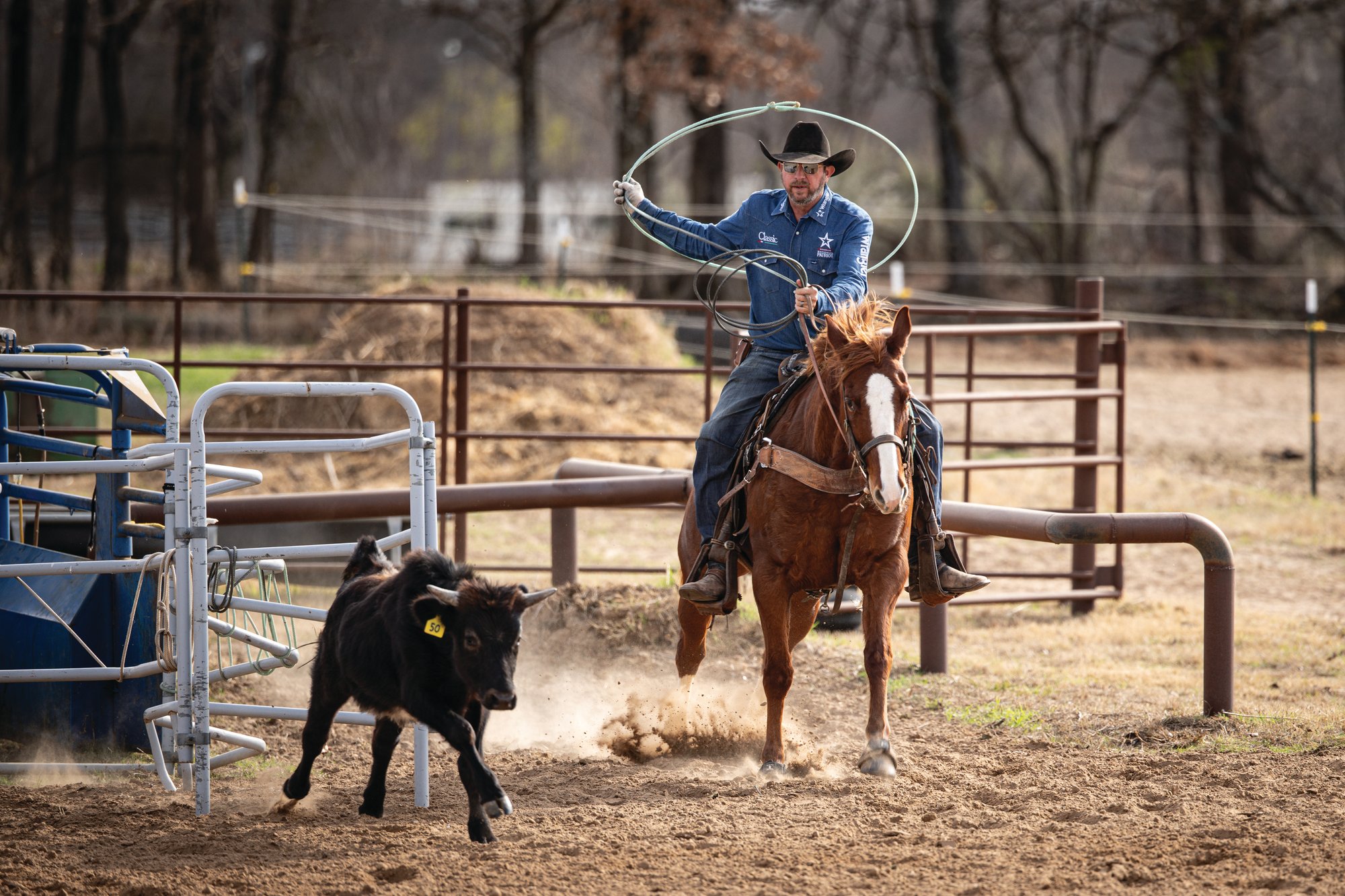
No one can argue that head horses are getting expensive. So, Olson thinks it pays to use a training aid that helps a good horse last longer. He actually uses it on his finished horses, too.
“Older, solid horses only have so many full-contact runs in them,” Olson explained. “Using a scoring lane with them allows for an easier practice session. I can slow-lope my good horse to the steer and it gives his mind a break.”
Instead of having to fire at full speed off the corner, a finished horse can ease through the box and still not have far to go to catch the steer. At the reins, you will have a little timing to figure out, but it still allows you and your horse to take a breath as the gates open. In fact, if you’re a lower-numbered header and have a horse that fires a little too hard off the corner, this is a way to soften up that departure.
Prevent Bad Decisions
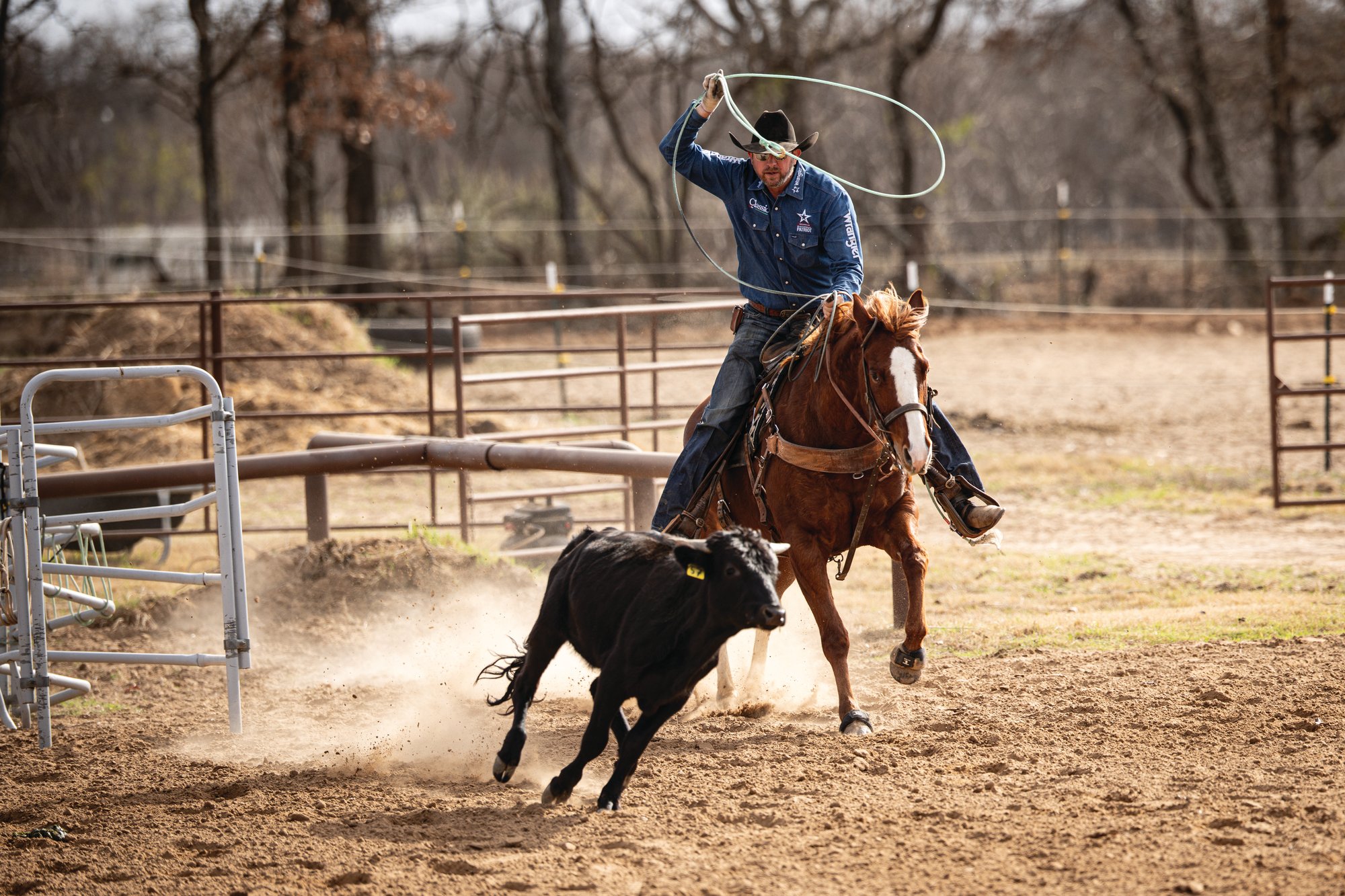
Even more benefits of a scoring lane are realized on young horses. Green head horses need to start out on slower cattle, but if all you have are the fresh kind, this is a way you can start making a horse without the added pressure of leaving the box so hard.
“A scoring lane allows you to control the pace of the run and therefore manage the pressure on your horse,” Olson said. “The other thing a lane does is make it easier not to make a poor decision on your green horse.”
Olson knows better than anyone how, on a colt, if you miss the start one time and ask for too much speed too soon, now you’ve just lost two or three months’ progress. Veteran trainers know how to address a problem before it appears.
In a nutshell, the use of a scoring lane during practice teaches your horse to focus on your own left hand and what the cow is actually doing – not the clang of the gates. Lots of horses black out when they leave the corner and don’t even see the steer, said Olson. He wants his horse to pay attention only to his hand and to the steer.
“My lane actually gets my horse watching the steer instead of the chute gates,” said Olson. “The biggest thing it teaches my horse, then, is to read the speed of the steer. I want my horse to run to the same spot no matter what speed the steer is traveling.”
Truly, the head horse that automatically adjusts its own speed to the speed of the steer is worth the big six-figure price tag. Olson, interviewed in January, points to the short-round team at the National Western in Denver that drew the trotter.
“It’s so hard to catch one when you blow up on a steer that hard,” said Olson.
Teach a Softer, Smarter Start
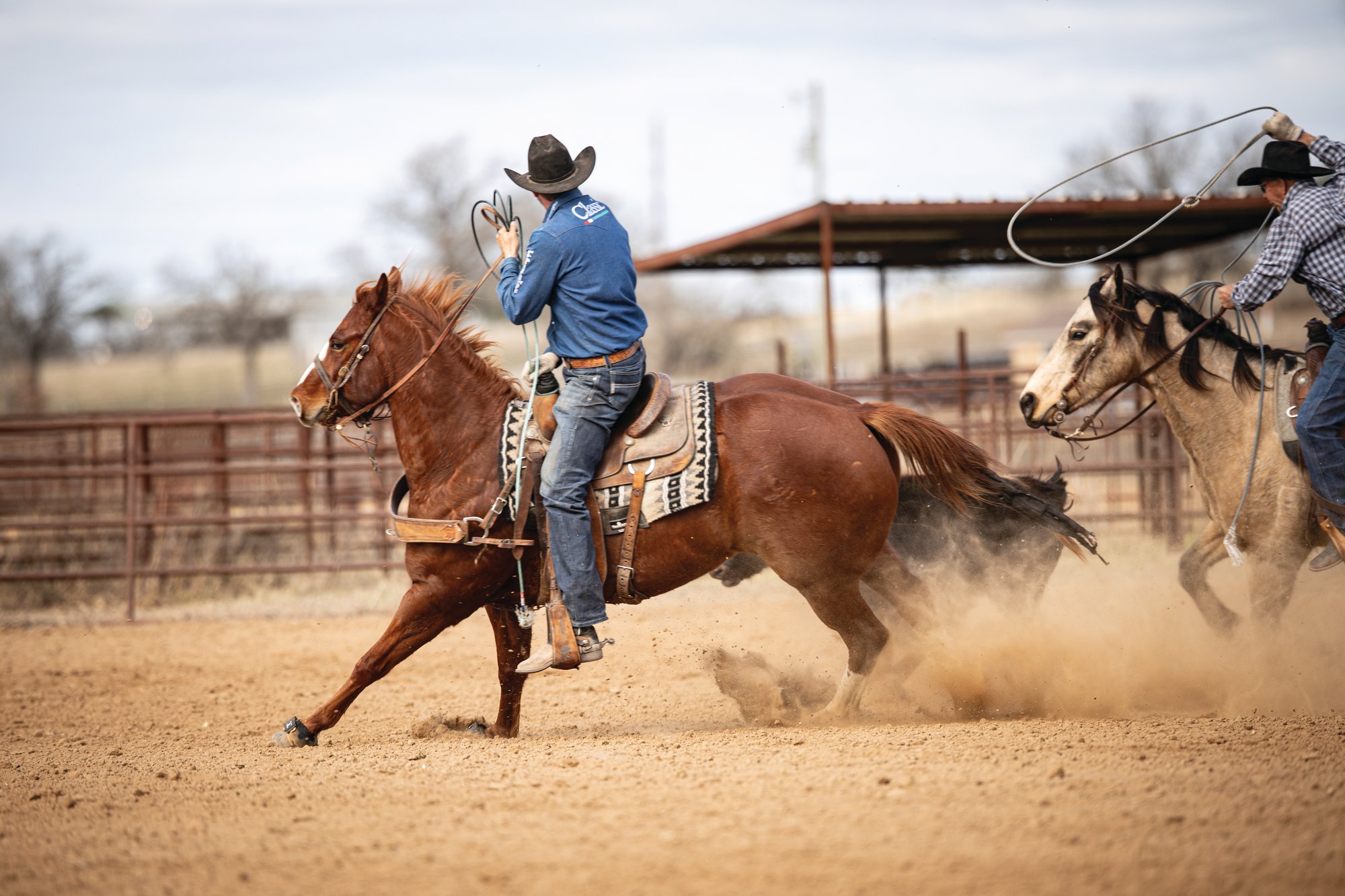
In addition to teaching a horse to adjust to the steer’s speed, a scoring lane can allow your horse to throttle according to your hand movements. And that really comes in handy behind a World Series barrier, Olson said.
Gone are the days when timing the steer’s progress on departure told you when to leave the corner. Now, the World Series start means you have to leave when the gates open—unless your steer stubs a toe or doesn’t take off immediately.
“I think a horse that leaves a little softer is more forgiving with a World Series start,” Olson said. “If for some reason your steer doesn’t start, you need to be able to pick up your horse to move his feet slower.”
One jackpot horse that has that down, Olson said, belongs to Arizona’s young Jace Thorstenson. Starting from the No. 9 ropings all the way to the Jr. BFI and Jr. NFR, Thorstenson won a truck and huge piles of money by the time he was 18—mostly heading aboard a dun horse that started softly.
A scoring lane allows you time to play with your cues for how to start your horse. To that same end, Olson also has a box with adjustable lengths. He’s able to train horses from a short box or long one, or even no corner at all.
“The goal is to have no pressure spot, at all, where you drop your hand,” he said. “Plus, standing in there with no back rail will teach you not to pull. Because if you pull, then your horse will go backward.”
The correct horsemanship when you nod, Olson says, is to actually hold your reins steady and not pull on them. After all, your horse is already at the back of the box.
“That way, my horses stand up on their own and watch the steer and listen to my hand,” said Olson, who notes that many horses want to squat or lean on the back of a box.
Between his adjustable box and Jasper Training Barriers, Olson can make the start to the run pressure-free on his green horses. Created by his South Dakota friend Jeff Jasper, the patent is pending on barrier wands that provide an easy, safe and consistent method to teach a horse to move through a physical barrier both directions—all without the mess of wires, bungees or a pull-rope. And without the need for anyone to help you.
How to Use a Scoring Lane
But, back to the scoring lane. If you decide to try using one, it takes a little experience to figure out when to start your horse. Olson suggests you simply keep your horse the same distance from the steer the entire time the steer is making its way through the lane. If your horse gets too close too early, just back off. It will only help the horse discover the correct distance until it understands to consistently run to the same spot in relation to the steer.
“The spot is the reward,” Olson said. “Once your horse gets to your preferred spot, take a few swings over the steer’s back and help him realize the pressure’s off.”
Then, you can build off that. Using a scoring lane, as your horse gains confidence in knowing where to rate the steer, you can begin to wait longer before starting your horse. That will increase the distance to the steer and require the horse to run harder to get there. It’s all a progression—and a painstaking one, which is the reason for the hefty pricetag on head horses.
—TRJ—
Put This Into Practice on Roping.com
Get step-by-step coaching from the best in the business with hundreds of team roping training videos.
WATCH ON ROPING.COM →