


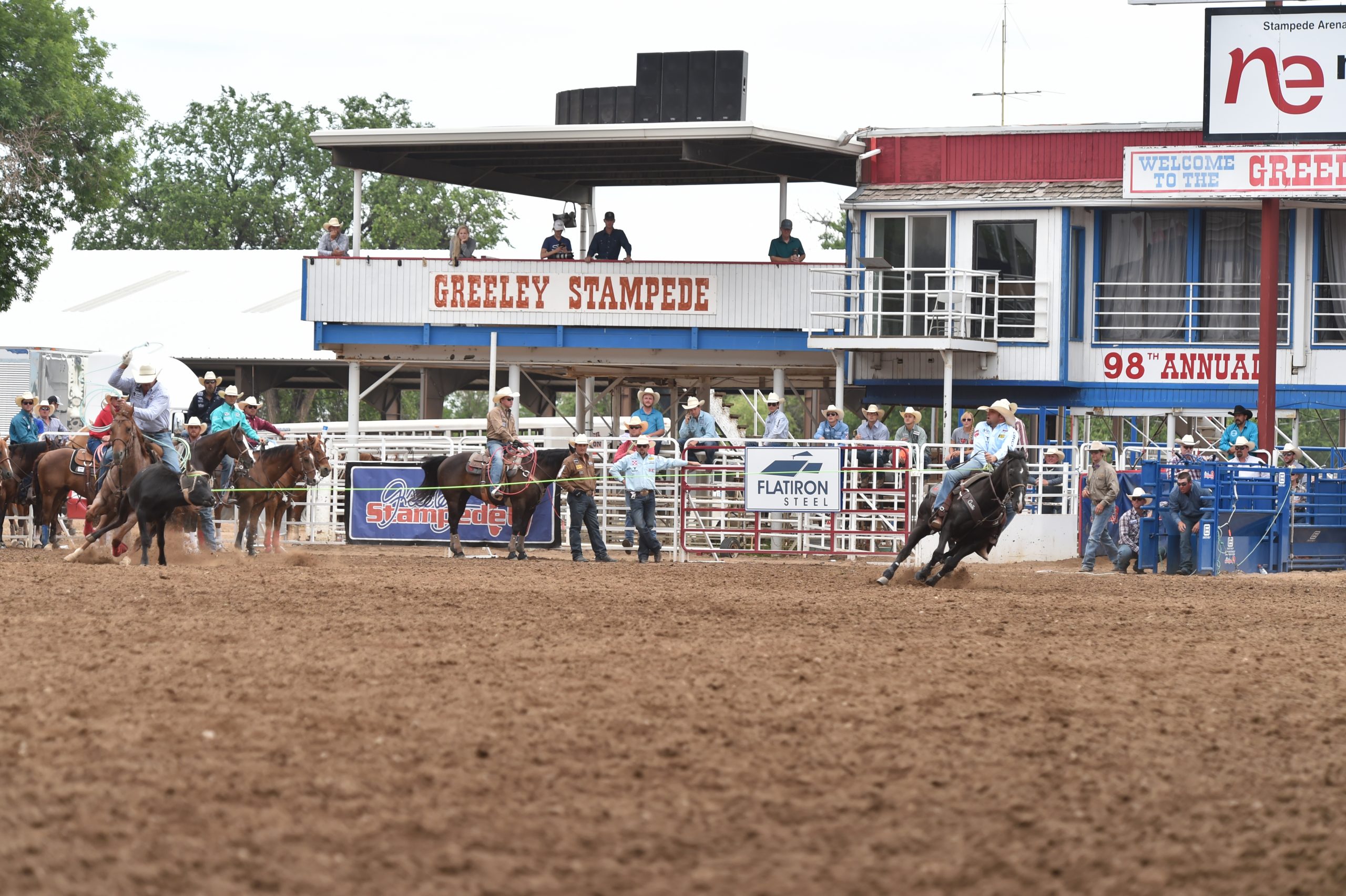
Dummy work
You’ve got to rope the dummy flat-footed—a lot. Lots of people can reach when they lean forward and step, but you can’t do that horseback.
[READ MORE: Before You Can Reach with Ty “Blaster” Blasingame]
Using your horse
Some people assume reaching means forgetting about using your horse. But keeping your horse working is one of the biggest parts of reaching. When I’m practicing, I might reach, but I focus on keeping my horse moving forward. I keep kicking, I keep my body square and I push my horse forward so he keeps running. Shoot, sometimes I even miss on purpose. I want my horse listening to my hands and my feet and not my throw. If I reach, I usually won’t even turn my horse off.
[LISTEN: The Score Season 2, Episode 6: Ty “Blaster” Blasingame]
[LISTEN: The Short Score: March 19 with Ty Blasingame]
Open swing
You need to keep more of an open swing so you have the coverage. You see a lot of people split the horns or miss because they don’t have their swing opened up. They’re swinging tight. I take a big swing like a hula hoop on my last swing. You can’t throw a football or baseball very far right next to your face. I get to swinging fast a little tighter, and on my last swing I make sure I open it up and take one big swing.
[READ MORE: Reading Cattle with Ty Blasingame]
Body position
You can’t lean when you’re reaching. That takes away all of your momentum and all of your horse control. My goal is to be sitting up in my saddle, with my chest pointed toward the steer, but with my feet under me and my body centered.
[READ MORE: Blasingame Poised to Compete for 2019 Gold Buckle Thanks to New Mount]
[READ MORE: Buckle Up with Ty Blasingame]
Hands, heelers, horse
Keeping your horse running through your reach protects your hands, it helps your heelers and, ultimately, it saves your horse. If your horse is already turning when you’re throwing, you won’t have an easy time getting your dally, handling the steer or keeping your horse sound. If your horse doesn’t stay running forward when you reach and drops his shoulders, you’re going to get some burns and nicks—or worse. Your heeler will have trouble heeling behind you when your horse drops his shoulders, and your horse will have a really hard time staying sound working that way.
[READ MORE: Blasingame and Borrego Win RNCFR]