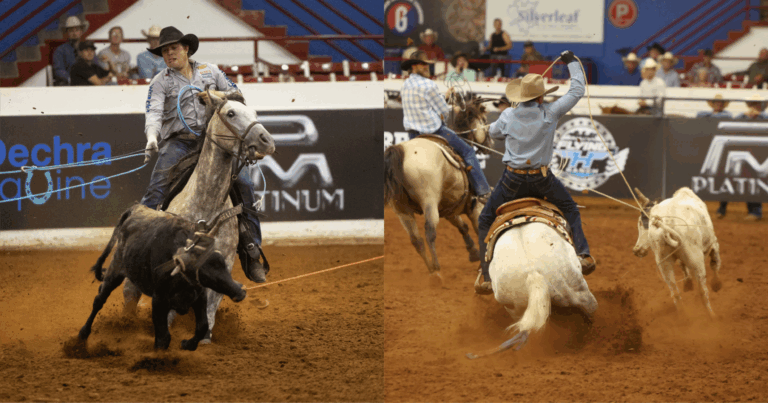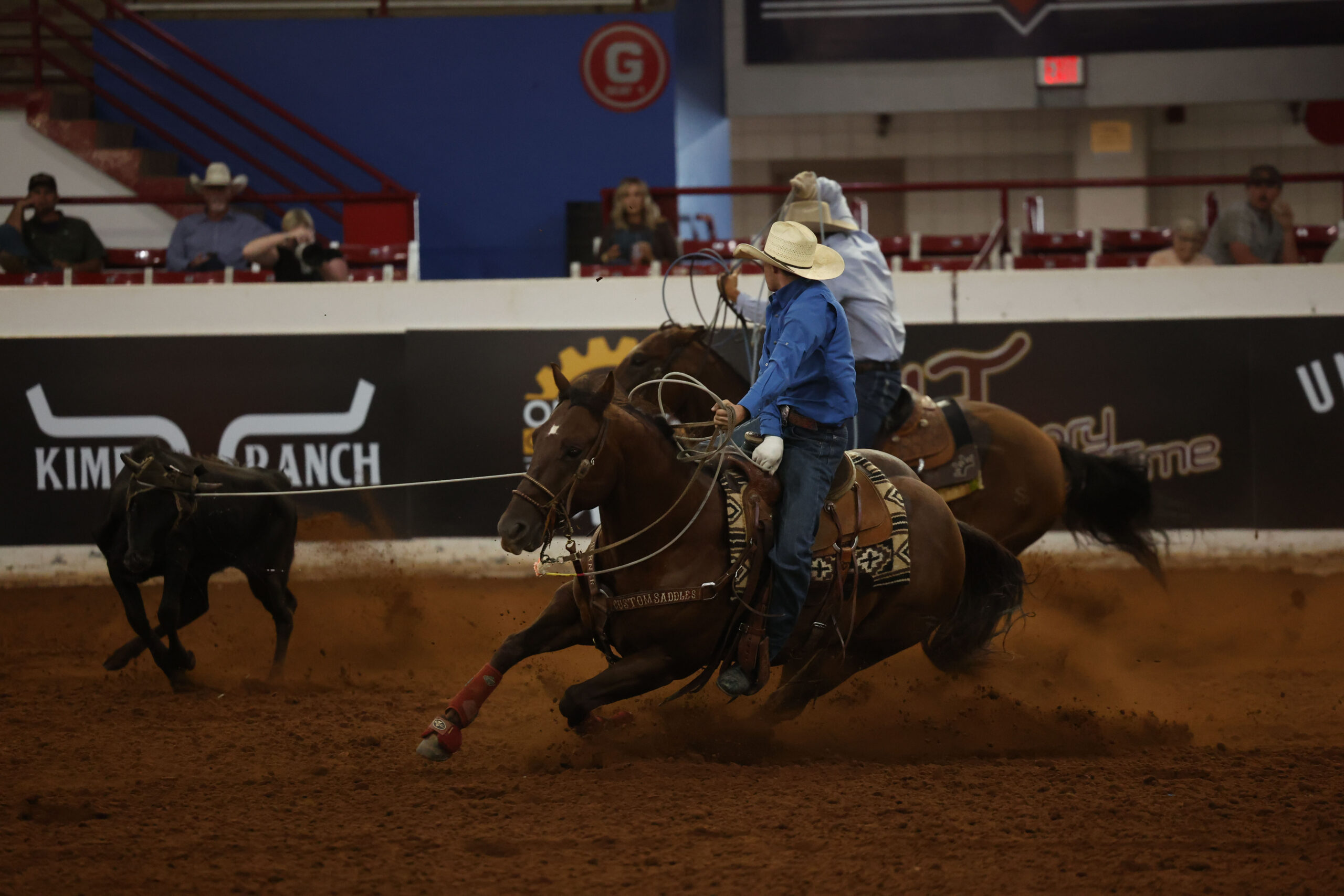
For decades, team roping has quietly become one of the richest disciplines in the Western performance industry—and now the National Rope Horse Rewards Program is set to amplify that impact across the horse industry and pay ropers BIG along the way.
From small-town jackpots to the Ariat World Series of Team Roping Finale, tens of millions of dollars move through the sport annually. Industry estimates place total prize money somewhere north of $110 million per year running through ropings using the Global Events Management Software (GEMS) alone.
Historically, that money has followed the rider, not the horse.
Enter the National Rope Horse Rewards Program
In horse racing, every purse dollar becomes part of a permanent record. In cutting and reining, earnings populate databases, sale catalogs and breeding decisions. In team roping, most of that money disappears once the payout envelope is handed over.
The National Rope Horse Rewards Program—a partnership between the Riata Stallion Incentive, the American Quarter Horse Association and Equine Network’s GEMS-operated events, including the Ariat World Series of Team Roping and USTRC—aims to change that.
Instead of earnings vanishing into individual rider histories, the program creates a system where performance can be connected back to the horse itself.
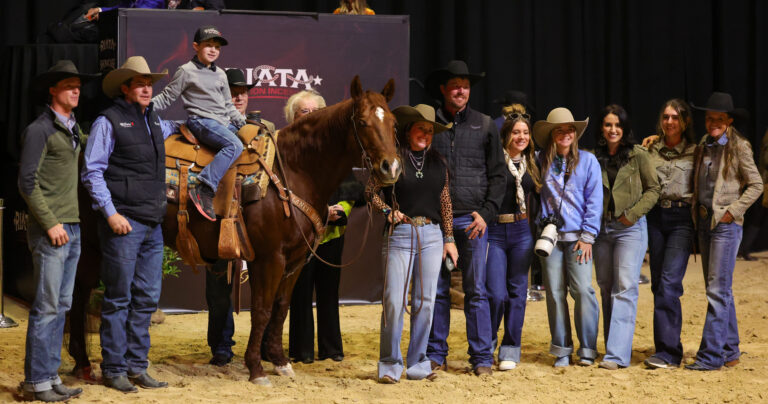
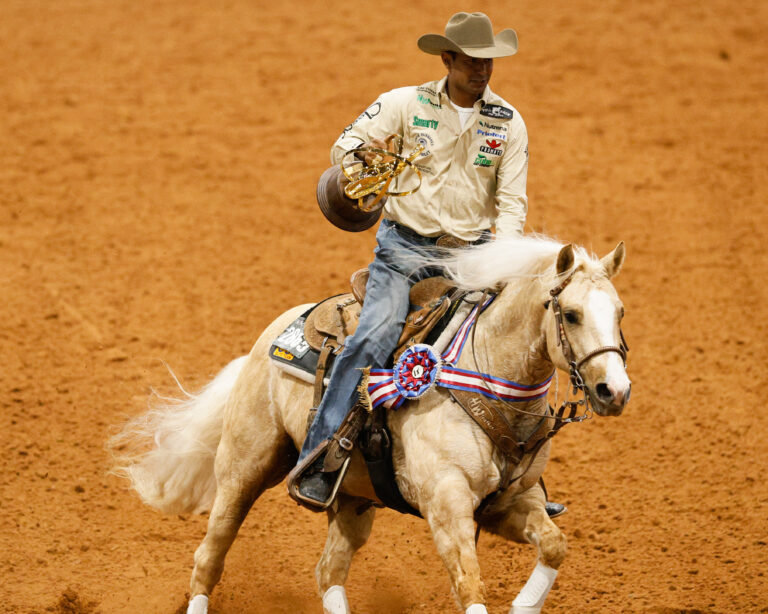
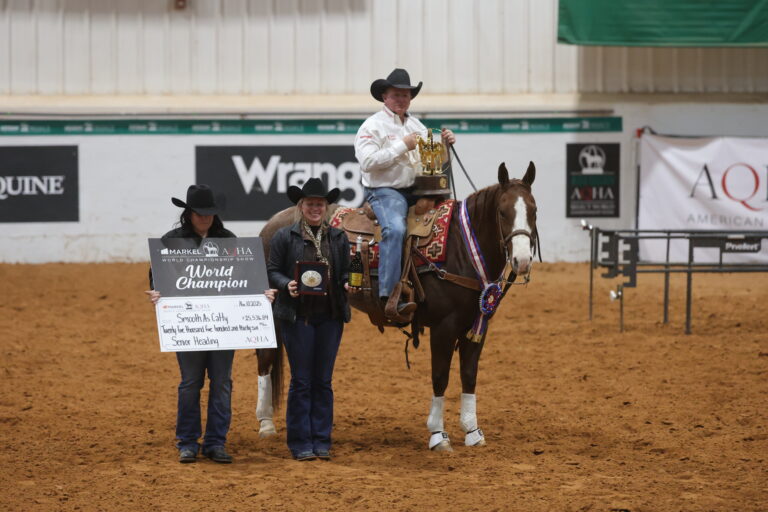
[The National Rope Horse Rewards Program’s First Winners]
Why AQHA Is Leaning In
“For years and years, AQHA was able to track earnings at AQHA-approved shows,” said outgoing AQHA President Jeff Tebow. “But team roping grew outside of that structure. We weren’t really tracking the horse.”
Incoming AQHA President Jim Brinkman agrees.
“The team ropers and rodeo horses are probably the largest untracked discipline of all the horses that the American Quarter Horse tracks,” Brinkman said. “And those horses win a lot of money. I think there’s more prize money in the roping world than any other discipline other than racing—and we do not track that.”
For breeders, that absence of information has had real financial consequences.
“Our breeders need that on those pedigrees,” Brinkman said. “If your stallion’s offspring are winning, his value improves. If your mare won something, that gives her produce record weight. Without the data, how are you going to know?”
Brinkman also sees the program correcting a historical gap that affected generations of ropers.
“It always has bothered me that the old rodeo hands would spend their whole lives doing all that, they’d retire, and their job is over and they don’t have much,” Brinkman said. “If they would have had the records on those horses—if you were an NFR guy and you rode a mare for six NFRs—you could retire on what her colts could produce. There was no data, so many of those guys could have been investing in the future if they could have got the data and put it on their horses.”
What the National Rope Horse Rewards Program Actually Does
Ropers can enter registered AQHA horses for $300 per year. Once entered, every time that roper/horse combination earns an aggregate check at ANY qualifying GEMS-operated roping—including World Series of Team Roping and USTRC events—that roper/horse earns an entry into a monthly cash drawing.
Each month, approximately $25,000 is paid out across roughly 20 winners. There are three levels of payout opportunity. If the roper is the owner of record and if nominated in the Riata Stallion Incentive program, those roper/horse combinations become eligible for larger payments.
Every drawing entry also carries larger implications. Monthly winners earn priority entry into the Rope Horse Rewards Championships, held during Rope Horse Rewards Day at the Ariat World Series of Team Roping Finale in Las Vegas’s South Point Arena in December.
Those Finale championship ropings will be held in three divisions—the #13.5, #11.5 and #9.5—with each paying up to $200,000 to the winning team ($150,000 guaranteed with a $25,000 bonus to each of the champions if riding a Riata). The six total champions will also earn the opportunity to spin for a custom Laredo Conversion Truck.
Riata Horses vs. The Broader Field
The National Rope Horse Rewards Program is open to any registered AQHA rope horse. Entry costs $300 per roper/horse combination per year, regardless of breeding.
So Why Is Riata Involved at All?
Riata horses—those nominated through the Riata Stallion Incentive—receive enhanced payouts within the program. In the monthly drawings, a standard enrolled horse earns $1,000 if drawn. A horse ridden by a roper who is the owner of record earns $1,250. A Riata-nominated horse earns $1,500.
That differential is intentional. Riata was built as a breeder-driven incentive program. Its purpose is to reward stallion owners, mare owners and the offspring of nominated sires by attaching added money to performance. In a short span, Riata-backed events have paid millions of dollars, proving that targeted incentives can influence breeding decisions and buying behavior.
The National Rope Horse Rewards Program expands that concept beyond Riata while still preserving Riata’s value.
“We’re trying to create a system that benefits the entire rope horse industry,” Denny Gentry said. “But if you’re riding a Riata horse, you’re going to have an advantage.”
That advantage shows up in larger monthly payouts and, over time, in market positioning. When earnings are tracked and attached to pedigrees, nominated horses have documented performance history tied to a specific incentive structure. That adds clarity for buyers and leverage for breeders.
For a roper deciding what to ride, the math becomes straightforward. A non-nominated AQHA horse can participate and build record. A Riata horse can do the same—while accessing enhanced payout tiers within the same system.
The program is designed to elevate the entire field while rewarding those already invested in incentive-backed breeding.
In short: all AQHA horses can play. Riata horses play with an edge.
From Invisible Earnings to Permanent Records
“That’s what people want,” Tebow said. “They want the data. They want to know what that horse did, what its offspring did, and how those crosses worked.”
“We’re going to find that there are definite phenotypes and lines that lend themselves to where one is more of a heel horse, one is more of a head horse,” Brinkman said. “Without the data, we can’t know.”
“Right now, the roping world goes kind of blind,” Brinkman said. “You just go buy one and try it. Your percentages go up when you can check records and see what lines work and where they fit best.”
The Bigger Picture
“If we have the data, we can justify that to our corporate sponsors,” Brinkman said. “We can show them the reach of the rope horse industry. We can show them the scope. For a long time, we were kind of the cowboys playing in the sandbox. But there’s real money here now.”
For a single horse/roper entry, competitors can continue roping their normal schedule while building a documented performance history that follows the horse long after its competitive career ends. This project cannot work without ropers, and ropers will always play if the rewards are right. Nobody is talking about the potential yet, but certainly as the program gains momentum, ropers will see growing rewards.
$500,000 in New Money—And Why That Number Matters
The National Rope Horse Rewards Program represents $300,000 in new cash money entering the team roping ecosystem in 2026, plus another $200,000 in incentives and prizes for the qualification roping resulting from the giveaway.
From January through November, approximately $25,000 per month will be distributed through cash drawings tied to enrolled horses earning aggregate checks at qualifying GEMS-operated events. That totals $300,000 in added money to ropers who have already won money at jackpots.
This is not redistributed entry money. It is new incentive-driven capital attached specifically to horse enrollment and documented performance.
Industry leaders view this as a foundational step, not a ceiling.
As earnings begin attaching directly to registered horses, the sport gains measurable scale. Verified participation numbers, documented payout totals and trackable performance data create transparency—and transparency is what corporate sponsors require before committing meaningful dollars.
“If we have the data, we can show the scope,” Jim Brinkman said. “There is real money here.”
Team roping already moves well over $100 million annually through jackpots, opens and championships. The National Rope Horse Rewards Program does not create that money —it organizes it. And organized markets attract investment. The MONEY is the starting point. The long-term potential lies in what documented scale can unlock.