


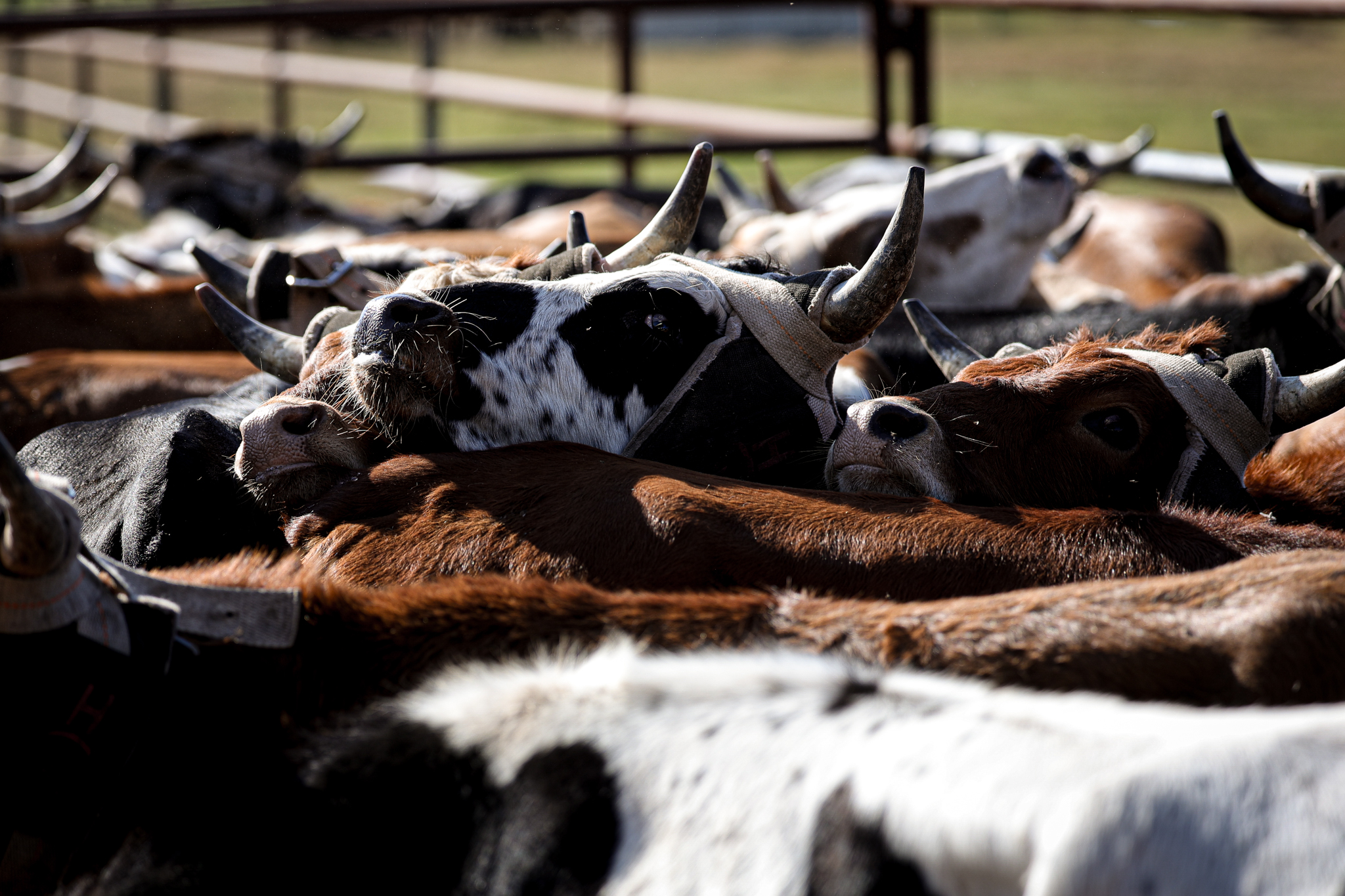
The NFR team roping cattle will look different this December, in two ways.
The finals will run 20 additional head—80 in all, enough for four full pens—so that no pen of steers has to go four times, according to two-time World Champion header Kaleb Driggers, who works with contractor Bobby Joe Hill on the finals set.
Driggers said in a text message that the change required special PRCA permission and is already in motion.
And the cattle themselves will most likely be natives.
Bobby Joe Hill, owner of Hill Rodeo Cattle, said he does not expect Mexican steers to clear the process in time for Las Vegas, even with the Douglas, Arizona, port of entry set to reopen to Mexican cattle Aug. 24.
“I don’t see them,” Hill said. “You gotta get into Nevada, you gotta have the TB test, there’s still paperwork. You gotta have them X amount of days out to do the test to get in. So I don’t see it happening this year. I would love for it to—don’t get me wrong.”
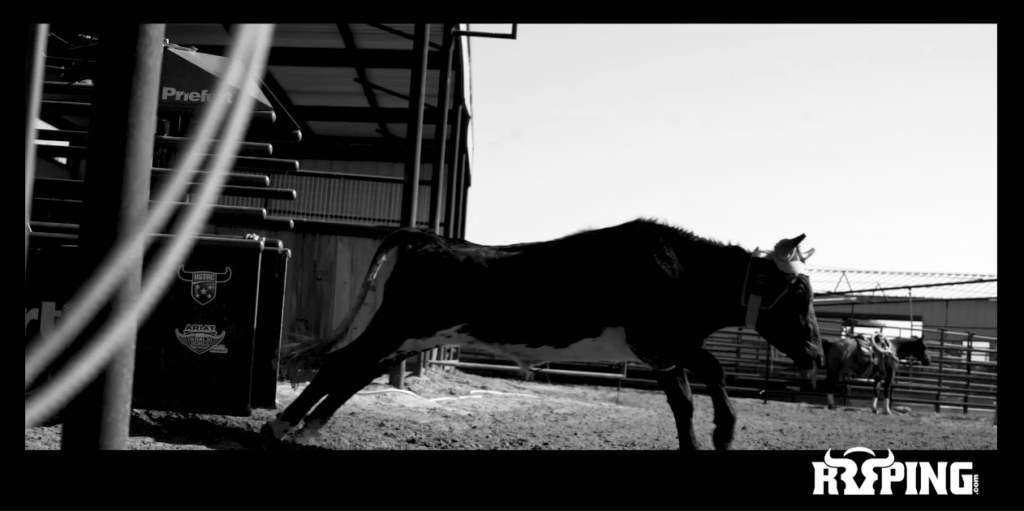
WATCH: 2025 NFR Steer Break-In
Why the Extra Head Matter
The NFR team roping cattle have traditionally been sorted into three pens by size and try, with 60 head making the trip to Las Vegas.
With ten rounds and three pens, the math leaves one pen running four times. For years that was the largest, strongest set. In 2024, Hill and Driggers flipped the structure, putting a medium-sized, faster pen in the four-round slot and moving the larger pen to Rounds 2, 5 and 8.
This year, Hill and Driggers are adding 20 head for a total of 80—enough to fill four full pens instead of three. Adding head removes the problem instead of managing it: with four pens across the 10 rounds, no pen has to repeat a fourth time, and every steer at the finals runs the same number of times.
Consistency across the set is the reason it matters. Jack Moore, who runs Joplin Regional Stockyards and ropes, put the general principle plainly in a recent interview about the cattle market.
“Whatever they are, they just need to be even,” Moore said. “If I got one that runs and one that walks, I got a problem. Then it becomes a drawing contest. That’s not the way it should be.”
The Set Hill Has Assembled
Hill said he has roughly 130 head of native cattle set aside, put together over the past year out of Corriente sales and small private lots—10 here, five there.
“They’re pretty good quality,” Hill said.
That is a different sourcing picture than usual. Hill’s Mexican cattle have historically crossed at Santa Teresa, New Mexico, or Presidio, Texas, out of Chihuahua—neither of which is opening Aug. 24. The Douglas port sits on the Sonora line, and USDA has not announced dates for the New Mexico ports.
Hill’s last load of Mexican cattle crossed in early May 2025, weeks before USDA closed the border over New World screwworm. He said crossings were pushed a month at a time through the following summer and fall, and a load scheduled for Nov. 1 never happened.
“Everybody’s all excited, border’s opening, gonna get steers,” Hill said. “I’ve heard it so much over the last year that the border’s opening next month, that I’m just gonna sit back—and when it opens, it opens.”
He is not short on cattle longer term. One supplier is holding 500 head for him and another has four loads committed.
The Conditioning Program
Native cattle typically carry less age than the Mexican steers that have historically filled the NFR pens, which changes how a contractor manages them heading into December.
Hill said he has kept this set on limited feed through the summer and started them on a ration Aug. 1—earlier than his usual schedule.
“I’ve had them turned out on not much to eat, and they’ve gotten pretty thin,” Hill said. “They kind of are starting to look like a Mexican steer.”
The feeding program itself is well established. As The Team Roping Journal has previously reported, Hill sorts his NFR potentials off at his place in Mexia, Texas, starts them on alfalfa and then moves them onto a mix built for his operation by a Livestock Nutrition Center nutritionist. The NFR steers typically stay on that ration from mid-August through the Finals.
Starting Aug. 1 gives the set an additional two to four weeks.
“Kind of give a 30-day window ahead of time,” he said.
What Happens Between Now and December
The finals set does not go straight to Las Vegas. In recent years the cattle have been hauled to Driggers’ place, where the NFR teams break them in, then returned to Hill’s before the Jingle Bell Classic, where the set gets run again and cut further. In 2025 the cattle also went through a two-day tune-up at Chad Masters’. Hill expects the break-in to take place again at Driggers’ arena, with the steers also making a trip the the Jingle Bell in 2026 before the Finals.
Related: The Border Reopens Aug. 24. What It Means for Roping Cattle.