Even the best in the world don’t agree on everything when it comes to heeling, and, when riding young horses, the spectrum of what’s right is even wider. In this new series, we’re breaking down the finer points of technique.
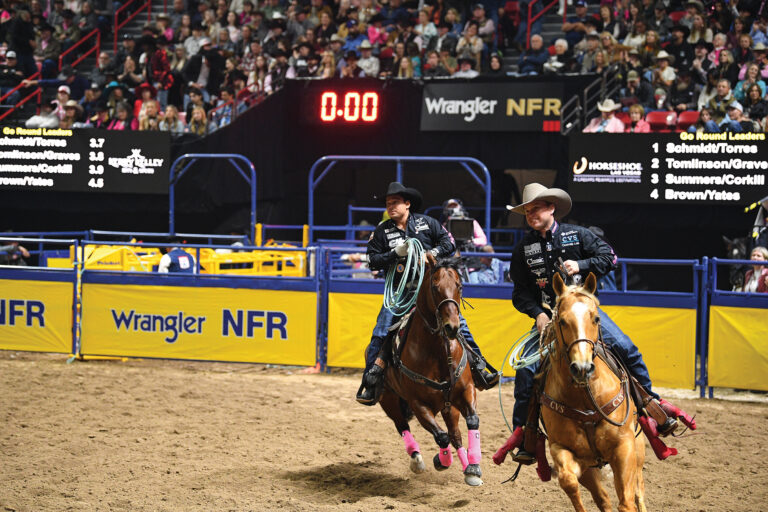
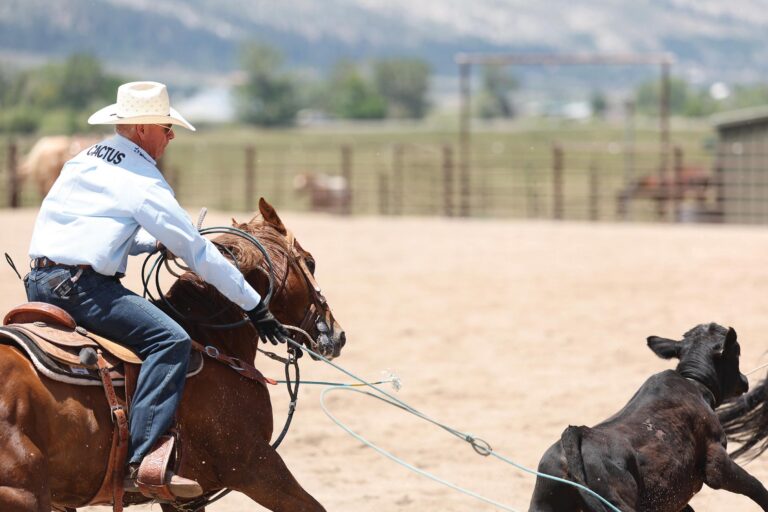
To kick it off, we’re talking to top heelers about what they’re doing with their left hand as they leave the box and head down the arena toward the cow. These images are all from the Solo Select Incentive Futurity, so these are all 4-year-olds leaving the heel box, with some of the best rope horse trainers (and ropers) in the world on their backs. And the way each man explains what he’s doing is illuminating, to say the least.
Dakota Kirchenschlager
This is going to make no sense to the average person, but we’re going to give it a shot.
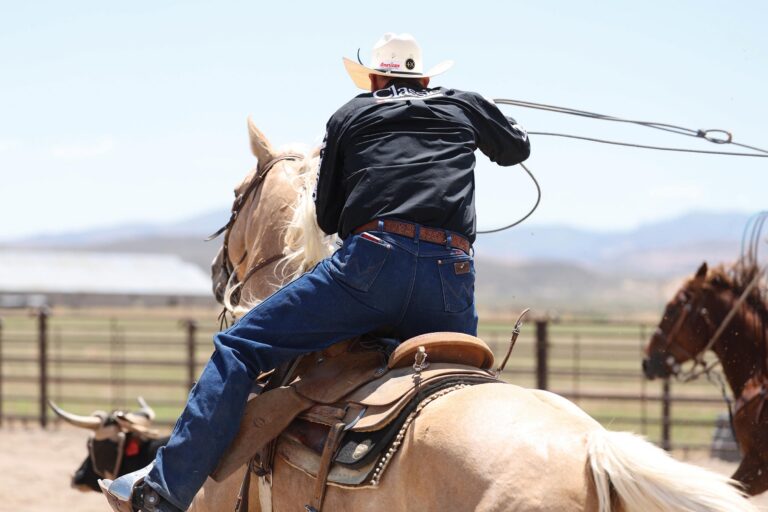
That horse there (pictured in feature photo above)—I rode him three or four times before this event. Every time, he’s a little nervous in the box, so I hold his head a little to the left. In the box, I keep the left rein tighter. Down the arena, I want them even. But once you get out there and turn and the steer stops, he turns his head to the left too much. So I want my right rein shorter then. That’s why I hold them the way I do—because I can adjust them how I want in the middle of the run.
I learned when I was little and rode crappier horses that I was going to have to figure out how to make adjustments. I learned how to do it on every horse so it felt comfortable. I do it this way so I can slide the reins. It’s not perfect, but it’s what I’ve had work for me.
Tyler Worley
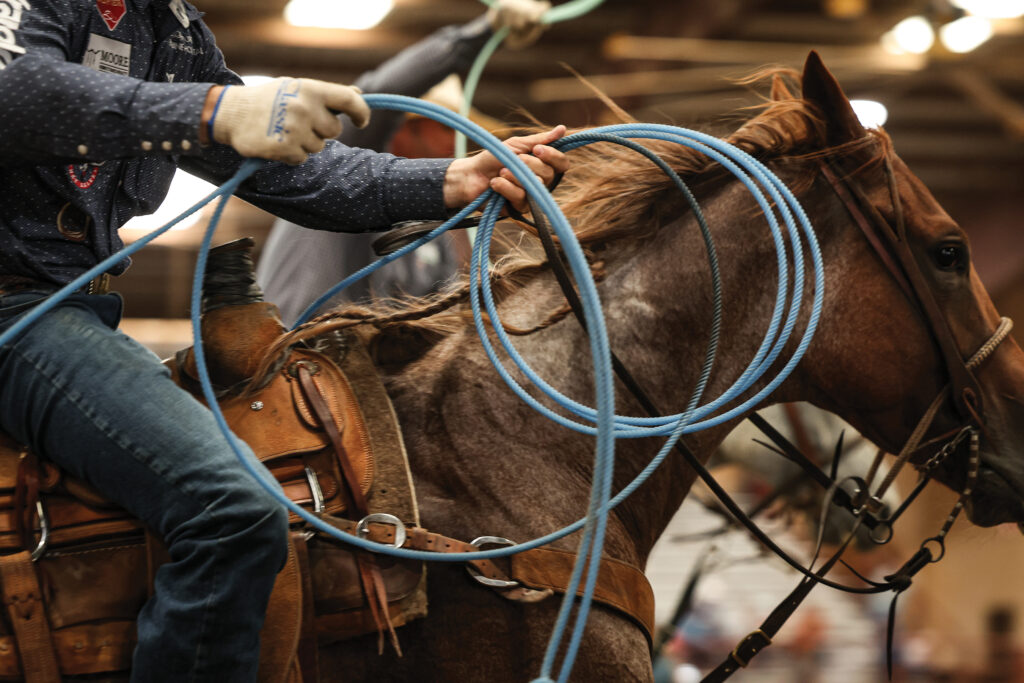
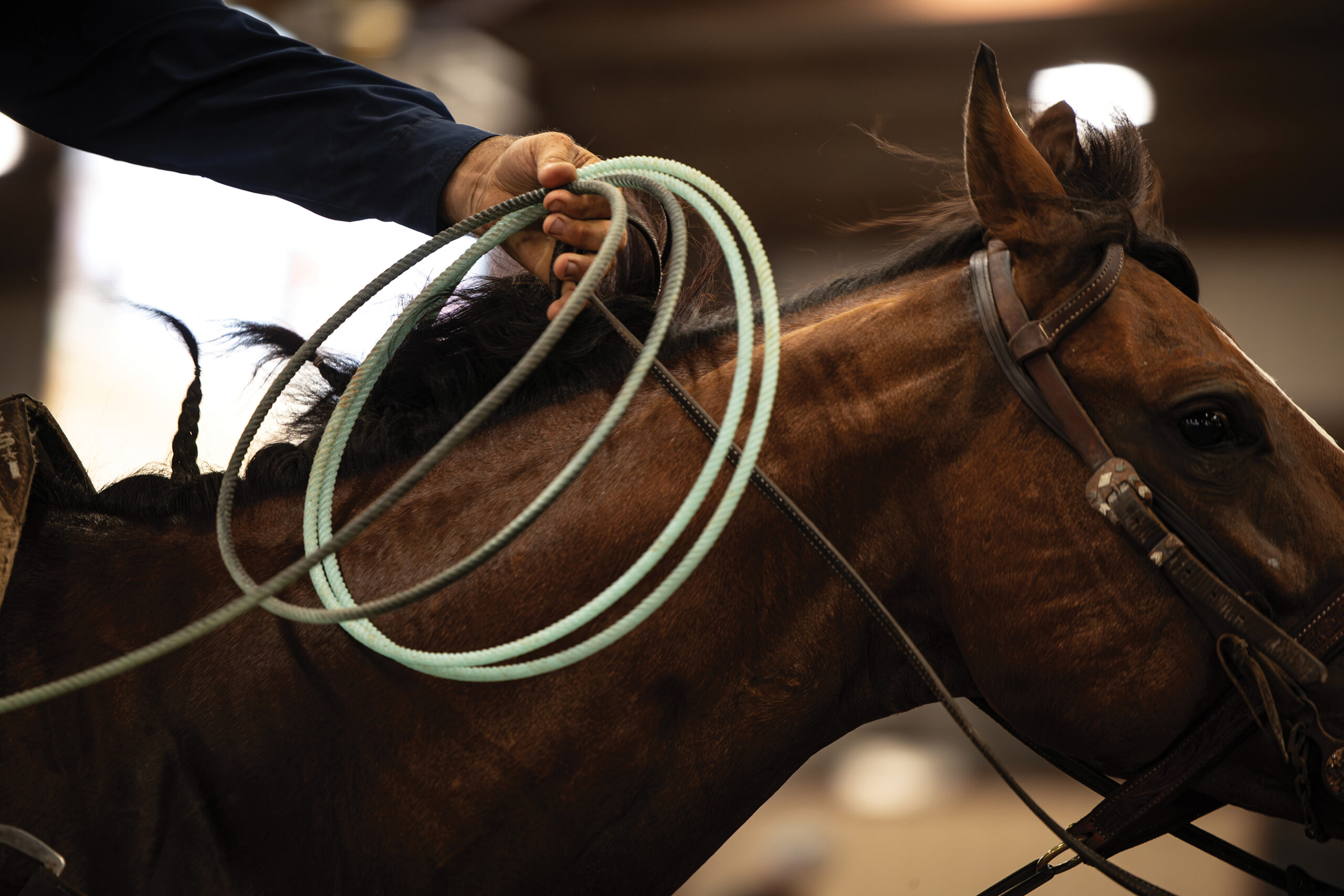
I like to ride with my reins a little shorter so I can keep my hand down without losing contact. I grip my rope pretty tight because I have a bad habit of letting my coils slide through my hand. I want my hand down low—especially on young horses—because I don’t want to get in their way. I don’t want to pull them off the cow. If they want to read the cow and work, I don’t want to kill their confidence by being so worried about me.
Cole Davison
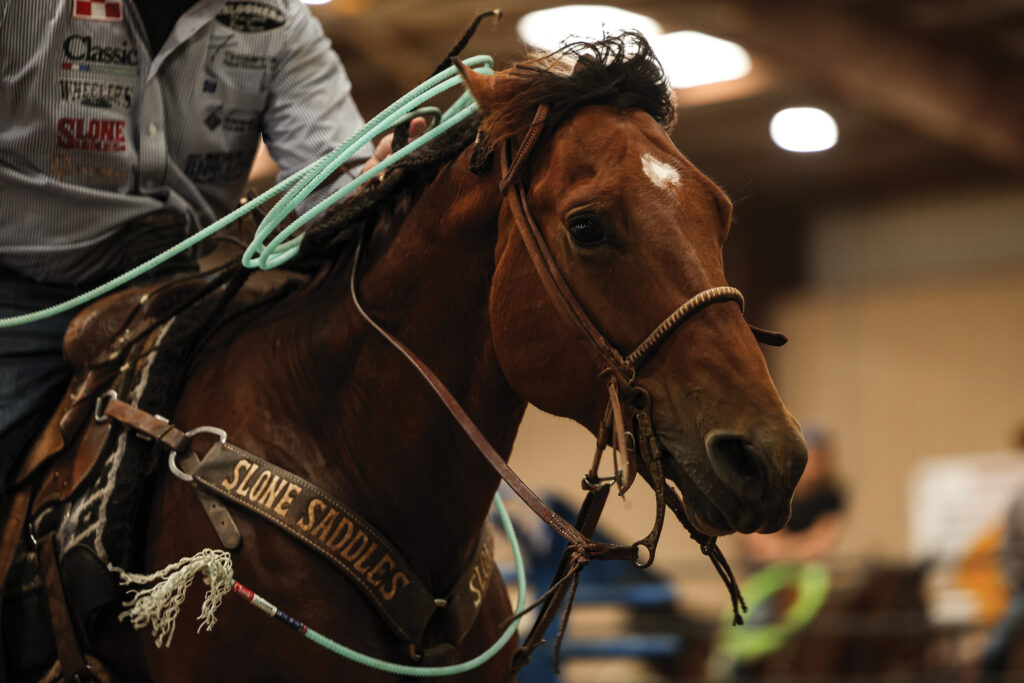
Something I try to think about is not pushing the gas and the brakes at the same time. Eventually you will run out of brakes! Especially on young horses, I want them responsive when I get to a comfortable spot on the cow going down the arena. Running my hand up their neck allows them to run freely to their spot, and then when I pick up they understand to slow down. When I do pick my hand up, I try to pick it straight up to get more bend out of my horse through the turn.
Ryan Motes
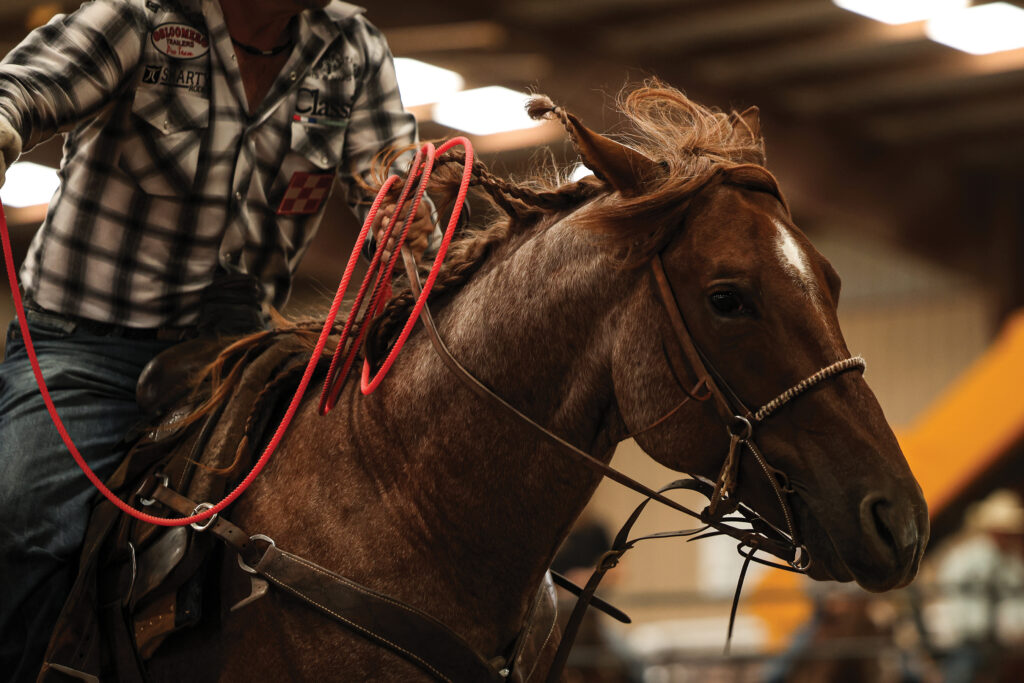
In a jackpot or futurity, especially on a young horse, I want them to score light in the box. When I release, I want to turn them loose all the way to the cow—free and running to their spot. Their job is to track the steer, so if I’m pulling or asking for more speed, it just confuses them.
I want to leave my hand down and let them learn to go on their own. Once we’re in position, if I need to help—like if the steer checks up—I’ll pick up then. But ideally, I drop my hand, let them run, rate on their own, and I guide them left to follow the steer and get where I need to be.
It’s like teaching a kid to drive—if they come in too hot to a stop sign, they have to slam the brakes. Same deal here. Let them learn to cruise, not panic.
Joseph Harrison
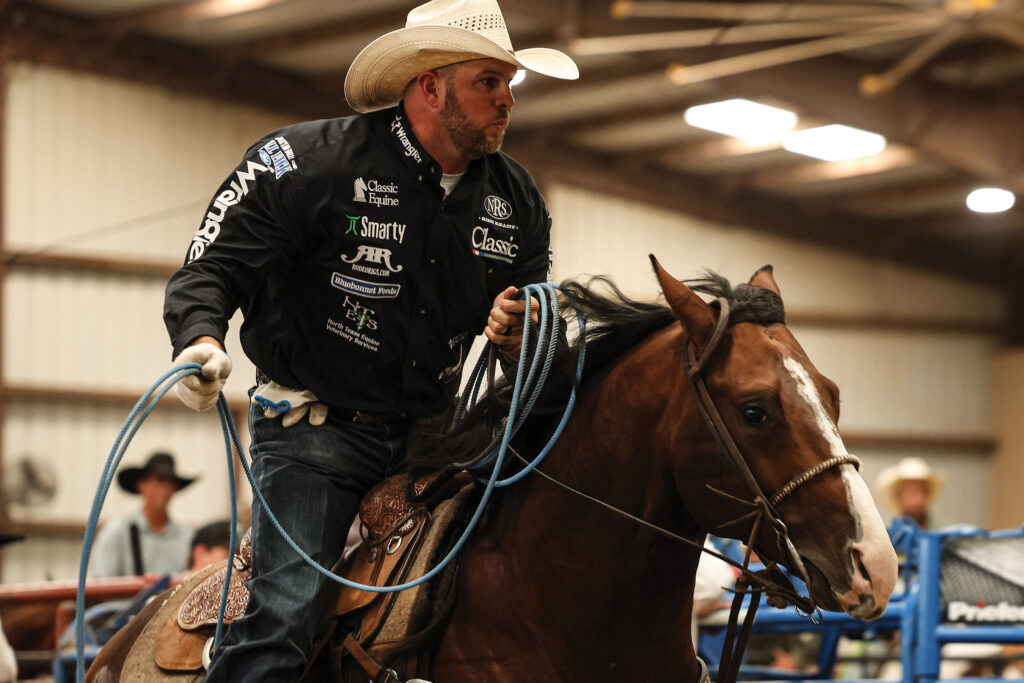
My goal is to leave my left hand down if I can. So there, I’m just hand forward, body forward, watching the steer, letting him run and find his place down the arena. I don’t adjust mid-run. I just keep them where they’re at the whole time from when I started.
John Ryon Foster
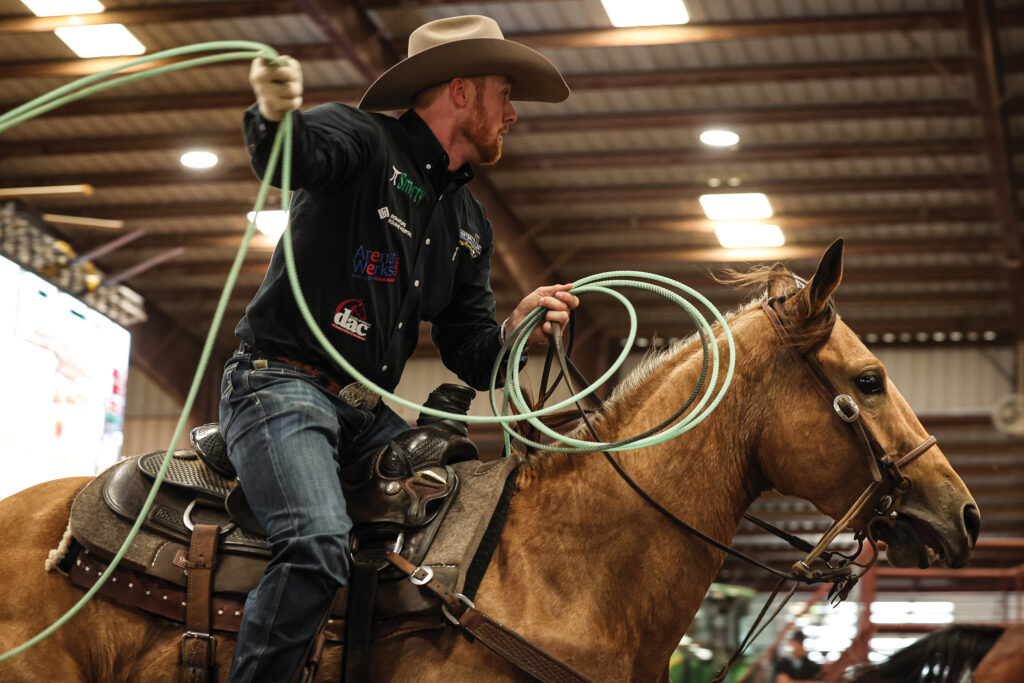
When I leave the box, I like to have my hand down, not hanging on the bridle. I want my horse to react to the steer on their own, but I also want them soft enough. If I do need to help them, they are responding to me and not running through my hand. I think it’s really easy for a horse to learn as soon as they hear the gates bang to just start running without reading the situation.
I spend a lot of time at the house roping different kinds of cattle fast and slow to keep my horses honest and reading the cow. I also like to stop my horses at different spots in the run, whether it’s first thing out of the box, down the arena, in the turn or across the arena to make sure they are rating the cow and listening to my hands.
JoJo LeMond
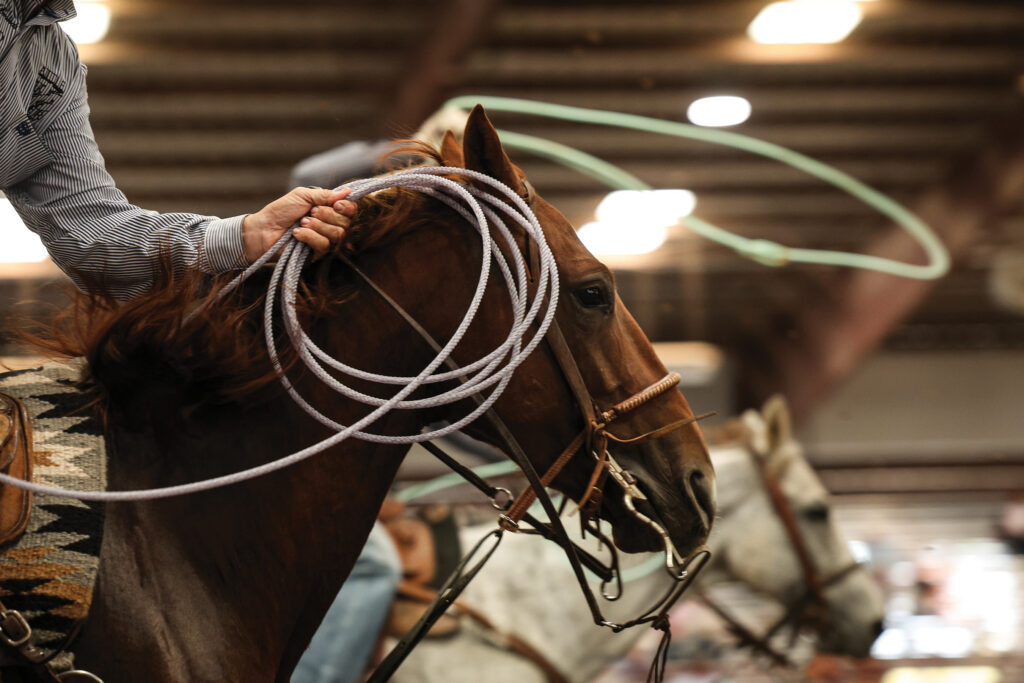
My main goal is to train a horse to go to the cow; from that point, I can start framing and holding one in place. I truly believe the futurity stuff has taken away from my training of the rope horse. I used to think no matter what I did, I wanted my horse to do his job. Now they have it almost like the reining in the roping; they want a horse relying on the roper too much.
With that being said, I’m trying to keep my horses between three points: left leg, right leg and, of course, my hand. Mine are very, very green right now, so I am probably having to do too much to get them through the run. In this picture, I think I’m trying to get caught up to position without allowing my horse to go directly to the cow. I have a horrible problem in the heeling of coming in early to create separation. It’s a problem for the futurities, but it’s a big bonus in the world of timed roping. My left hand should be able to run up a heel horse’s neck for him to run, then I’ll start rotating my palm up so I’m able to get the horse’s chin and create space through the corner.
Wesley Thorp
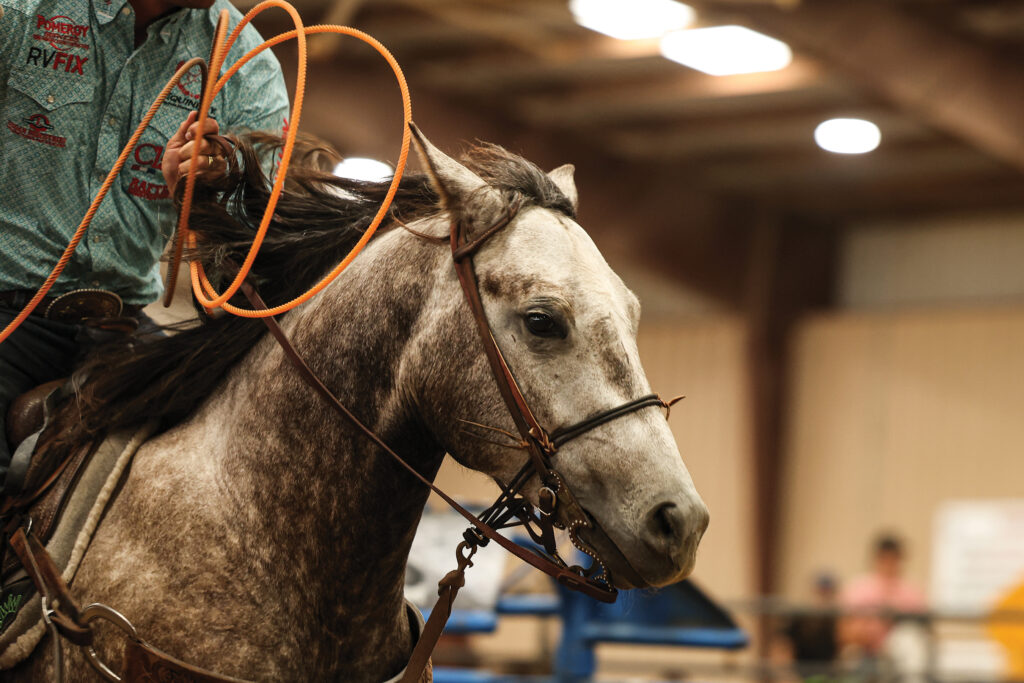
I always want my horses very responsive in the run, from the time I leave the box to creating the width I want to my entry into my corner. I like having light contact on my horse to where he’s slightly pushing into the bridle but can come off my left hand at any time. I want him to know his job and be able to do his job himself, but if I want to turn off auto pilot and give him a signal, I want an immediate response. If my hand is completely on his neck, then technically I’m just along for the ride.
I like to have a say in how I set up the corner for different types of spins and different types of steers, and sometimes I can read the scenario based off experience better than the horse. So him being responsive to my left hand helps me give him the best signals to respond—especially if there’s a curveball thrown.
—TRJ—