


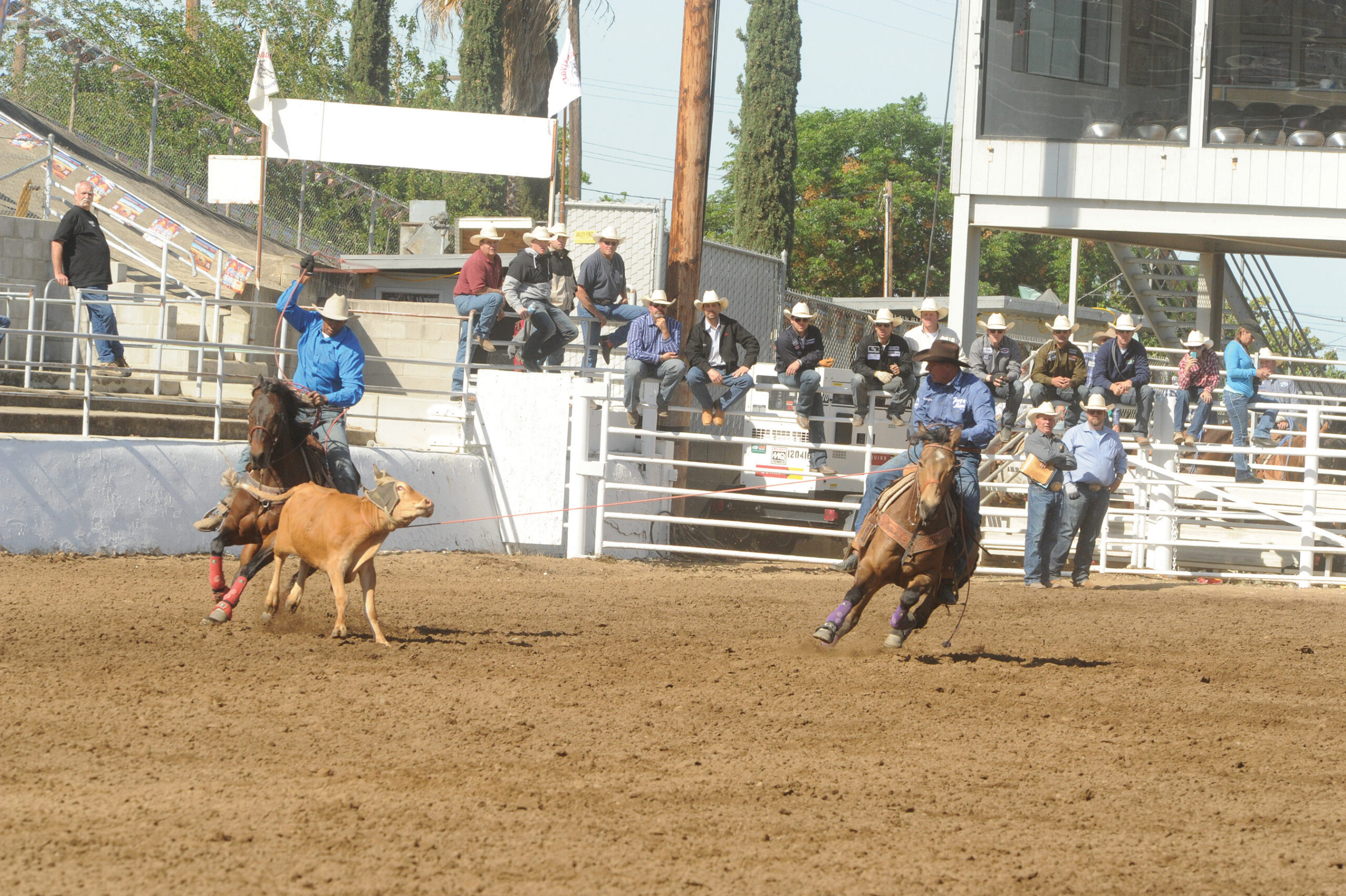
Spring was always my favorite season of the year when I was rodeoing. Winter was over, and we just got to hang out in California. The grass was green, the flowers were blooming, and it was just a relaxing few weeks before the summer run and heat hit. We went to Oakdale, Red Bluff and Clovis, and other than the years it rained and was a muddy mess, it was just good times. The rodeo in Logandale, Nevada, got added later, but back in the day, those were the big three of the California spring run, and all the team ropers were there.
Oakdale was a two-header, and Red Bluff and Clovis had progressive formats that were three and a short. I’m not sure the guys rodeoing now with all the one-headers and sudden-death formats realize how good rodeos like that really are. That little run of rodeos is one of the things I miss most about rodeoing.
Not everyone goes to California now, because the majority of team ropers today are from Texas. Everybody’s waiting to take off for the summer run, and being away from home an extra three weeks right before setting out for the summer isn’t something they all want to do.
Most of the rodeos we went to back then were two-headers. Having so many one-headers today cuts down your chances to win. You have to go for first on every steer. In our day, you didn’t have to draw the best one to get a check, because you had three chances—in the first round, second round and average. In our time, we could just go make good runs and accumulate a lot of checks during the year. Nowadays, these poor guys have to draw good and blitz one to get money out of the one-headers.
Roping revolves around the luck of the draw. You can take the best ropers in the world and give them the worst steer, and they’re probably not going to win anything. You have to draw good and rope good, especially at a one-header. We had to make good runs to win in our day, but if you put good runs together you’d almost always win something in the average. Today’s one-headers are cutting down on slacks and stock charge, and also chances to win.
Salinas is my favorite, and I’ve always praised that rodeo for keeping the tradition alive. They still have a five-header—four and a short—and it’s the only five-head rodeo in our sport. Salinas is a destination rodeo. The weather and food are great, and it’s like getting to make a vacation out of a rodeo. The best thing Salinas can do is never change.
One of the big changes now is a limit on how many rodeos guys can count. There are so many rodeos to choose from over the course of the year, and team ropers can only count 80. Rodeoing back in my day was way more of a marathon with no limits. We did crazy stuff, and chartered a lot. Trying to win championships was kind of like “The Amazing Race.”
I’ve always thought cowboys needed a union and a three-tier league—the elite A-league guys, the B-league circuit guys and a third C-league, so there’s a place for everybody. These days, I’d belong in the C-league, because I’m not rodeoing for a living anymore. The B- and C-league guys would be better off financially if they weren’t going head-to-head against the Top 15 all the time.
People who say buying a PRCA card gives them the right to go to every rodeo aren’t realizing that every rodeo’s not big enough to accommodate every contestant. Denver used to have long slacks. But with the size of the rigs today, they don’t have room for 150 contestants in every event anymore. A lot of rodeo grounds are running out of room, and with team roping steers costing $2,000 a head, it’s pretty obvious what the stock charge looks like.
A lot of contestants think they can’t have the rodeo without them, but I’ve always felt like committees, stock contractors and contestants all need each other, and can’t survive without one another. It’s definitely a new day if you rope for a living. There might be more money to win, but I still say it’s a tough way to make a living. I was born a gambler, but I laugh now when I think of how people used to call us crazy for paying $10,000 for a horse.
—TRJ—
READ: Flaggers are Human, Too