


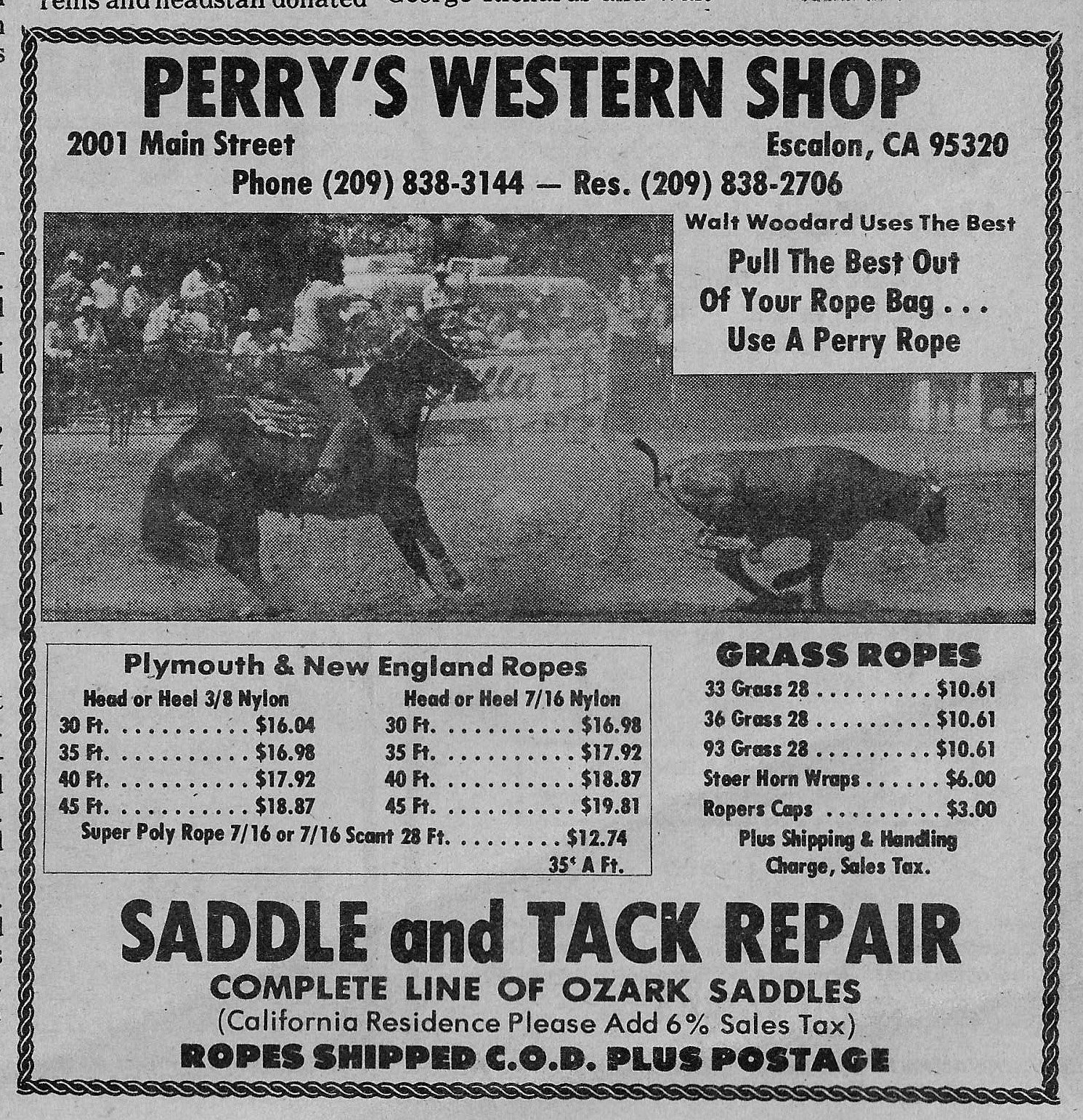
Everything about team roping keeps getting better, and our No. 1 tool is no exception. When I first started roping in remote Bloomfield, New Mexico, my Uncle Billy (Barnes) lived in Oakdale, California. There was a rope company near there called Perry’s Ropes that was owned by Perry Blagg. Those were my first ropes. I would order some ropes, Uncle Billy would go pick them out for me and Perry would ship them to me. It’s hard to explain how much team roping ropes have changed since I started roping.
What Ropes Were Like Back Then
The thing I remember about ropes back in those days when I was really young is they were really waxy. And they had really good leather burners in them that gave them some weight.
The rope they used came in big spools, and one end of the spool was stiffer than the other. So different lays of rope came on one spool. They’d roll out the spools, and age the rope. I remember from the King Ropes ads I saw in the Ropers Sports News that they let their ropes sit out in the sun. And after so many days of aging, they started determining which lay of rope they were going to make and cutting them up.
There were only three lays of ropes back then—soft, medium and hard. I used a medium. A lot of people bought their ropes at feed stores at that time. All I know is I was hard on them. When I roped the dummy, it was a horned skull baling-wired to a sawhorse. Hitting that wood and rawhide wore ropes out.
But when the leather burner would wear out, my dad would re-tie the rope and I’d use the other end of it. When the leather burner wore out, we’d use baling wire to make a new burner. That gave a rope a whole new feel, because the rope slid so much faster on that baling wire.
When a Burlap Sack Was a Rope Bag
Rope bags back then, including my first one, were made out of burlap gunny sacks that were used as feed sacks before they started using paper. On hot days in the summertime, we’d stick a burlap rope bag in a water tank, shake the water out of it and let it dry a little, then keep our ropes cool in there.
To this day, when ropes get too hot they get springy and wild. They felt so much better coming out of that cool burlap bag. We were from cold country and there were no indoor arenas around, so we didn’t rope much in the wintertime back then. My roping was pretty seasonal until I went to college. But in cold weather, ropes get pretty soft and don’t have much feel to them if it’s really cold.
The Ropes I Used Along the Way
The second ropes I used came out of Arkansas, and were made by Dub Grant. His ropes had the first rawhide burners I’d ever used, and they were really good-feeling ropes. Then I used Clint Martin’s Red Burner Ropes from Oklahoma. They had a good feel to them, too, and were popular with a lot of the best guys back then. I paid for all of my ropes with those first three rope companies.
Gator Ropes gave me my first rope endorsement. They were good at marketing, and had little rubber gators tied to each rope with a chain. Each color of gator was for a different lay of rope.
I’ve been with Classic for quite some time now—decades—and they’re the best ropes on the market for me. There are a lot of good ropes out there now, but Classic makes great-feeling, consistent ropes that feel the best to me.
Ropes used to be pretty inconsistent, and backswing was an issue. If you got one with a backswing in it, and it wanted to figure-eight on you, we’d turn the loop over until it pulled down and got a good stretch on it, so it would lay straighter.
How Modern Team Roping Ropes Changed the Game
Early in my career, they were all three-strand ropes. Then came four-strands, and now there are a lot of five-strand ropes. Ropes have cores in them now also.
There are so many more choices in ropes today—lays, lengths, colors. My rope of choice now is a 32-foot Classic Powerline Lite extra soft. I also use an extra soft, 32-foot Heat. Bottom line, rope-making technology has advanced as much as roping has in my lifetime.
—TRJ—