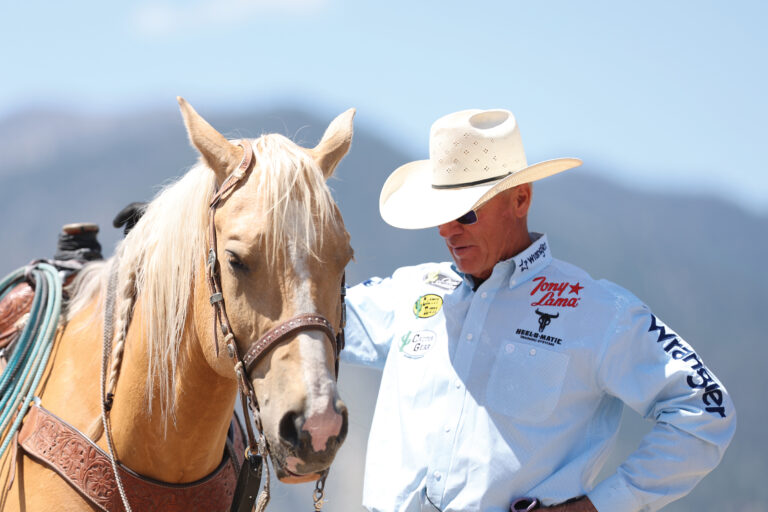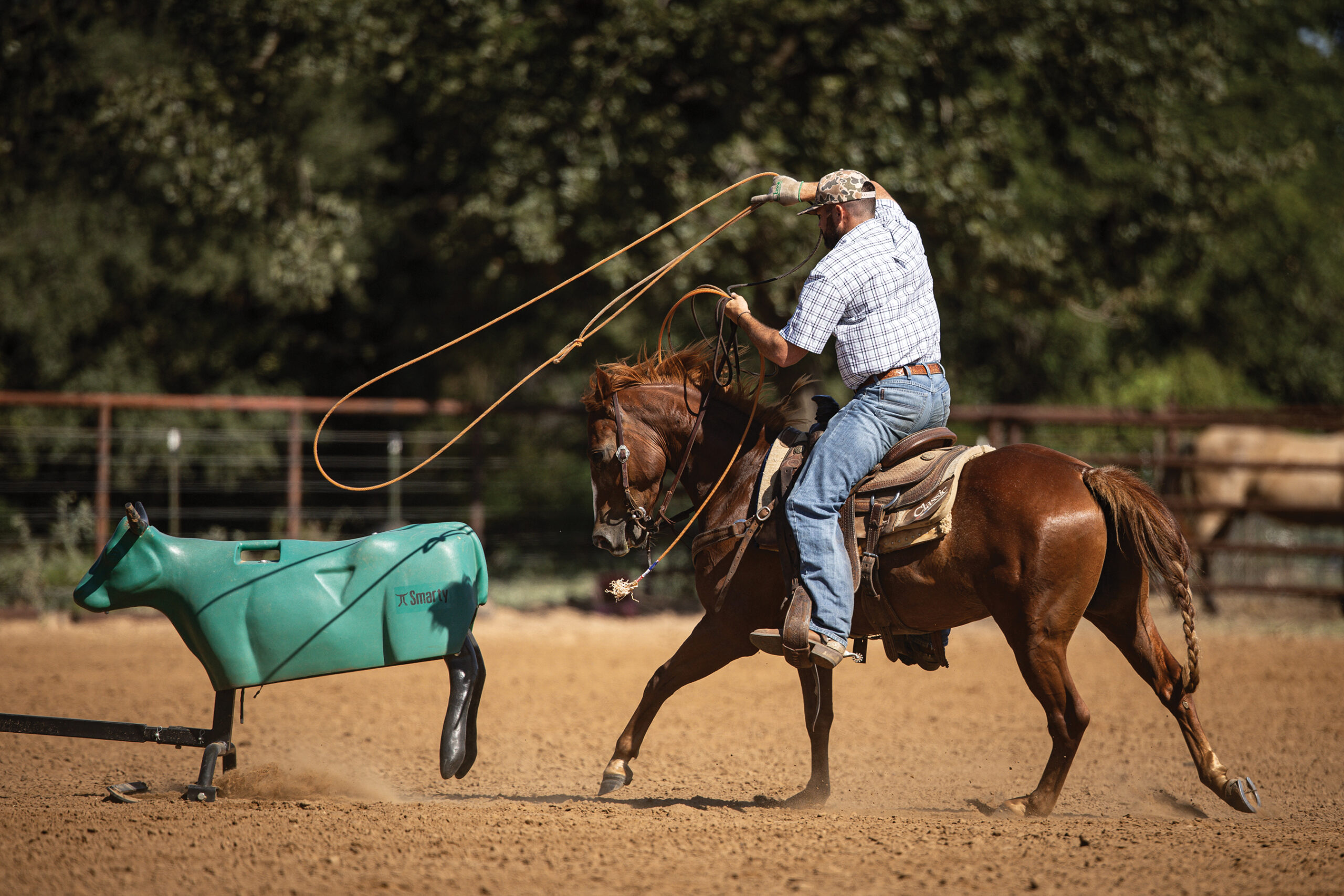
This colt is plenty ready to go on live cattle, but I still like to slow things down and use the sled to keep everything simple. My goal isn’t about making runs—it’s about keeping him in my hand, waiting on me and not trying to get ahead of my rope. Those basics are what carry over into every run later.
Don’t Let Him Anticipate
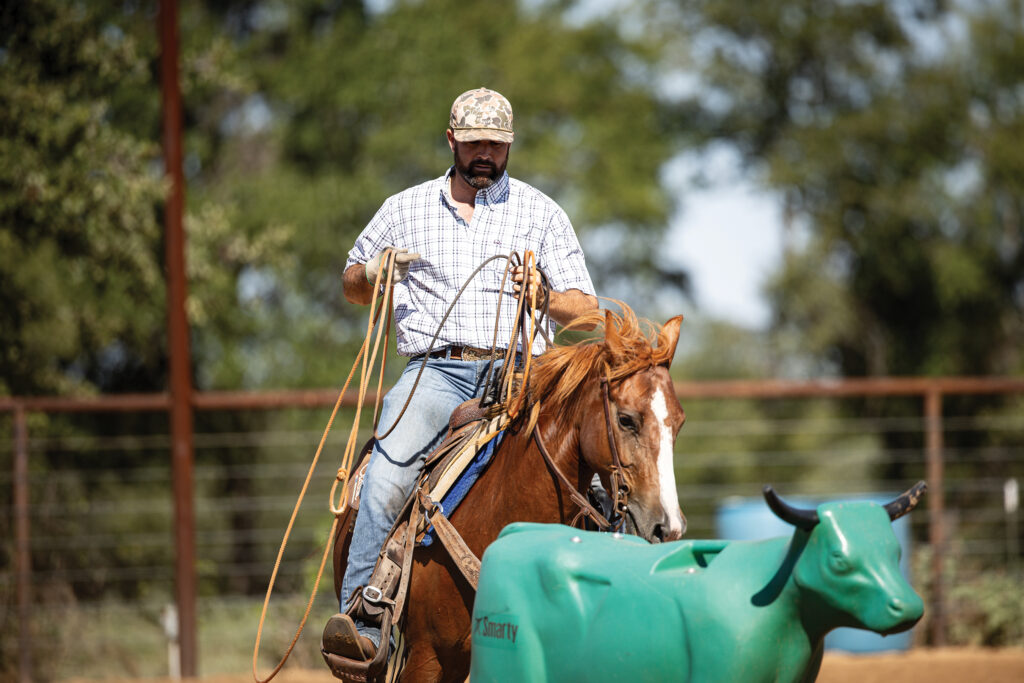
This horse naturally wants to stop, and that’s something I like. But if I let him anticipate every time I move my rope, I’ll end up with one that quits too soon. On the sled, I just want him to be comfortable following my hand until my rope hits the ground—never trying to beat me to the stop.
The Feel I’m Looking For
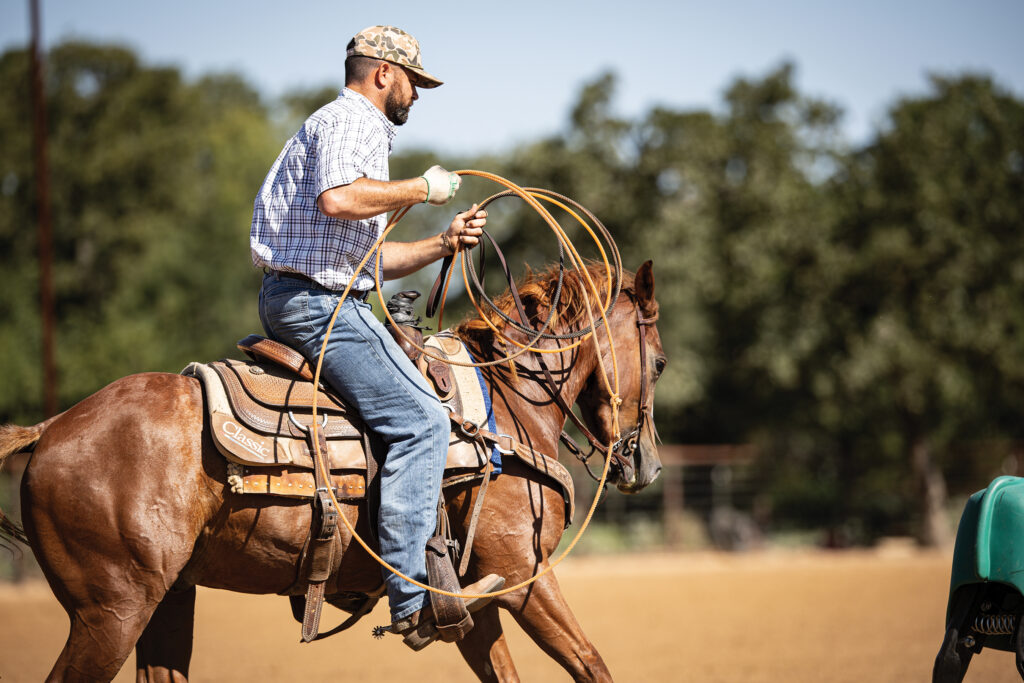
When I say “stay in my hand,” I mean I can hold him lightly without pulling, and he’ll just wait right there with me. I want him in my hand throughout the run, no matter where I am or what the steer is doing. If I can teach him that slow feel on the sled, it makes those moments automatic later when the run speeds up.
Using the Sled Simply
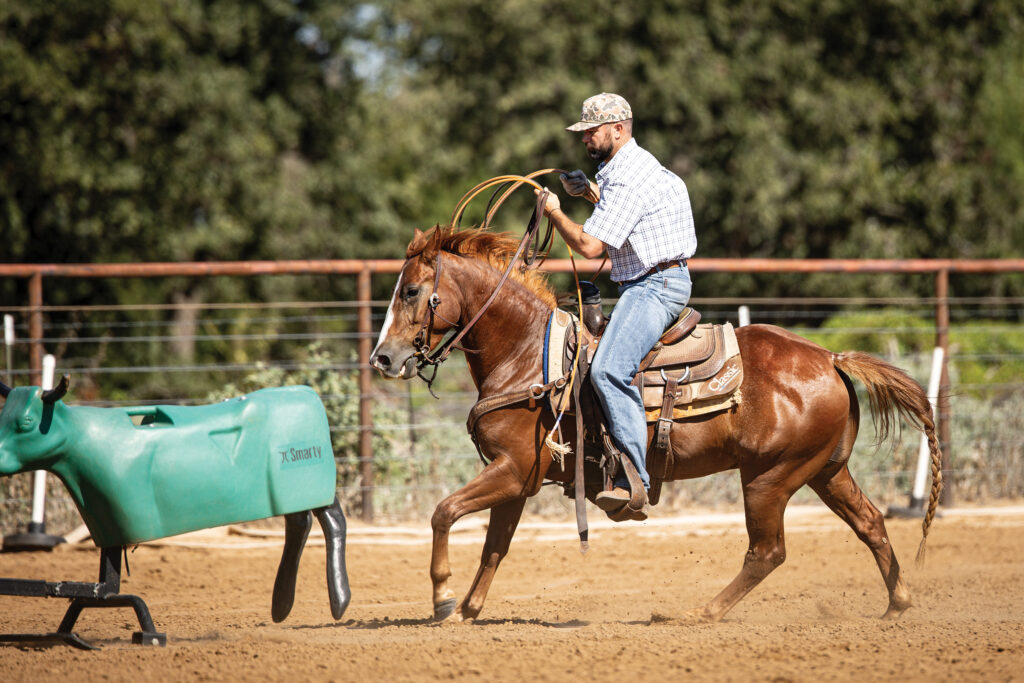
I don’t like to get too complicated. I’ll have the driver make big circles and then tighter ones, but never real fast. As the sled swings out, the colt has to stay framed up—shoulders in line, body balanced, pushing everything toward the left hip. The goal is that he learns to do it on his own without me having to fix him every stride.
Reward in the Release
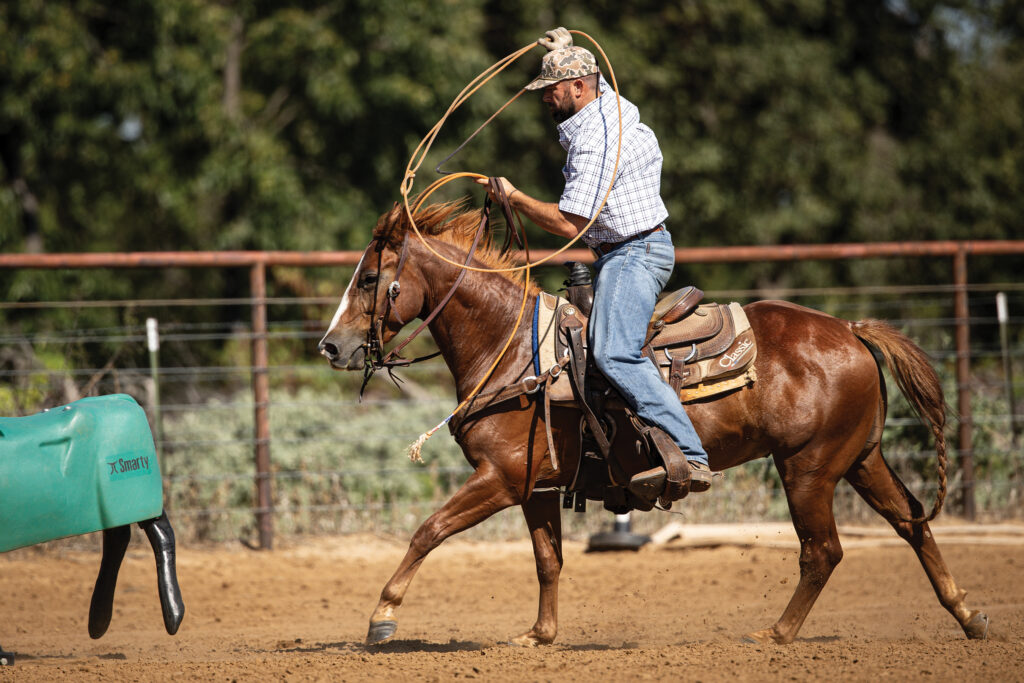
I don’t throw every time. I’m not worried about catching the dummy; I’m worried about how he’s traveling and how he feels underneath me. If he’s hooked, framed up and waiting, then I’ll go ahead and throw. That’s his release. He learns that doing it right makes the run end, and that’s the best kind of reward.
Keep It Simple
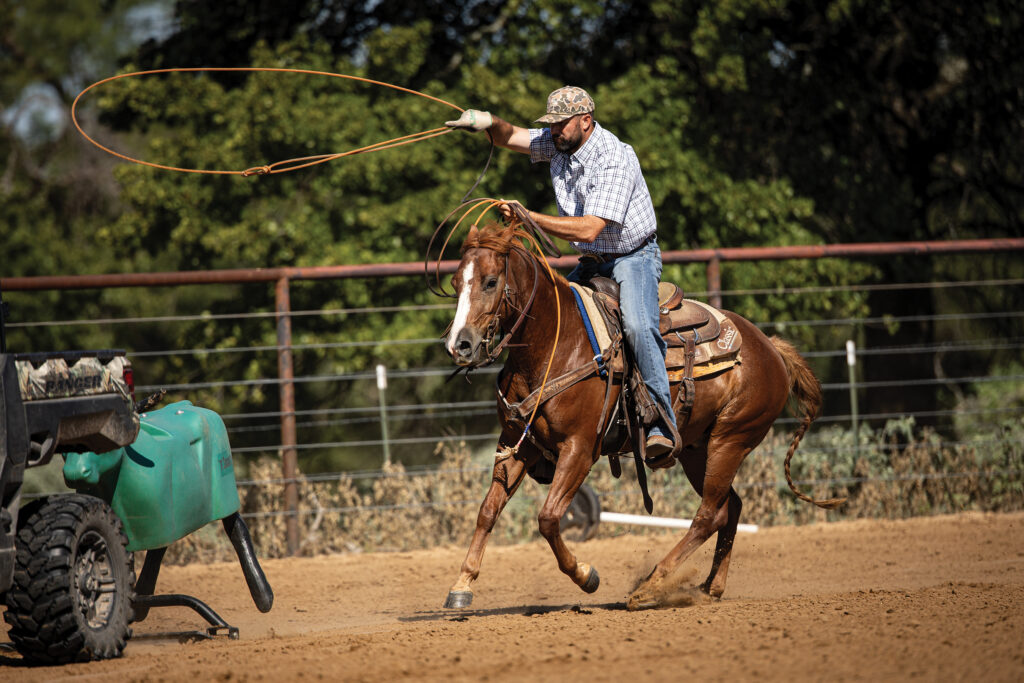
Every colt is different, but I want them all to be easy and honest. If he’s got it, I quit. If speed makes things fall apart, I slow back down and put it together again. The sled drill is just one of the steps between a donkey, a lead steer and slow cattle.
Practice Pen Tips
Tuning Up an Older Horse
Even seasoned horses can get out of time or start cheating your throw. If that happens, I’ll go back to the fundamentals. A dummy exposes different holes than live cattle do. Sometimes it helps me remind an older horse to frame up, stay with me and not anticipate. It’s a way to reset them without the pressure of a live run.
Knowing When to Quit
The biggest mistake I see is people drilling too long. If a horse gives me the feel I want, I quit. At this stage, less is more. Speed is what breaks things apart, and you can always add speed later. I’d rather a colt finish fresh and confident than tired and confused.
—TRJ—
Build a strong foundation for your young roping prospects with the Colt Starting video series on Roping.com.