


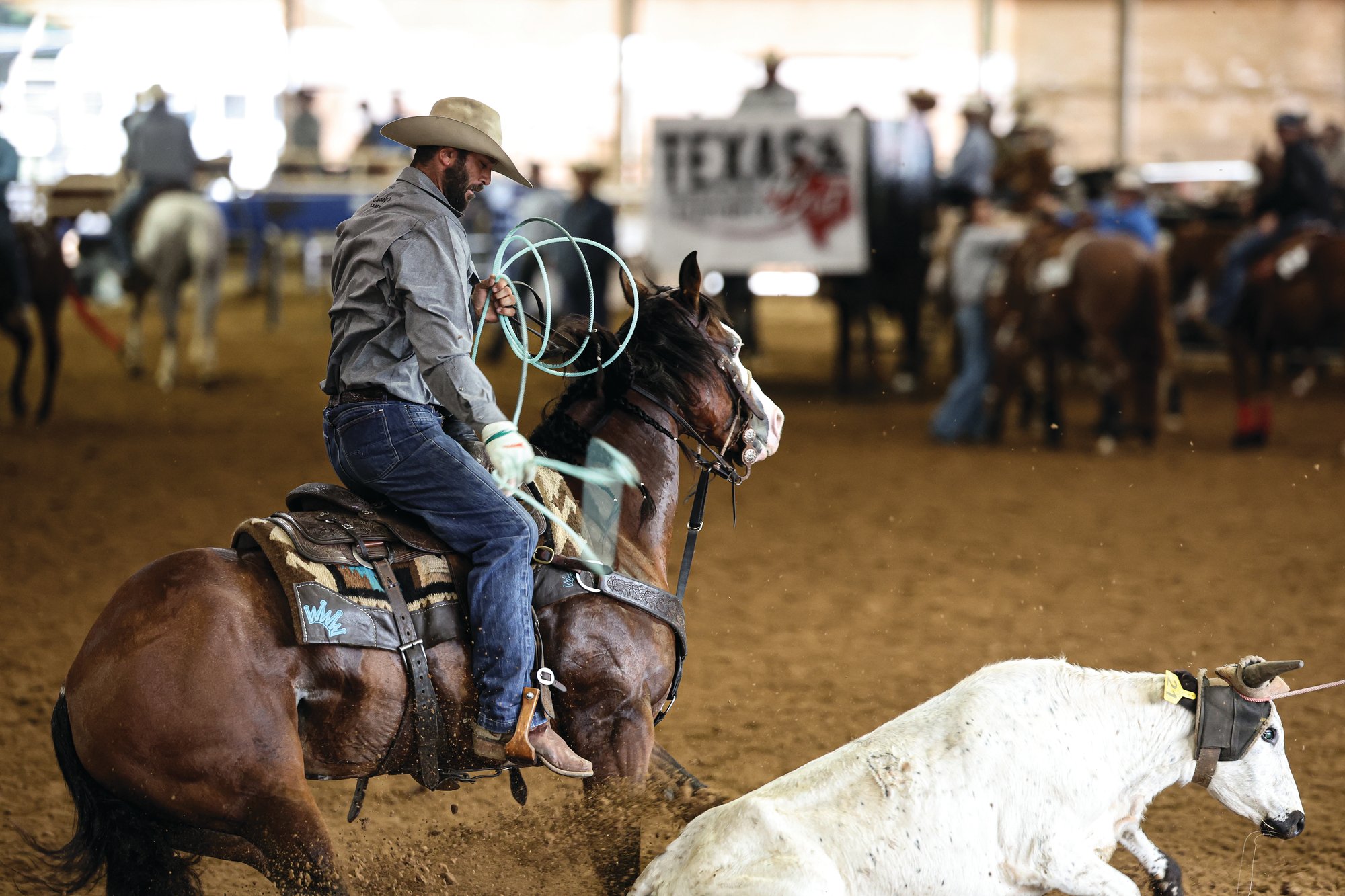
When a run goes good, I let my horse sit there for a while before we rope another one. I don’t know how much of that is technical, it’s just something I’ve done since I was a kid. Letting my horse stand there and relax, and patting him on the neck gives him a release and a bit of confidence.
You see some people—I noticed this watching a lot of reining—pat them real hard on the left side. Well, if a human walks up to me and pats me really hard every time, I’m not going to think that’s good. The kinder and softer you can be, the better.
I’ve watched Kelby Phillips a lot, and he reaches down the horse’s right side, where the jaw and the neck meet, and rubs them really soft and scratches them, whether it was a good run or a bad one. He does that a lot. And that approach registered with me: There’s got to be a way to let the horse know, “OK, it’s OK.”
Here’s the honest part. As a competitor and a roper, sometimes when it doesn’t go good, you immediately take it out on the horse—when it wasn’t even the horse’s fault at all. It’s very hard to control the rider’s emotions so the horse stays in the right frame of mind moving forward.
The mare I’m riding right now, Smokin Stilettos, is 6 years old, and she’s not the biggest horse in the world, but she’s a very physical horse. I practice on her regularly just doing simple little things so she performs better at the shows.
The whole point is to keep her liking her job and not get her dreading it. I think that’s a common denominator in all horses: if they enjoy doing their job, they’ll give you their heart more than if they’re dreading doing it.
That’s the long game. This mare has been with me from her 4-year-old year through her 6-year-old year. She’s one of the very first ones that’s stayed in my program that whole stretch.
If the reward is real—the standing, the soft hand, the release when it goes good—they’ll keep giving you their heart. And that’s what wins.
—TRJ—