


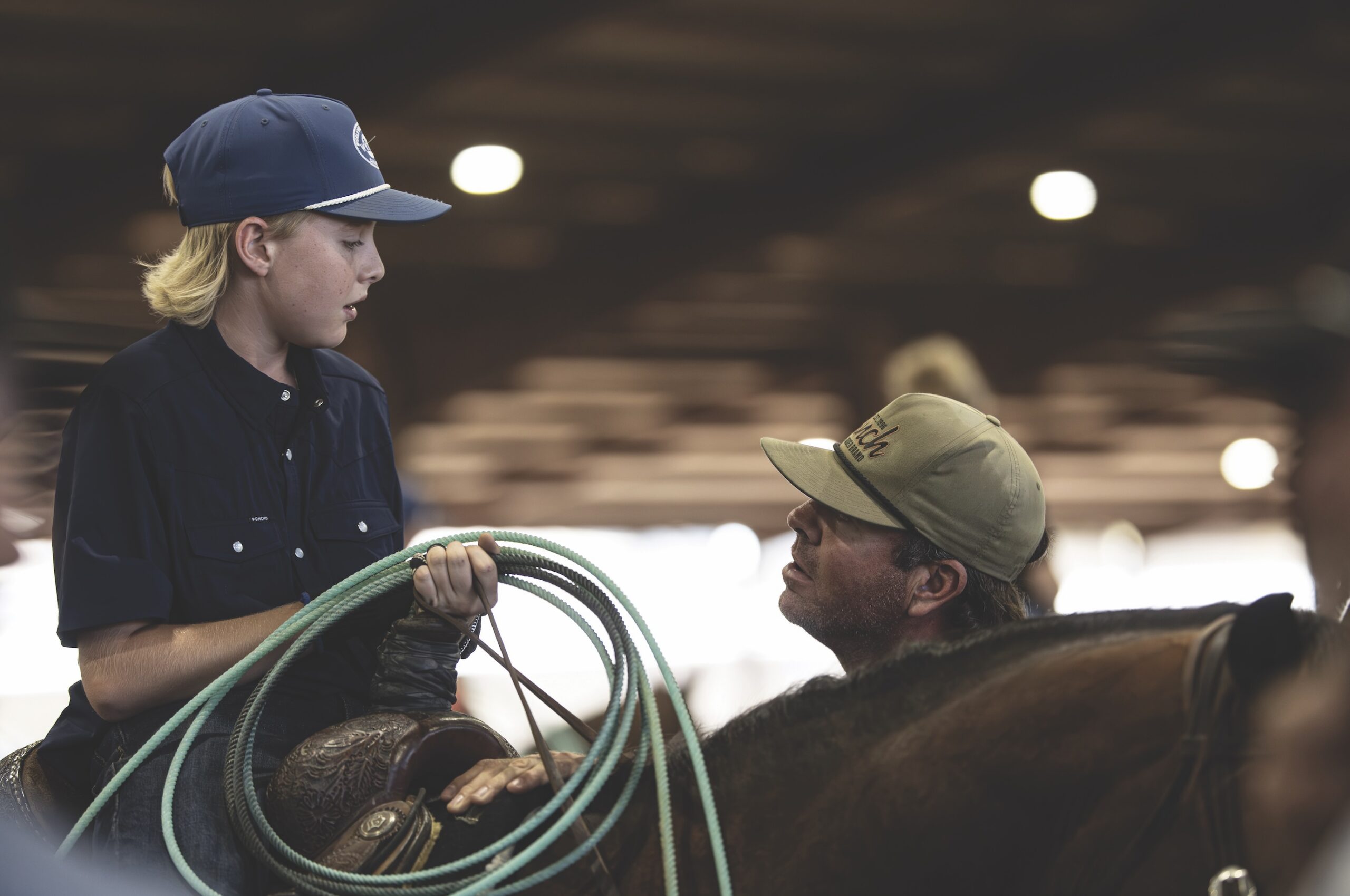
The kids of today’s competition didn’t get here by accident. They were raised in it, are ate up with it and were built for it.
There’s a wave of kids coming up right now who have been around this game their whole lives—kids who have watched it, lived it and are just now starting to make their own mark. And behind every one of them is a dad trying to figure out how to do it right.
Some of them have gold buckles. Some of them don’t. But all of them are trying to raise kids who can handle what this sport throws at them—because it’s never just about winning.
Jade Corkill
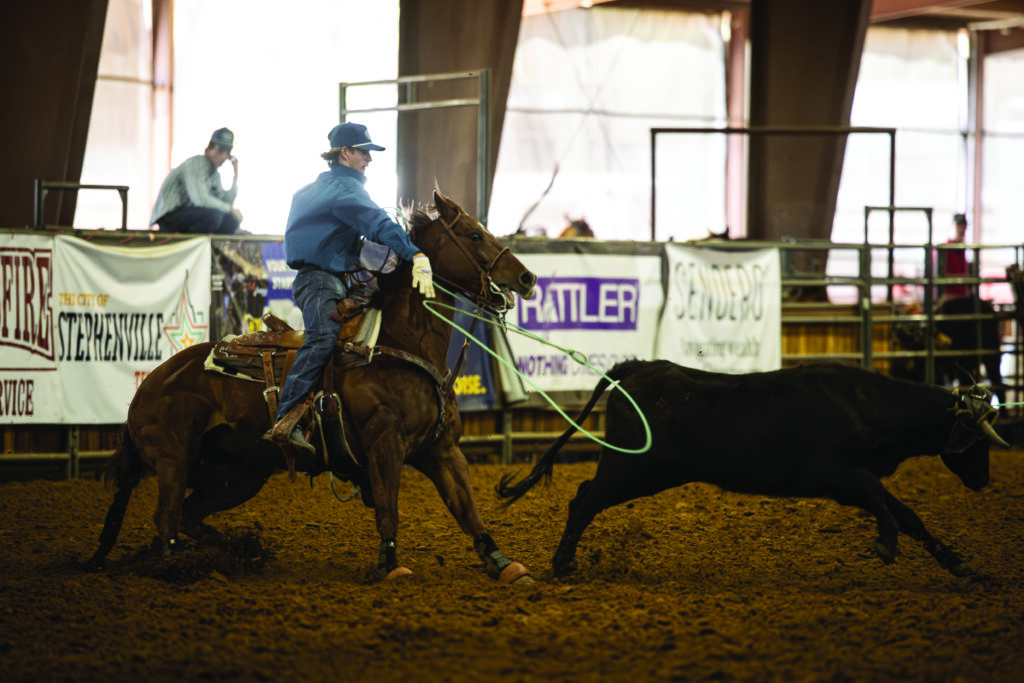
For Jade Corkill, raising sons Colby, 15, and Kelton, 12, with ropes in their hands has never been about expectation; it’s been about timing. Colby started young, stepped away for a stretch and then dove back in headfirst. Kelton took a little longer to catch the team roping bug, but recently decided he is ready to start giving his dad and brother a run for their money. Three-time world champion Jade has been intentional from the start about not forcing anything.
“I didn’t want them thinking they have to rope just because I rope,” Jade said. “It doesn’t matter to me what they do, I just want them to try whatever they want, and I will help them.”
Big brother Colby has already proven he can hang with the best, highlighted by a #15.5 win at the Ariat World Series of Team Roping Finale in Las Vegas with Denton Parish, while Jade watched anxiously before competing at the NFR. With his oldest, there is no need to apply pressure; it comes from within. Instead, Jade’s focus is on the foundation: ride a good corner, stay patient and develop a swing that allows him to rope every steer, every time.
Still, for all the wins and big moments, Jade says there is something that matters more than anything that happens in the arena. The goal is not just raising good ropers, but raising men who can handle whatever comes with it.
“I want them to be genuinely good people when people aren’t around. You couldn’t ask for much more than that as a parent.”
And with both boys now all-in, Jade is getting to watch it unfold in real time.
Justin Parish
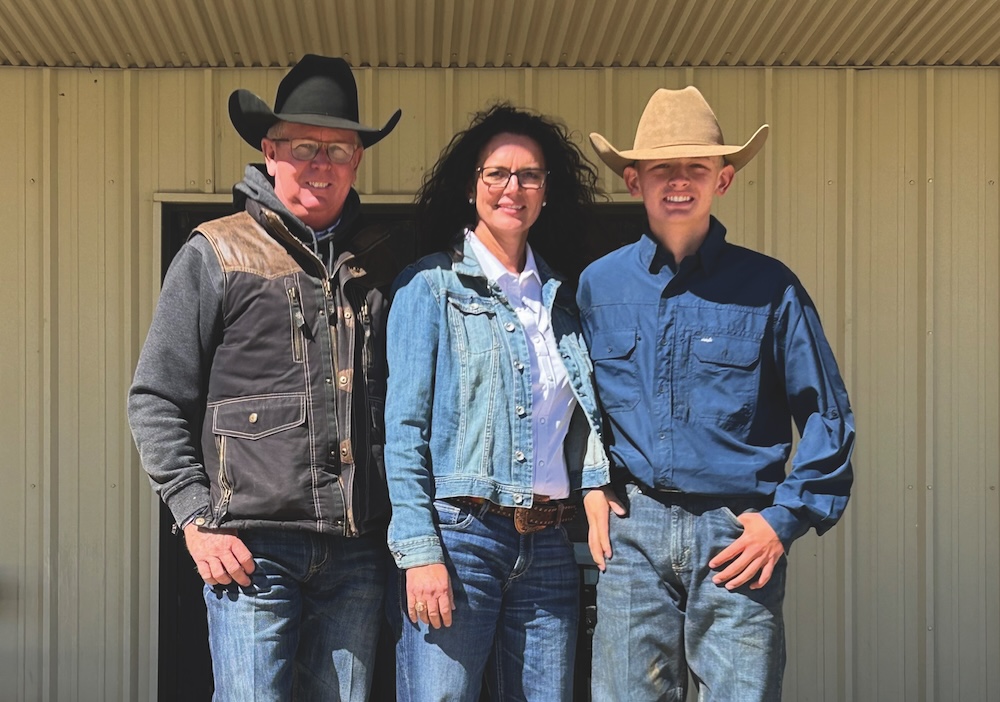
Justin Parish doesn’t talk about raising a team roper the way most people do. There is no blueprint or magic recipe, just a belief that if you force it, you’ve already missed the point. His son, Denton, 18, grew up in a world built around the sport, but Parish and his wife, Tammy, always made sure the choice was his. Baseball, football or whatever he wanted—he was going to pick it and he was going to own it.
“If I made him rope, I’d be a bad parent. I don’t care what you choose, but if you choose it, we’re going to do it. And if you choose it, you’ve got to love it because if you’re called to do it, you won’t get tired of it. That’s what we believe.”
That mindset shaped it all for Parish. He isn’t the dad coaching from the box because, in his mind, that part should already be handled before they leave the house. The expectation is preparation, and from that comes confidence—a strategy he believes kids have to build for themselves.
“Preparation builds winning. Winning builds confidence. Confidence builds more work, more drive. If we don’t have the work ethic at home and I can’t trust his preparation, it’s not good enough anyway.”
For all the success Denton has had, Parish says the priorities have never changed. The wins matter, but not more than who his son is when the roping is over.
“He’s got a big heart. He cares about people. He understands people are God’s people. And at the end of the day, winning solves everything, but it does nothing for you if your people skills aren’t right.”
David Key
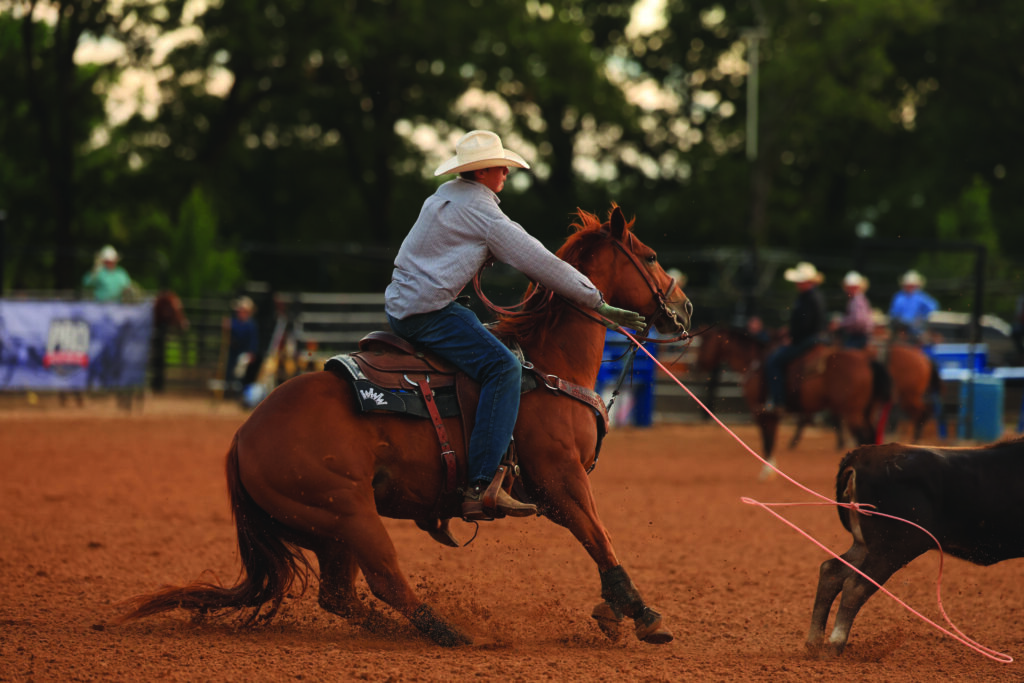
For nine-time NFR header David Key, raising a son has been as much about building the mindset as building the skill. His son Kase, now 16, has been in it from the beginning, learning how to rope on the horse Key rode to a George Strait Team Roping Classic win. Now a winner on both ends of the run, Kase has found success early, but Key says it was never really about the wins.
“It wasn’t really about winning as much as it was he just wanted to rope.”
That love for the game is what Key believes has carried Kase through the levels. Along the way, Key has learned that timing matters just as much as the advice itself. Their best conversations do not happen in the heat of the battle, but later, usually in the truck on the way home, and are not built on constant praise.
“There’s a difference in hoping you’re going to win and knowing you’re going to win.”
That has set the standard in the Key household. Key is not big on overpraising when he knows Kase has not scratched the surface of what he is capable of. The focus stays on what’s next, not what has already been done. More than anything, though, Key wants his son to be known for who he is away from the arena. In his mind, that matters just as much as any win.
“If all you want is to make the NFR, then you’re not where you want to be.”
Travis Graves
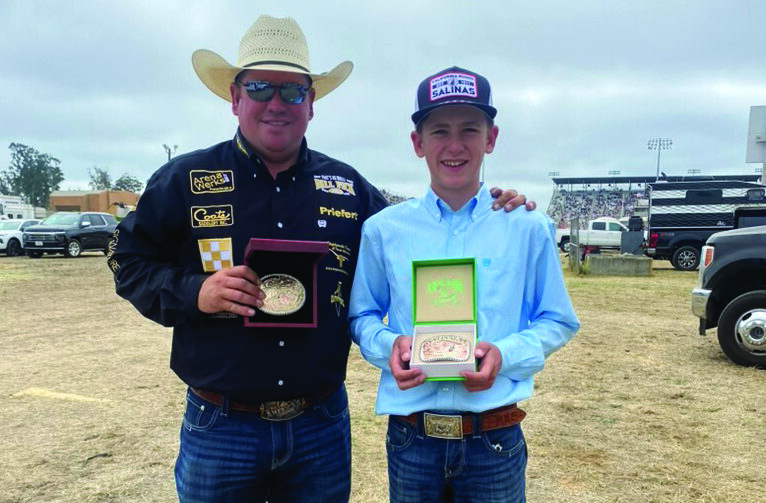
For Travis Graves, the difference in raising a kid in today’s roping world versus the one he grew up in is simple: there’s more to pull them away from it.
His son Tee, 13, didn’t grow up obsessed with a rope. Basketball and baseball filled most of his time and, for a while, roping was just something he did on the side. Graves never pushed it. He didn’t need to.
“They’ve got to want to do it to be good at it. I never pushed him to rope. I don’t care what they do. But if they’re going to be good at it, it’s got to come from them.”
That shift from casual to competitive is where the 16-time NFR heeler has seen the biggest change. Once Tee figured out how to win, the work started to matter more. From there, Graves kept it simple: build the foundation and let the rest grow around it.
“The swing is the most important thing. If you don’t have a good swing, it doesn’t matter how good you ride.”
Now, as the pieces start to come together—timing, consistency, confidence—Graves says the wins still aren’t what stand out. Like most dads, what matters most has nothing to do with the arena.
“The most important thing to me is being a good person. There’s nothing more important than that, being humble and treating people right.”
Trevor Brazile
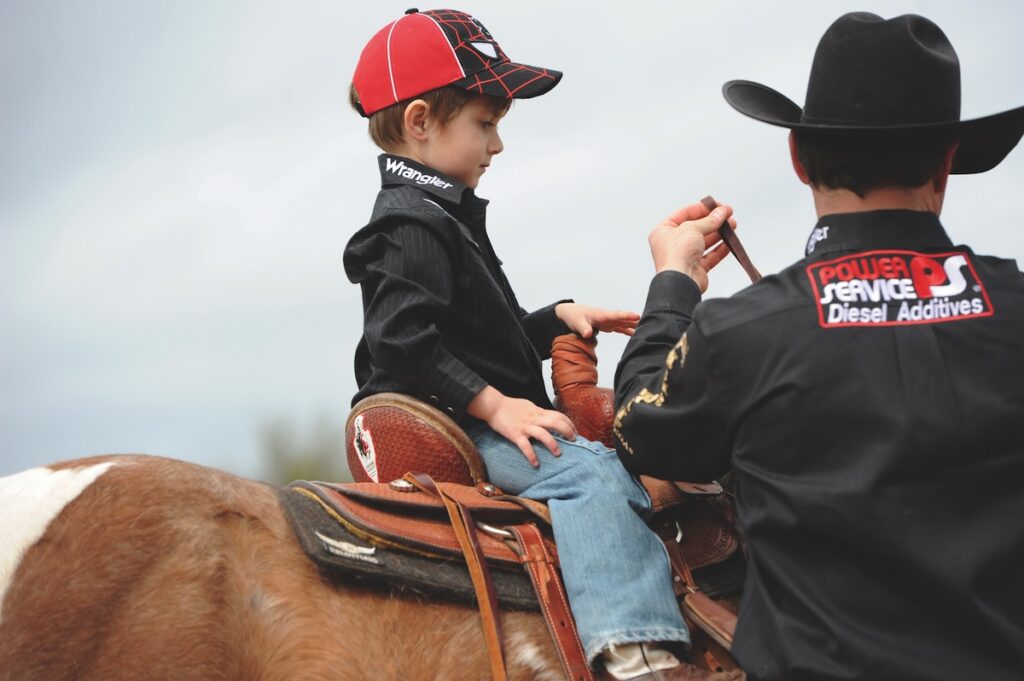
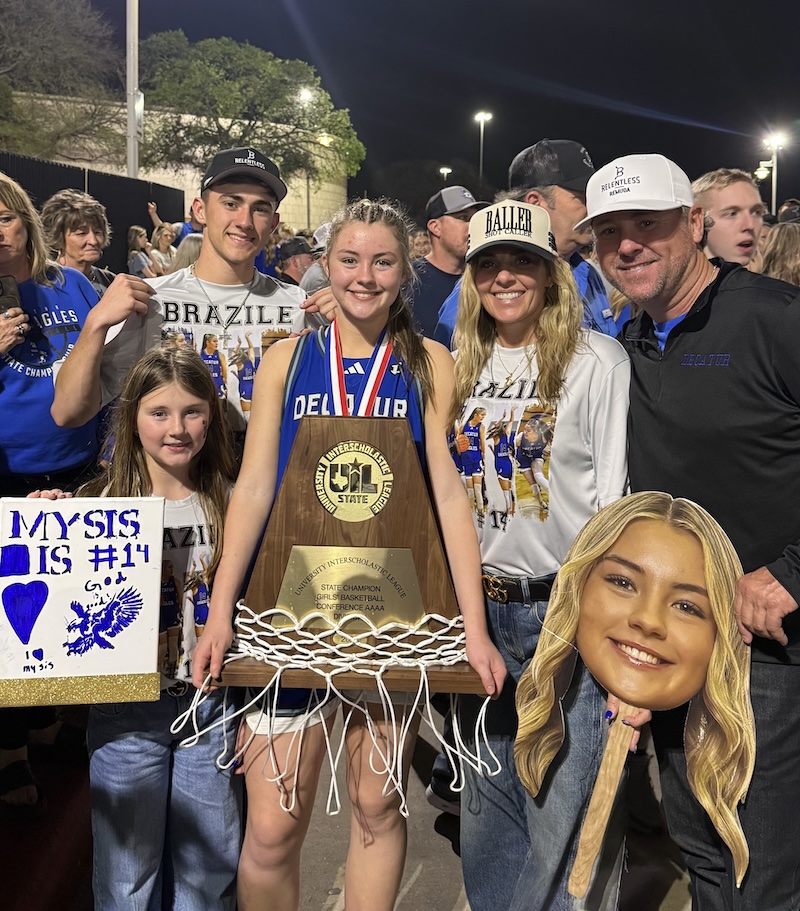
Trevor Brazile has spent a lifetime in the arena as the winningest ProRodeo cowboy of all time, but as a parent, things are a little different. With three kids, all going in different directions—Treston in the roping pen, Style on the basketball court, and Swayzi just getting started—Brazile’s approach isn’t about results, it’s about what they can control.
“I just don’t like them getting out-hustled or out-tried. Effort and attitude are really the biggest things for me.”
Eighteen-year-old Treston’s story didn’t always include a rope. He stepped away at times to focus on other sports before coming back to roping in junior high. But Brazile believed in the foundation that was already there, and in Treston’s willingness to put in the work.
“You keep putting the reps in, and one day you’re in the middle of it and it’s like, ‘Dang, that felt good.’ Then all of a sudden, a lot more days start feeling like that.”
Fifteen-year-old Style’s road looks different, but the standard stays the same. A two-time Texas Class 4A state champion in basketball, she’s putting together her own success outside the arena. For Brazile—who is now an avid women’s basketball fan—watching her compete at a high level has been just as rewarding, because the expectation doesn’t change, no matter the sport.
“If your attitude and effort are there, it makes it a lot easier to deal with the results. There’s no perfect run, there’s no perfect game, it’s just about chasing it.”
Rich Skelton
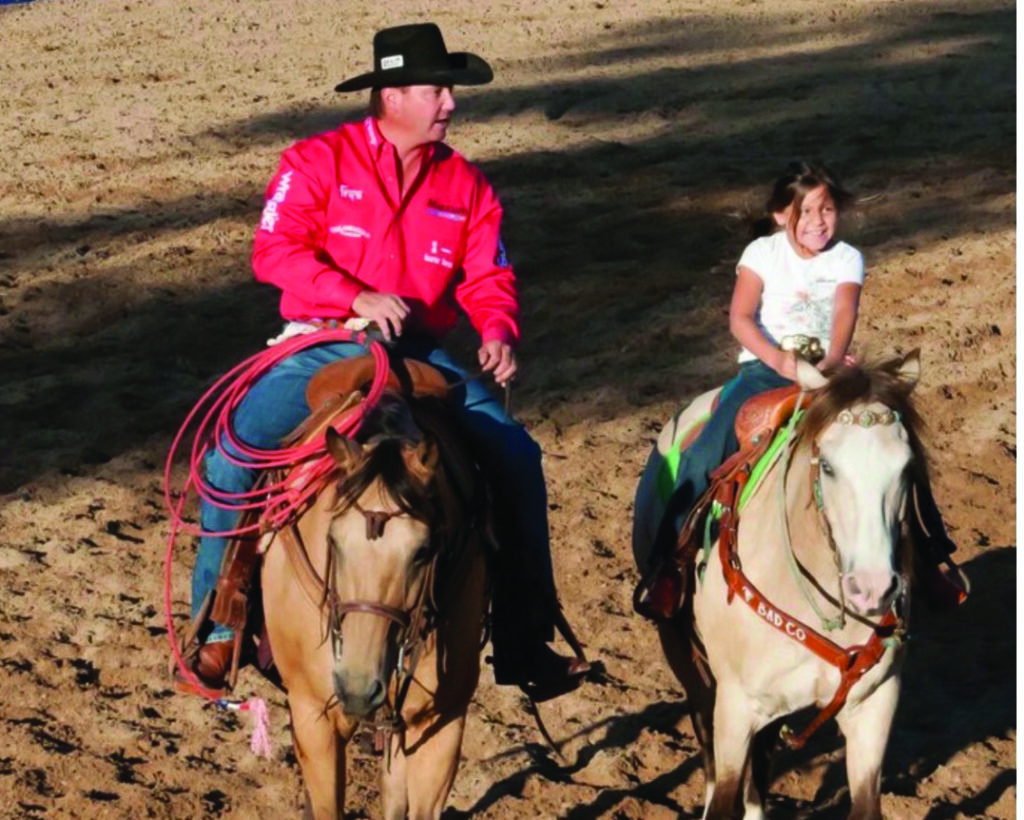
For eight-time NFR world champion heeler Rich Skelton, raising a daughter in the sport has always come back to two things: horsemanship and work ethic. His daughter Rainey, 22, didn’t have to be pushed to become the horsewoman she has become. She grew up in it, starting out flipping ponies and figuring things out on her own before the wins ever happened.
“You get out of roping what you put into it. It doesn’t matter if it’s your daughter, your neighbor, whoever. The better work ethic you have, the luckier you’re going to get.”
From the start, Skelton and his wife, Rhonda, made sure Rainey had the tools to be competitive: good horsepower, a solid foundation and every chance possible to be consistent. But as she’s gotten older, the dynamic has changed. Now, it’s less about horses that take care of her and more about her learning how to take care of them.
“I think the earlier kids can learn horsemanship and be consistent with it, the better. You watch the best guys—every run looks the same because their horse position is the same. That’s huge.”
Even now, as Rainey builds her own program with a barn full of young horses, Skelton sees that growth happening in real time. The wins still matter, but understanding why they happen matters more.
“There are reasons why you catch and there are reasons why you miss. You’ve got to figure that out before the next one.”
Patrick Smith
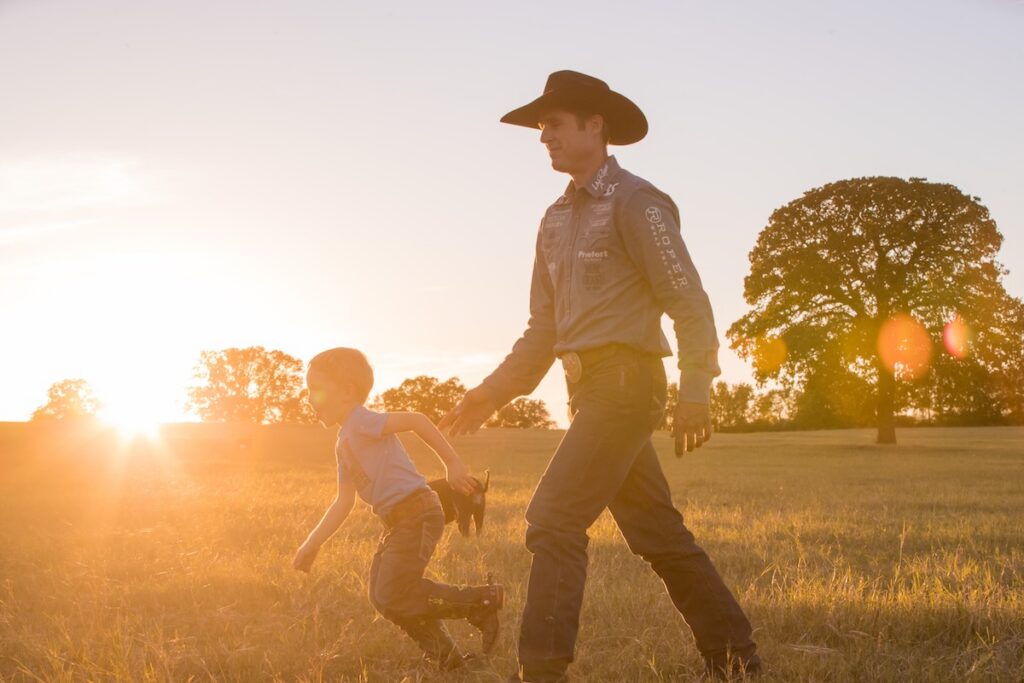
Patrick Smith didn’t have to show his son Eli how to love the game. It came naturally. From the time he was a toddler, Eli had something in his hand to swing, spent hours on the road watching the best of the best and was captivated with it from the start. But now, at 13, the want to win is starting to develop and Smith’s strategy is simple.
“I try not to be too hard on him, but I’m hard on his attitude. It’s okay to be upset when you don’t do good as long as you’re using it as fuel to get better.”
That parenting mindset comes from experience. The 14-time NFR heeler didn’t have a guiding light when he started, but it’s now something he is intent on passing down. In a sport where losing is guaranteed, he believes learning how to handle it is just as important as any fundamental part of the run.
“Get over it. Shake it off and go to the next one. You’ve got to be mentally tough enough to bounce back and believe in yourself the very next time you’re in the box.”
At the Smith residence, the roping is only part of the equation. From horsemanship to the people Eli surrounds himself with, Smith is adamant that if you’re going to do it, you’re going to do it right.
“There are no shortcuts. You can buy the best horses, the best steers, all of it. But if that kid doesn’t want it, you can’t put that in them.”
Cass Ringelstein
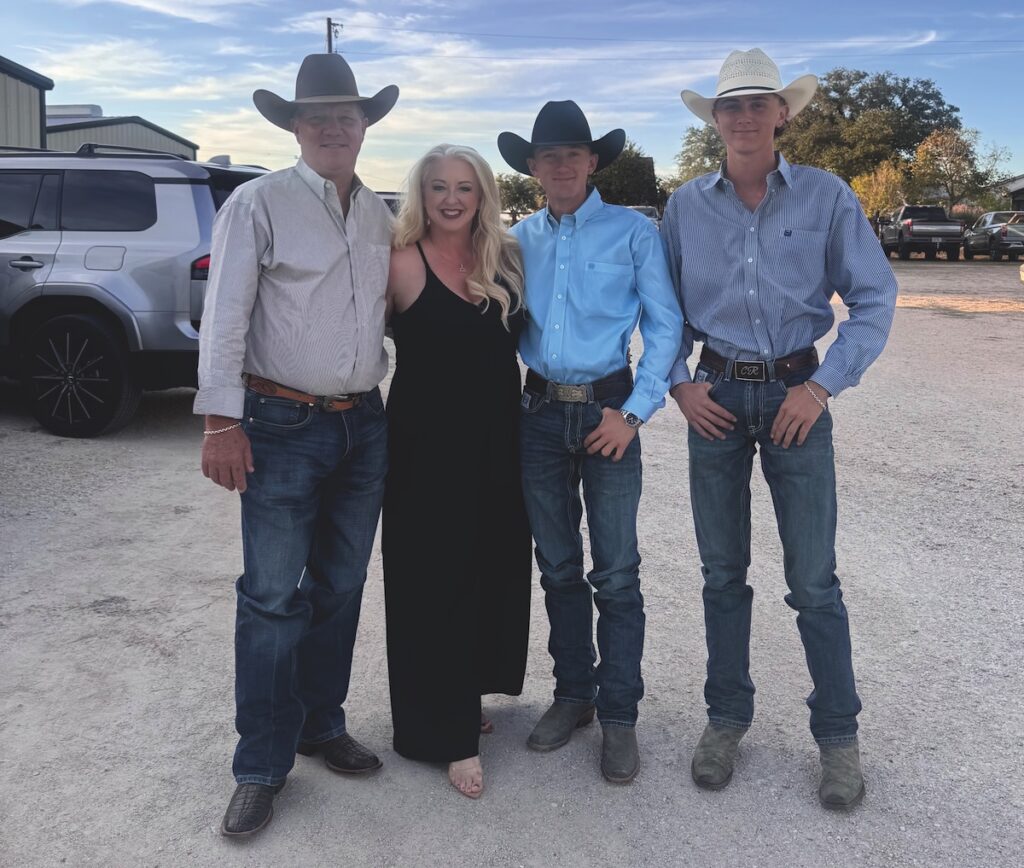
Cass Ringelstein might not have hit the ProRodeo trail himself, but he raised his sons on a different side of it: the producer side. For Casper and Cross, the game has always been there, something they were raised in as Ringelstein put on ropings across South Texas. From the time they were little, there were horses under them, steers in the pen and an environment conducive to becoming obsessed with it.
“We’ve never forced them to practice. If anything, I’ve tried to deter them from it. It’s got to be something they want to do.”
That parenting mindset has shaped two very different competitors. Casper, 19, is wired for the business side of it all, handling the entering, travel and the details that keep the wheels on the bus. Cross, 16, is the opposite. He’s the one who shows up with one goal in mind: heel whatever steers get turned as quickly as possible, and if that doesn’t happen, fix it.
“They both love it. Cross is just the one that can’t leave it alone. If he didn’t win something, he’d be out there roping a goat until we made him come in.”
What the brothers share is a foundation of being a hand. Not on finished horses, but on whatever was available—ponies that didn’t know their job, young horses that made mistakes and a setup that forced them to learn how to catch before anything else.
“They learned how to handle their horses because their horses weren’t trained. They had to figure it out.”
Now, as both boys start to find their place at a higher level, the approach hasn’t changed much. The mistakes are addressed, then left behind, and the focus stays on the next steer.
“Your rearview mirror’s really small and your windshield’s really big. Think about what you did wrong and be done with it. There’s another one tomorrow.”
Speed Williams
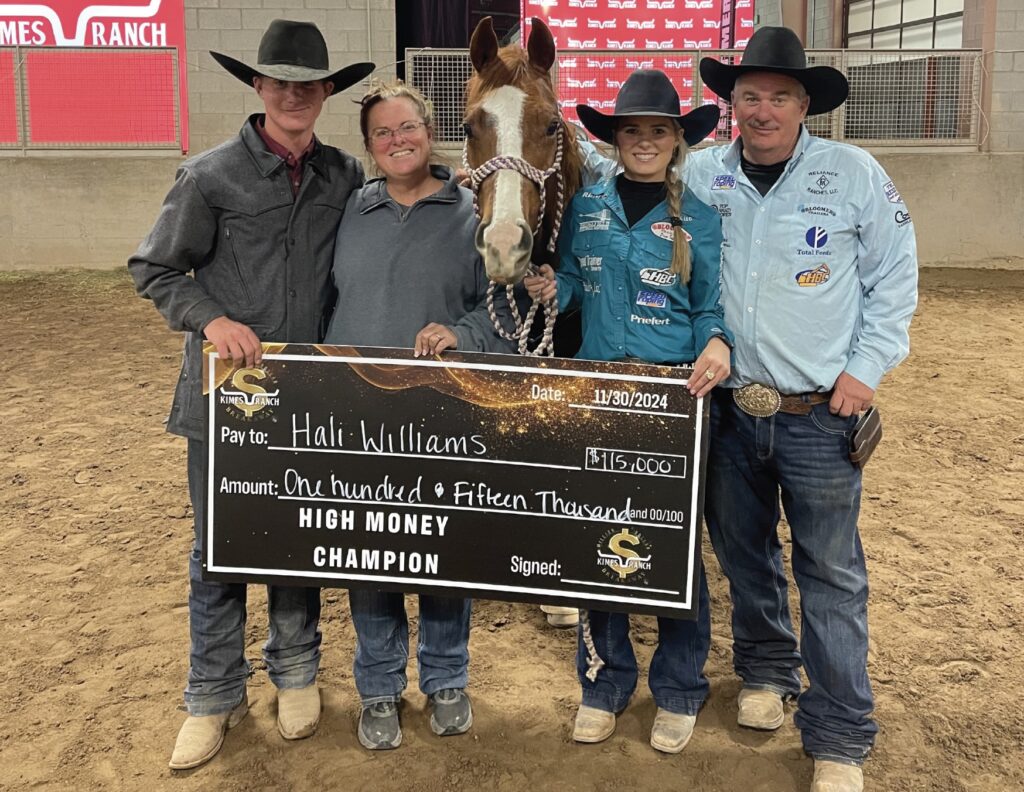
Eight-time world champion header Speed Williams didn’t raise his kids with the intent of making them high-level competitors. He just raised them around it and let the rest take care of itself. From the time they could sit a saddle, they were riding ponies, swinging a rope and watching Williams teach team ropers across the country at his clinics.
“I never made either one of my kids rope. I’d bribe them if they wanted to go somewhere or do something, but I didn’t want it to feel like that was the only thing in life. It’s got to be something they want to do.”
That approach has produced two young guns who are as thoughtful about the game as they are talented. Hali, 22, has developed from a hard-to-beat header into a multiple-time National Finals of Breakaway Roping qualifier with two RodeoHouston titles, while Gabe, 19, has become one of the handier switch-enders of his generation. But for Williams, the job as a dad is as much about when he coaches as it is about how and what he coaches.
“The biggest thing is, you can’t give advice until they’re ready to hear it. Teaching Hali has always been easy; whatever I say, she trusts it. My son, we’ve got to talk through everything. But that’s part of it.”
What has never been up for discussion is how Williams has taught them to handle the one sure thing in this game: failure. He is adamant that emotion can’t be what defines the next run.
“I don’t believe in showing emotion when you miss. I don’t believe in temper tantrums. You’ve got 10 minutes to process what happened, and then you’ve got to move on. Because when you back in that box again, you’ve got to believe you caught the last one—you can’t be in there trying to fix everything.”
—TRJ—
READ: No Thumb, No Problem