


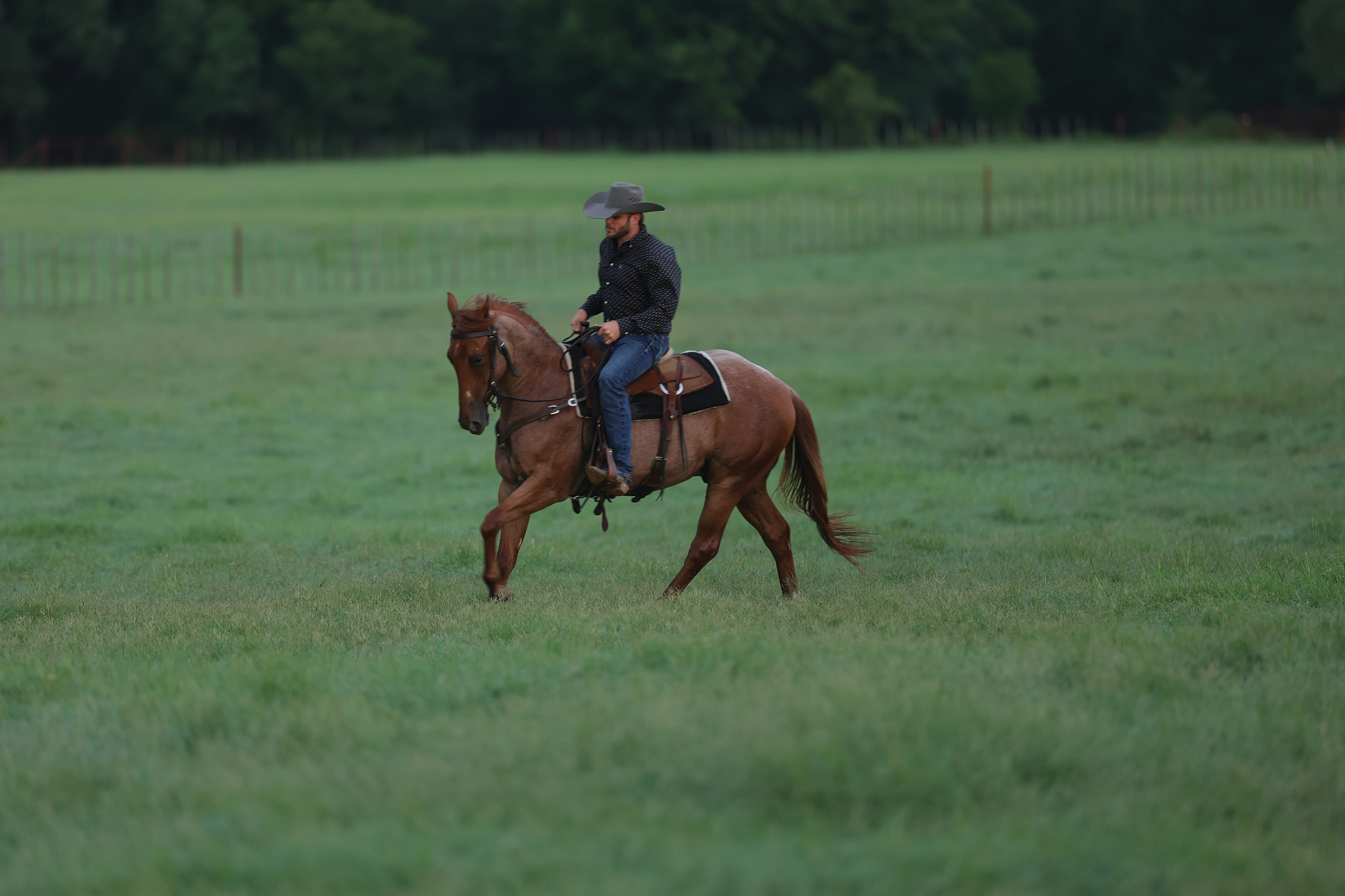
Great head horses start with great fundamentals. Colt starter Ty Benson breaks down how going slow, softening up and building body control gives young prospects the foundation they need.
Speed Control Comes First
When I’m working with 2-year-old head horse prospects, speed control is the number one thing I focus on. I want to be able to go from a run to a lope, down to a trot, and all the way to a walk—smooth, with no resistance. That’s the baseline for everything else.
To get there, I do a lot of galloping and turning them loose, then breaking them down consistently. I’m not afraid to redline one a little—to really move out—then ask them to come right back to me. When I pick up, I want them to give their chin and rate their feet back immediately. I want them to feel good in my hand and be confident relaxing into my ask. That’s what sets them up to be able to rate later when we put a cow or a dummy in front of them.
I’m not worried about a stop on these head horse prospects—not like I would be on a heel horse. I just want them adjustable, responsive and with me every step.
Teaching Rate Before There’s a Cow
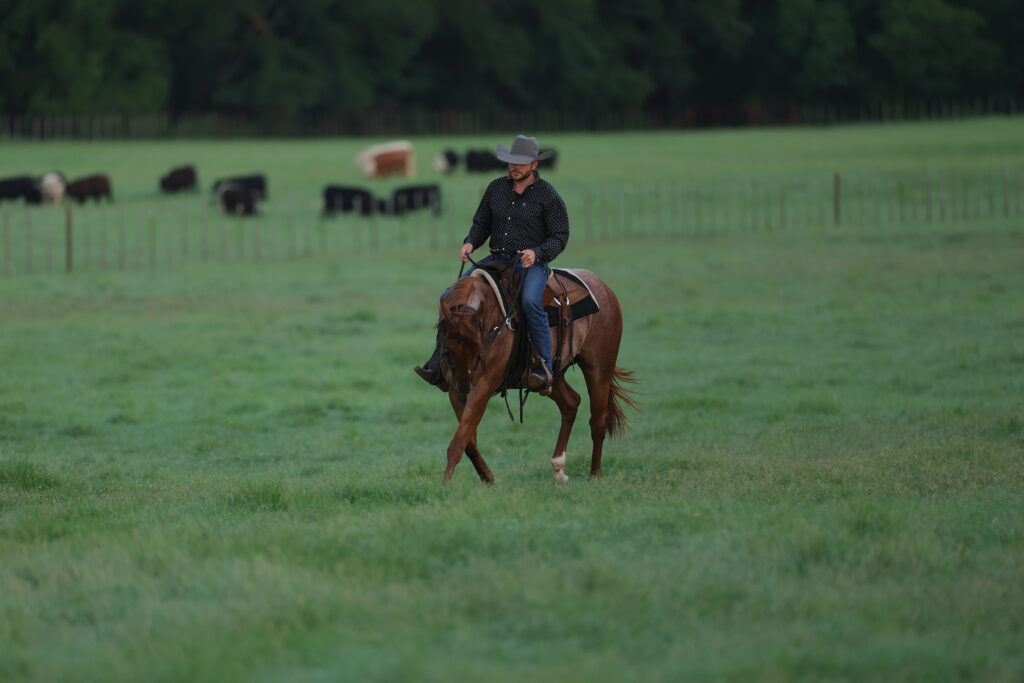
I want one breaking at the poll from early on. That matters because a head horse starts from a disadvantage coming out of the box—they’ve got to catch up. But once they catch up, they need to rate back in with you.
If I can teach them to do that in the dry—with no dummy, no steer—then when I add that next piece, I already have the tools in place. I can ride to the cow, put my hand down, pick it up, and that horse will rate back with me. That’s what we’re building.
At 2 years old, I’m not training a finished head horse—I’m preparing one to be trained. I want them soft and mentally ready, so when we start adding pressure and asking more, there’s no argument. They already know how to respond.
Rib Control Over Pretty Spins
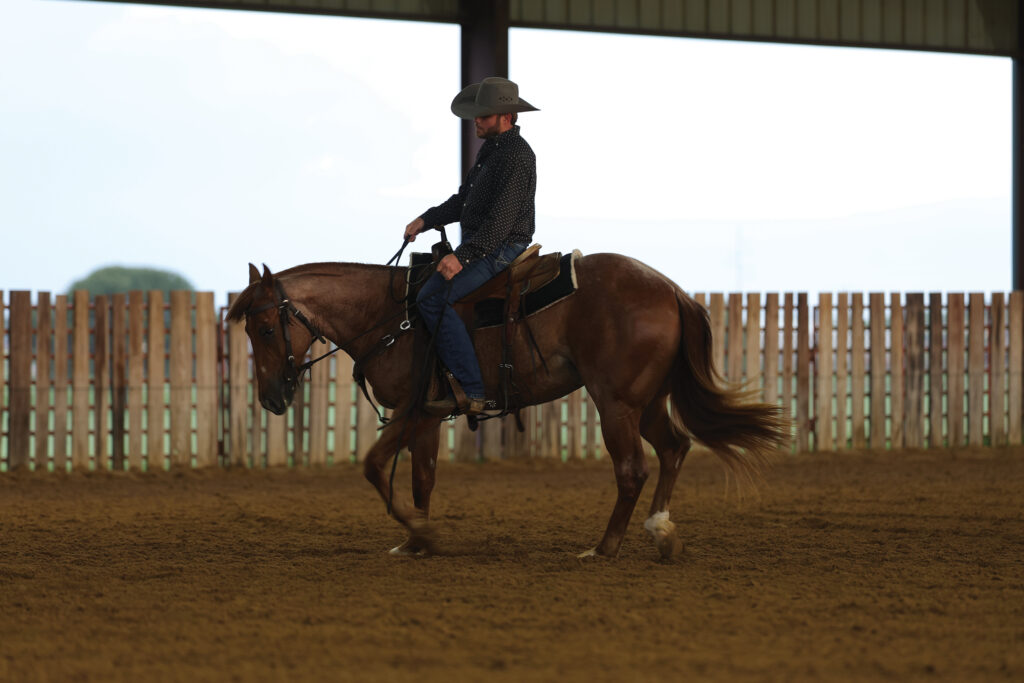
Trevor (Brazile) and Miles (Baker) have helped me a lot here. For head horses, I’m not trying to build reiners. I don’t care if they can turn around pretty or lock a hock in the dirt. What I do care about is control of the shoulders, rib cage and the hip.
So I do a lot of counter-arching, disengaging the hip and getting them soft through their body. I start all of it at a walk and trot in two hands—keep their head to the outside and push the rib cage and hip where I want it. Eventually I move it up to a lope.
I want to be able to move the shoulders, ribs and hips independently—but also be able to move everything together while keeping the horse straight. That’s what I need before I ever think about going to one hand.
A turnaround is really just a tight version of steering. If I can’t steer them around at a walk and trot, if I can’t control the shoulders around the hip, then I won’t be able to do it fast either.
So I work on that kind of control, but I don’t need it to look like a reiner spin—I just need function.
When to Go to One Hand
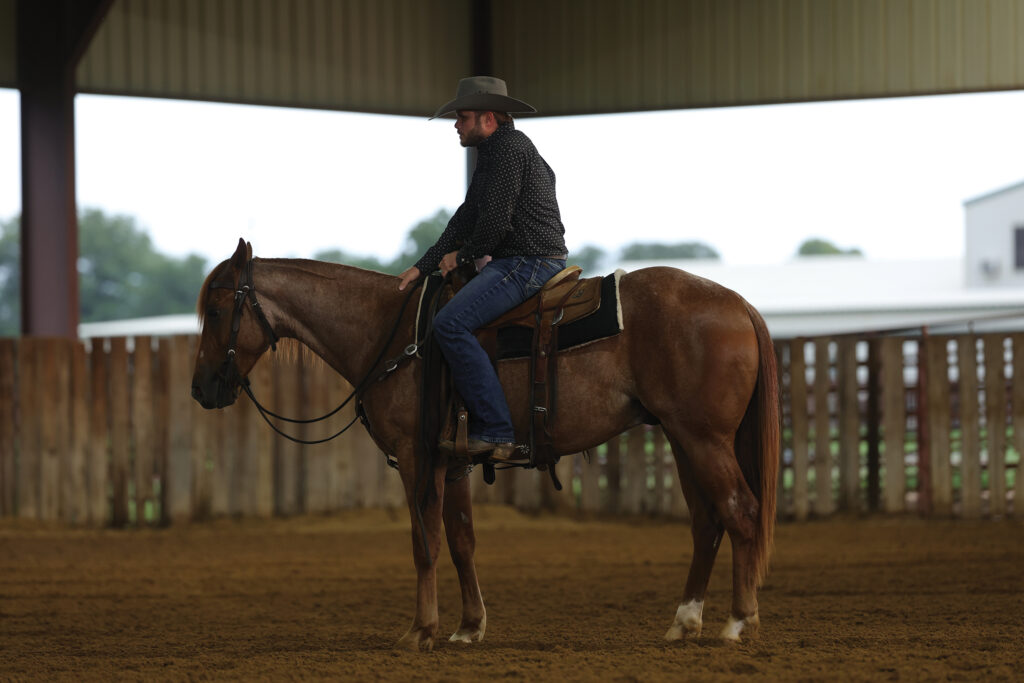
I keep everything in two hands for a while. I don’t rush it.
When I can move every part of their body without resistance—chin, shoulders, ribs, hips—and they stay soft and willing, that’s when I start transitioning to one hand.
By the end of the 2-year-old year, my goal is to be able to do everything I need in one hand. But it’s not a timeline thing—it’s a feel thing. I wait until the horse tells me he’s ready.
Why I Start Them Outside
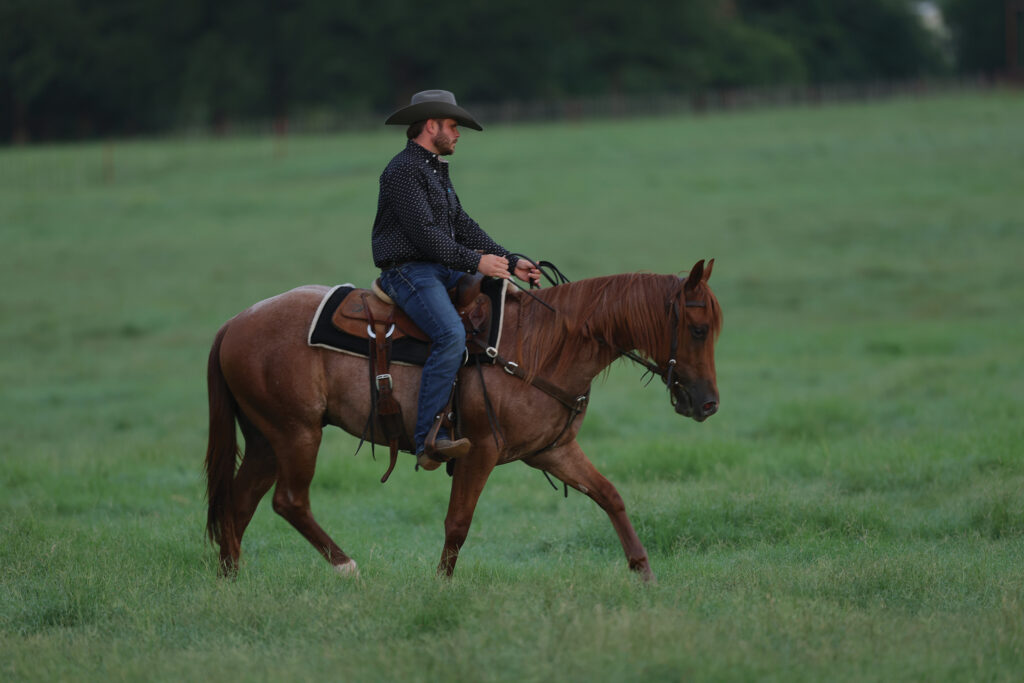
For the first 90 days, I ride outside a lot. My only real goal at that point is to make a good mode of transportation. I want to saddle, get on and go wherever I point them—across the pasture, up a hill, wherever.
I think it’s good for a young horse to learn to travel out without a fence. They don’t learn to lean on anything, and they figure out how to stand up and go somewhere on their own.
Later on, we start tightening things down—bigger bridles, tie-downs—but that early freedom gives them confidence in their movement and helps them carry themselves naturally.
Bottom Line: Tools First, Then the Job
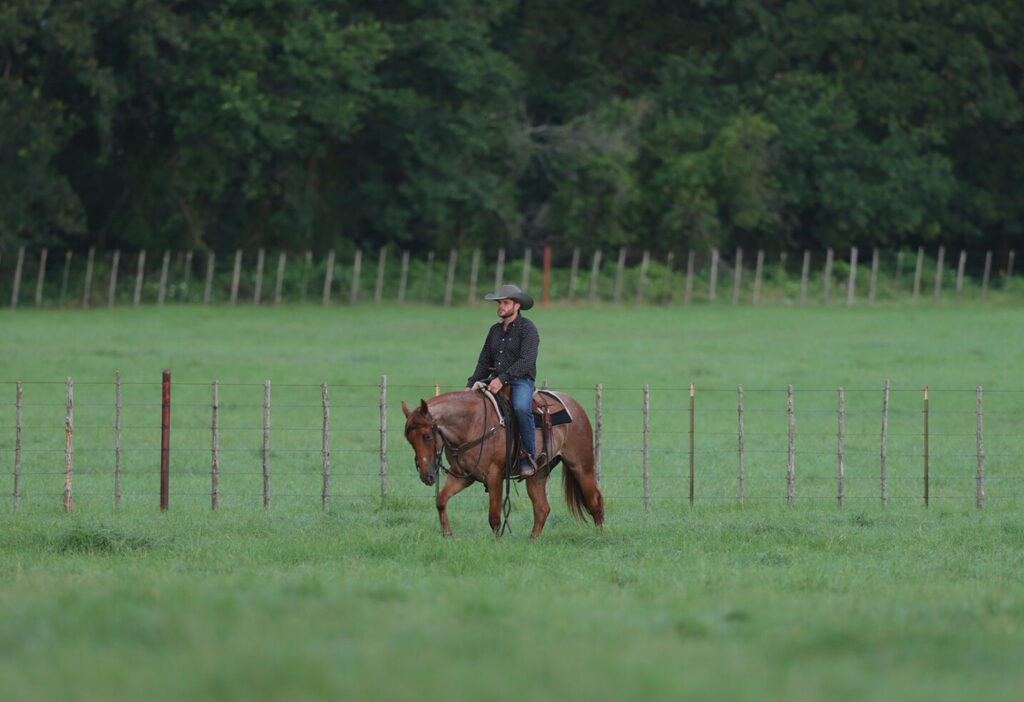
At 2 years old, I’m not trying to make a broke rope horse—I’m laying in the tools so they can become one eventually. I want them confident, relaxed and responsive. Everything I do at this age is about setting them up for the next stage.
I’m not showing them the job yet. I’m just building a horse that’s ready to learn the job—with no resistance—when the time comes.
—TRJ—
Build a strong foundation for your young roping prospects with the Colt Starting video series on Roping.com.
READ: Improving Your Roping in the Information Age: Digital Training Tools for Team Ropers