


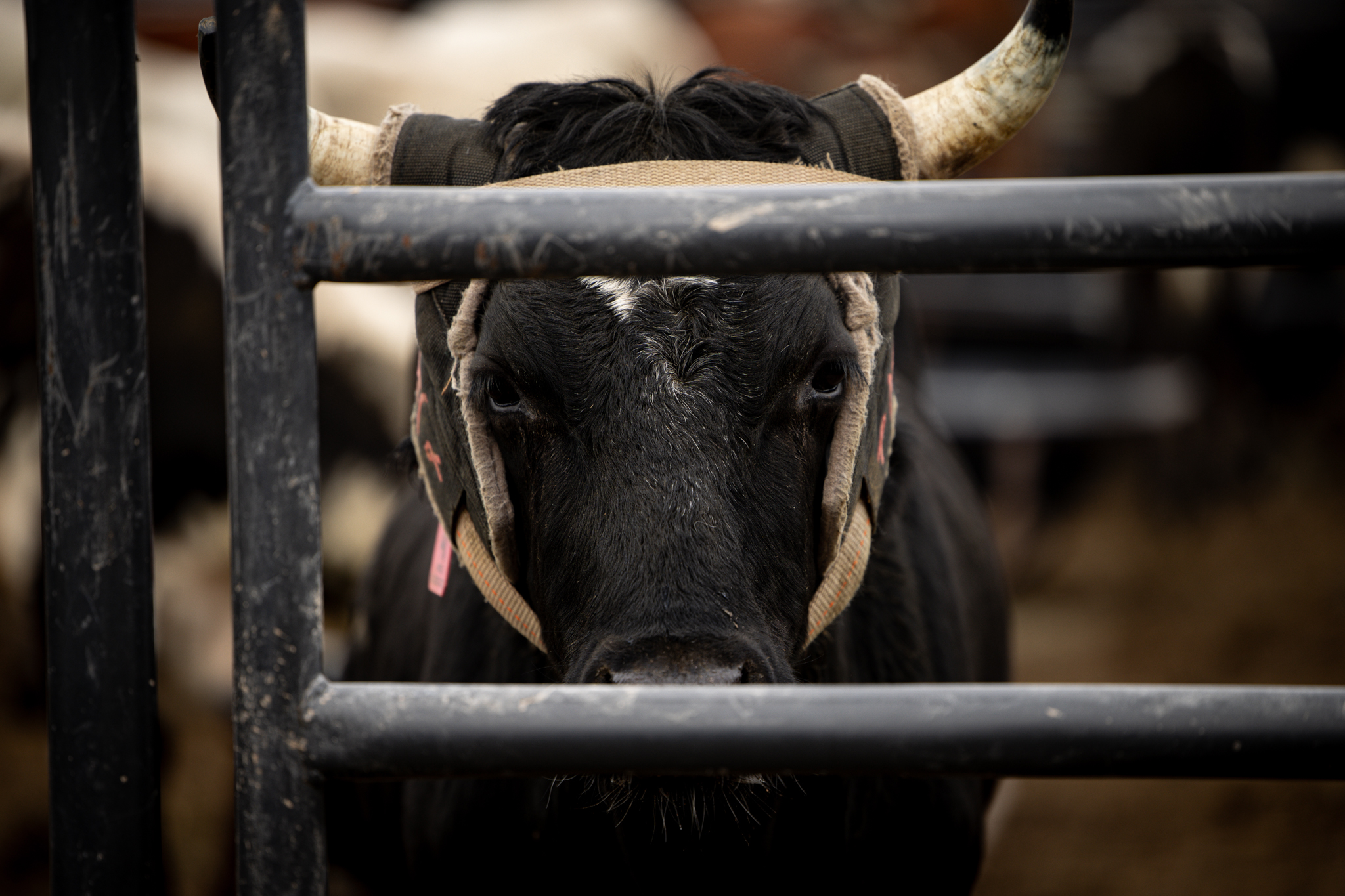
The Old West Rope Horse Futurity returns to the Wasatch County Event Complex in Heber City, Utah, June 14–20, 2026, with $1.375 million in graduate-only money on the line—and for the first time in the event’s history, there’s not a single M-brand in the pen.
The U.S.-Mexico border has been closed to cattle since April 2025 due to the New World screwworm outbreak in Mexico, and the last roping cattle to cross ran at Old West’s Heber City futurity in June 2025. With Mexican Corrientes off the table and native steer prices up 40–50%, Old West co-founder Rhen Richard and his crew had to build a herd the hard way: load by load, with a rigorous break-in and sorting process.
MORE: Old West Details
The Herd
Old West bought 200 head of native steers ahead of its Scottsdale event in March and has been cycling them through the year’s schedule ever since.
“We used about 80 of those at Scottsdale, and then we’d used everything at Guthrie,” Richard said. “Most of the cattle we’re going to use over here in Heber were the steers from Guthrie, and as far as natives go, they’re about as good as you can put together, in my opinion. They’re all solid color and good size and strong. So we’ll rope those in the 6-and-under and the 4-and-under heeling. And then we’ve got a set of smaller native steers from Southern Ranches that we’re going to rope in the 4-and-under heading.”
The first sets came from two sources—a truckload from Missouri’s Scott Gage and another set from Colorado’s Alan Gordon.
The Break-In
The 4-and-under steers have five runs on them heading into Heber City.
“We put four runs on them here, and then we went back through them and we put one more run on them, so they’ve had five runs,” Richard said. “They’re medium to medium-plus, little lighter-type cattle for those 4-year-olds. They’ll be strong enough where you’ve still got to be on something that’s got some run, but we didn’t want to just have that setup be just stupid, you know? Something that if you’re riding a good one and it’s easy, and if you’re not, it’s exposing things.”
The Score and the Setup
Richard expects most runs to develop in the middle of the pen.
“We’ve been staying around that 4.5-to-5-foot under,” he said. “That arena is not terribly long, and these cattle, especially in the 6-and-under stuff, they leave sharp and go. So I think most of the runs will be middle of the arena to three-quarters way down.”
The Rerun Deal
Old West doesn’t issue reruns off a rulebook. It runs them off judgment—with three sets of eyes on every steer.
“Really, we have two guys watching for reruns, and at the end of the day, we don’t really have a rule that says this is a rerun,” Richard said. “We feel like the guys that are watching that damn sure know we want the tie to go to the runner. So if it’s something that we feel like they couldn’t get their horse showed on, then we’re going to give them a new steer. The hard part is when you’ve got, say, a helper in the heading that hits one a little hard, or you’re in the 4-year-olds, whatever it is—the cattle are fresh enough that you got to be able to do it right. If you knock a steer down, that’s hard to give a rerun on when you did it.”
Veteran judge Gary Wells, ARHFA founder Jay Wadhams and the event’s flaggers will make those calls, with a dedicated sorter on the cattle all week.
Why It Matters
With graduates chasing the $375,000 side pot and a shot at the $1 million bonus, the cattle are the foundation of the whole deal—and Richard knows it.
“The cattle situation for us is, we feel like that’s what makes the futurity good, is having steers that you can go present a horse on,” Richard said. “We do our best to not ever have anything in there that takes a guy out and doesn’t let him show his horse. We put a ton of work into the cattle. We’ve been breaking steers in now for three weeks, and we roped through everything that went to Guthrie and sorted. We’re trying to do a good job there and make sure everybody has a really good chance.”
READ: Halfway There: 2025 NFR Team Roping Round 6 Cheat Sheet