


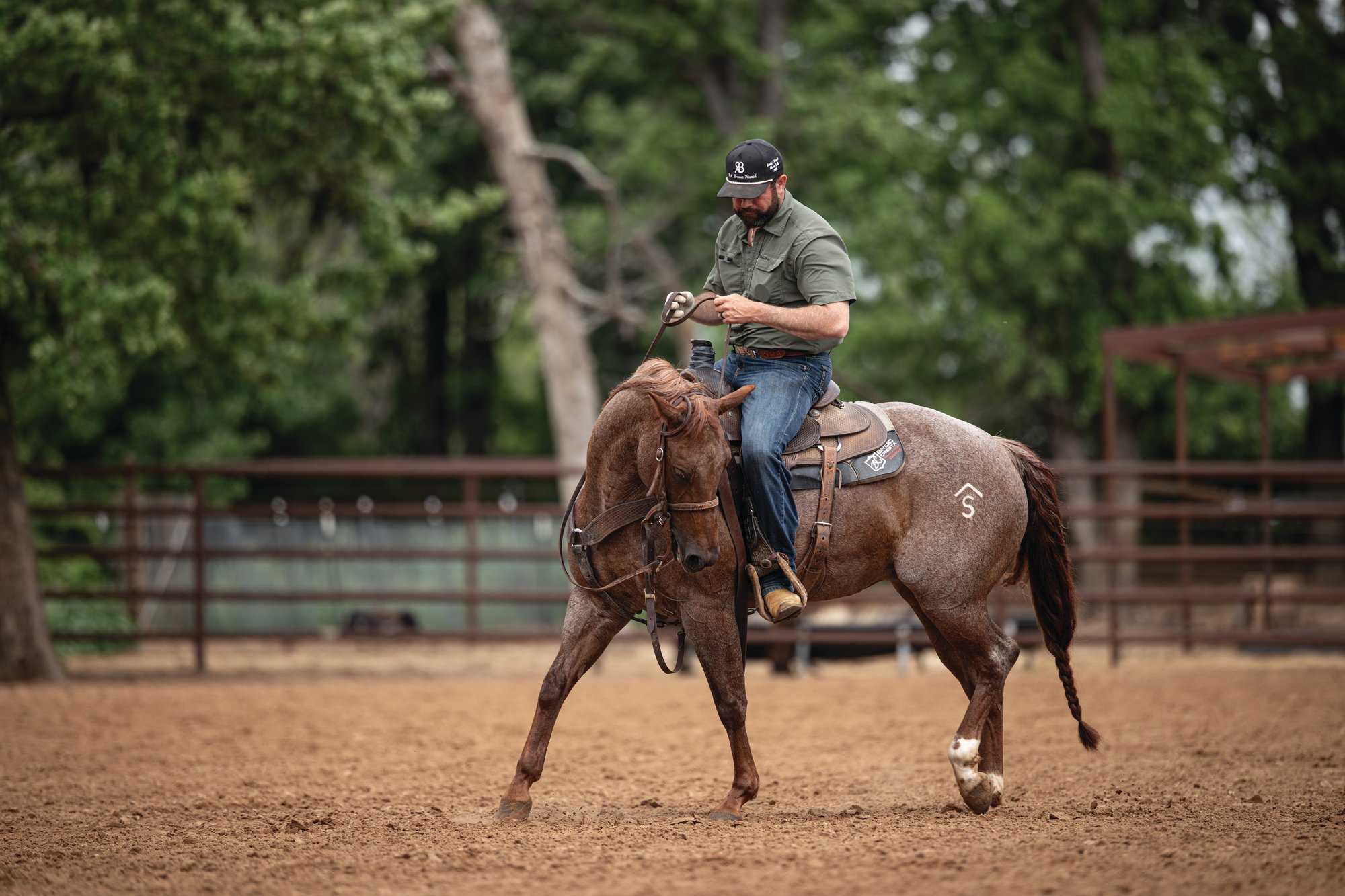
I’m not real concerned with what a horse’s front end is doing. If he’s leaning on me through the corner, I’d rather fix it with my legs than with my hands. Here’s what I’m feeling for when I get one that somebody else started.
Feel the Middle, Not the Front
When I get one in that I didn’t start from the beginning, I want him soft to my legs. In the turn or down the arena, I’m really not concerned with what his front end’s doing a whole lot. It’s more what I’m feeling just underneath my legs, underneath my seat.
All I’m wanting to feel is: Are they matched up, and are their angles to the cow the same? I can move that around with my legs. If I can’t, then I feel like we’ve got to go back and get it that way.
Quit Setting Their Head
In the run, I think too many people try to manually put their horse’s head and neck where they want it, trying to give a certain look to the horse.
I’m not saying I never mess with the front end—before a run, or warming the horse up, I flex them around to reinforce the control. In the run, though, I’m not trying to get their nose tipped to the inside the perfect amount. They need to feel good in my hand, but some horses want to hold their head straighter, and some want to hold it to the left a little bit. That’s fine. I’m not trying to make that perfect.
I’ve rode some where their nose is tipped into the turn, and their ribs are following their nose, and it feels terrible—because they’re not framed up to the cow that way.
Know What You’re Trying to Get To
When I’m putting my touches on one somebody else has already roped on a lot, my style is very simple. All I’m looking for is: Are they easy to ride and see the feet on? Are they matched up to the cow? Can you get to those steers and maintain speed easily, or do you feel like you’ve got to accelerate, come off, accelerate again?
That’s really all I’m after. I want them to work how they want to work. If their back end’s following their front end and they’re not leaning on your legs or your hands anywhere, that’s very easy to rope on. They’re framed up from the back to the front, they’re not leaning on you anywhere, and they’re hooked onto the cow. The cow does nearly all the work to tell them what to do. So I’m just trying to stay out of their way.
Put Your Leg On Before You Pull
When one is leaning on me, it’s just experimenting, really. I try to use as little pressure as possible. A lot of people don’t ride with their legs, so sometimes when you start using your legs on a horse, he starts respecting that pressure and matching up, and things get easier for him.
Most of the time horses come to it pretty fast, because it’s easier on them to make the turn that way. They’re not hollowed out or leaning anywhere.
If They Don’t Take It, Make It Uncomfortable
If they’re not getting the idea, then I’ve got to get them off that pressure somehow—whether that means stopping, making it uncomfortable for them or whatever.
But they’re not going to get a whole lot of grief from me if they’re just not leaning on me anywhere and they’re hooked onto the cow. I’m going to stay out of their way.
Fix It on Slow Cattle
My donkey or a lead steer would probably be my two main tools. Sometimes I’ll do something different on them, head on them a little bit, change it up.
—TRJ—
Put This Into Practice on Roping.com
Get step-by-step coaching from the best in the business with hundreds of team roping training videos.
WATCH ON ROPING.COM →