


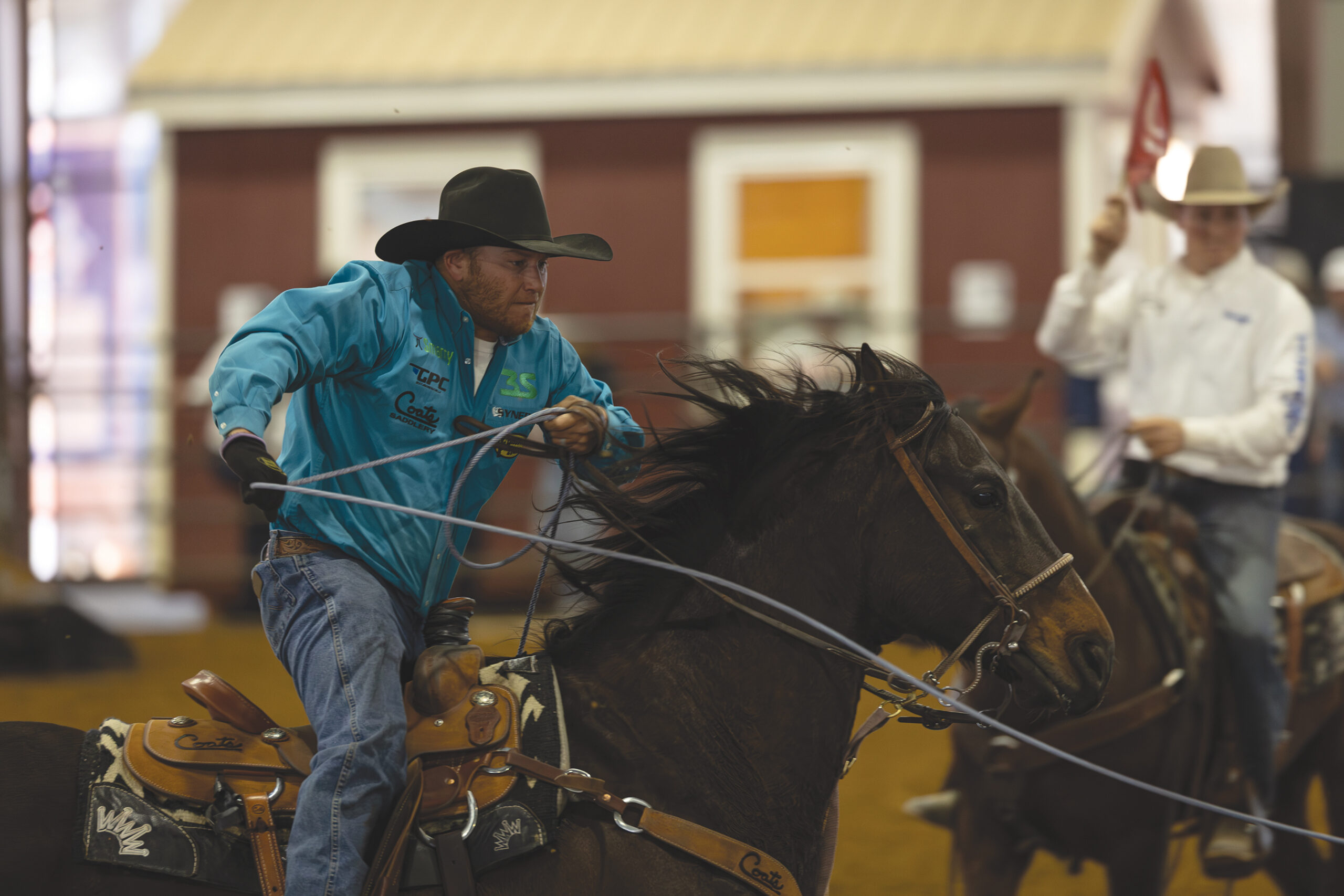
What’s really happening in the moments between the box and the steer with some of the sport’s best headers?
Andrew Ward, Kaleb Driggers, Cash Duty, Dustin Egusquiza and Cody Snow walk you through body position, hand placement, leg cues and timing, with an emphasis on why those details matter when everything is moving fast. You’ll see how small adjustments in shoulders, feet or rein pressure can change how a horse runs, stays straight and sets up the throw.
Here’s how each roper balances power, control and position to give themselves the best chance to catch:
Andrew Ward
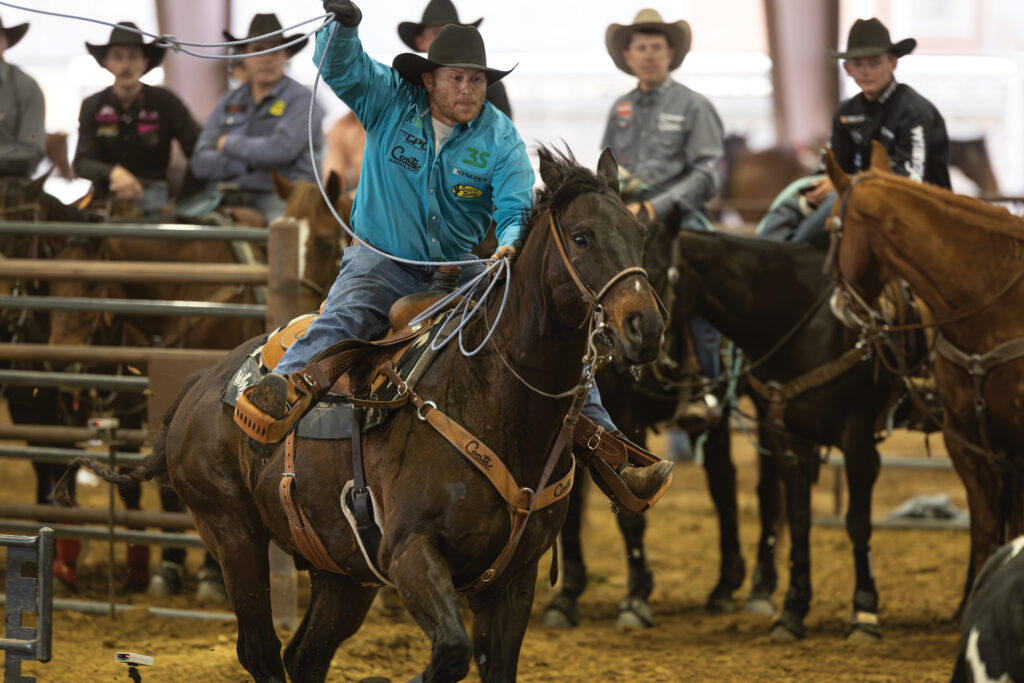
I’m down and riding and trying to stay out of my horse’s mouth. That cow is going right, so my right shoulder is back. I’m opening my swing up. I throw in a straight line to the buckle, so that’s where I’m already aiming. I’m always going to have my elbow in a straight line away from me off my shoulder. I throw it like a baseball to the back of the head. In my saddle, I hold on with my thighs just down and riding. The kicking is keeping me in the seat. I tilt my upper body in front of the saddle horn so I don’t get way behind when my horse leaves the box.
Kaleb Driggers
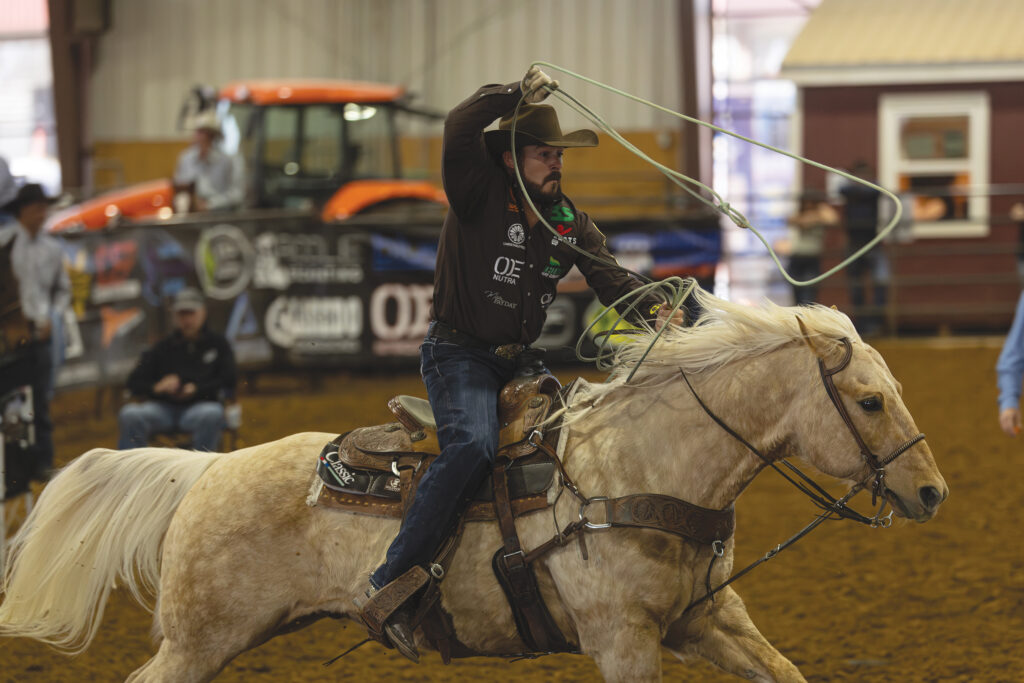
In this photo, it looks like I’ll be throwing once I bring my rope back around because my foot is slightly back on my horse. I use that to gain power through my horse and my legs to throw. When I release my rope, my foot comes back between the two girths to cue my horse to pick up his ribs, gather up and set up the turn. My hand is down, with no tension on the bridle reins, which allows my horse to know to keep running through my throw. I’m sitting straight up—not leaning one way or the other, nor front to back. That gives me the greatest amount of power in my swing and doesn’t cue my horse to move in any direction other than straight.
Cash Duty
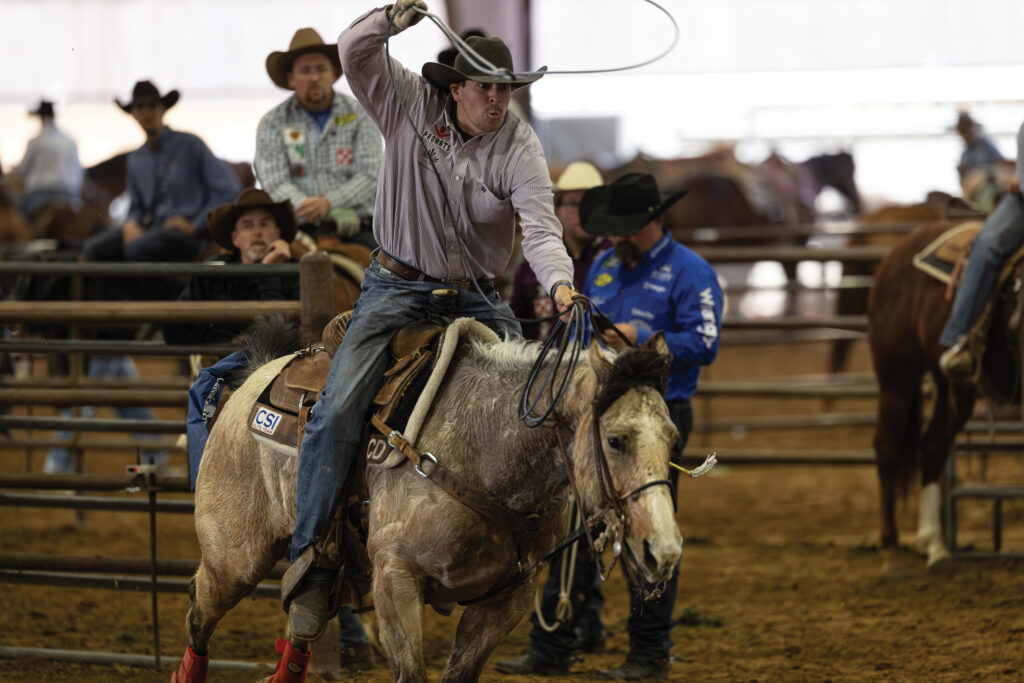
I try to keep my hand down and out of my horse’s face until my rope is on the horns. The only thing I really focus on with my left hand is not sending my horse too much to the cow to where I am too narrow to rope the horns. I want my horse running as hard as they can at an angle wide enough for me to throw my rope as I’m gaining on the steer.
Dustin Egusquiza
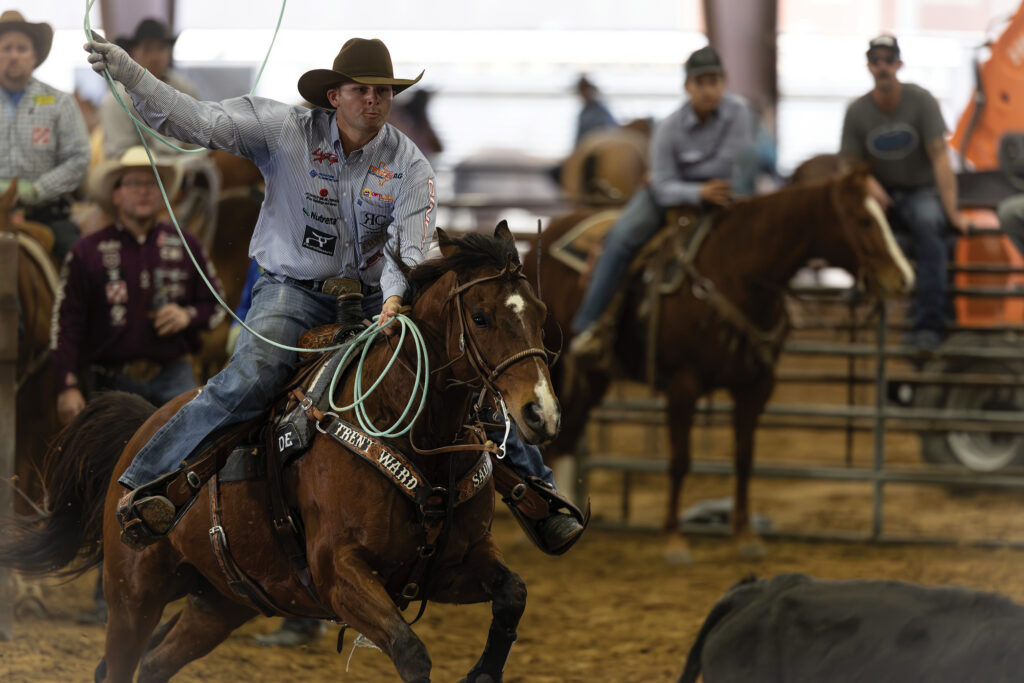
In this situation, we were high call in the ProAm and had to be 10. So I wanted to take a safe start and, after that, give my horse the right cues to let him know we’re going all the way to the steer. That means my left hand is all the way down, I have weight in my stirrups (per Speed Williams) and I sit right in the middle of my horse, using my feet to ask him to run. After that, I let him get as close to the steer as he wants to give myself the highest-percentage chance to catch and make it easy for my partner to heel.
Cody Snow
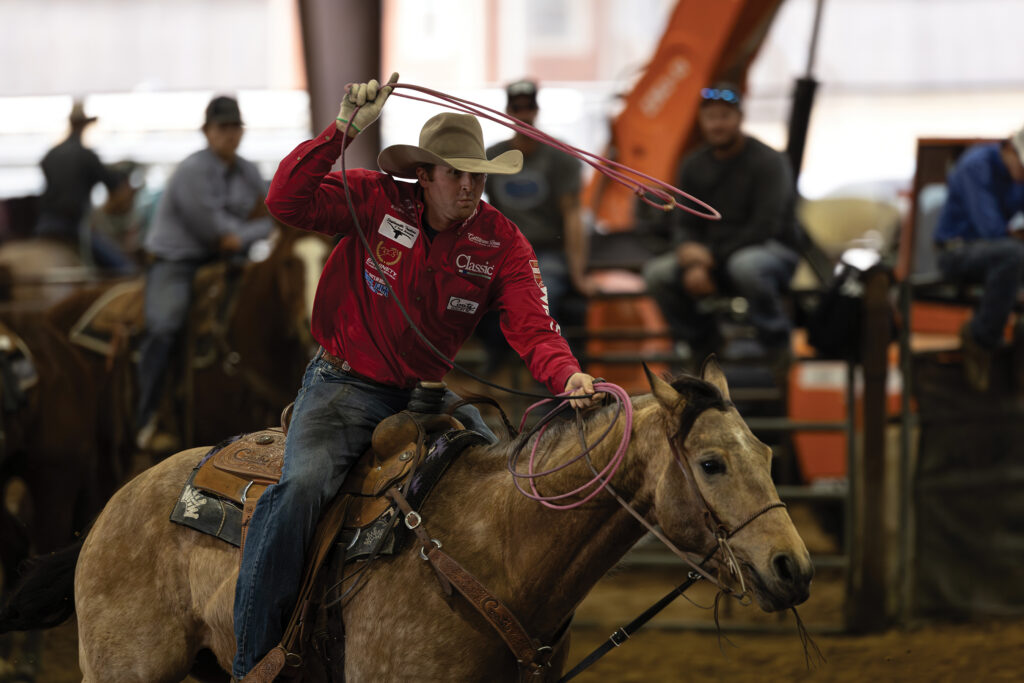
I’m trying to get to the front of my saddle as soon as possible so that I’m ready to rope the steer. With my left hand, I’m pointing my horse toward the steer. Wherever you point your left hand is where your horse is going to go.
—TRJ—
Learn from the pros. Unlock the secrets of successful heading with Roping.com’s exclusive collection of instructional videos. Start your free trial to watch.
READ: The Position Adjustments That Make Delivery More Consistent